The Quiet Corners of a Small Town Library
There is a particular kind of November afternoon when I can imagine changing my plans simply because a library is still open. The sky has settled into a pale gray, the trees along the sidewalk are nearly bare, and the cold has begun to find its way through my coat. I might have intended to walk straight home, but a light in the window would be enough to make me pause.
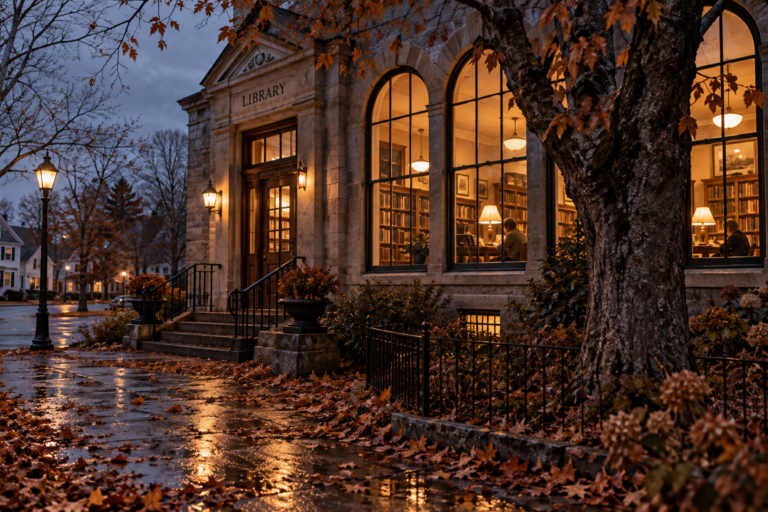
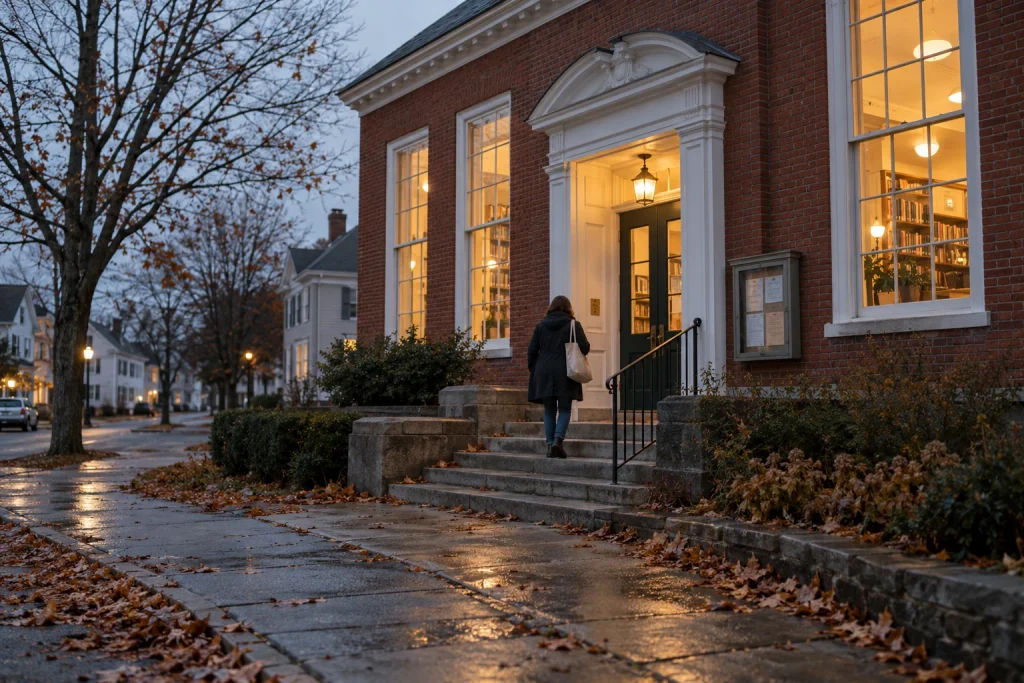
The quiet corners of a small town library feel especially inviting at this time of year. I picture a modest building a little way off Main Street, with a noticeboard beside the entrance and fallen leaves caught against the steps. Someone has come in ahead of me carrying a bag of returns, and through the glass I can see shelves, a desk, and the familiar brightness of a room where people are still spending their afternoon.
This is an imagined visit, rather than a description of one particular library. It brings together the details I find appealing about these places: books within reach, a chair by the window, and time to discover something I had not come looking for.
After a slow November walk through a small town, I can think of few places I would rather step inside.
Coming In From the Cold
The first thing I imagine noticing is the change in temperature. My hands would still be cold, and for a moment I would remain near the door, adjusting my scarf and letting my eyes move around the room.
There might be a cart of recently returned books waiting beside the desk, a few community notices, and a small display someone has put together for the season. A child’s drawing could be pinned among the announcements. Somewhere farther inside, a printer would start up, followed by a short conversation about collecting the pages.
Those ordinary details matter to me. They make the library feel connected to the town outside, with its school days, appointments, local groups, and people trying to get a few things done before going home.
I would like to take my coat off slowly, fold it over an arm, and begin looking around. Even before choosing a book, there is pleasure in having somewhere welcoming to spend the next part of the afternoon.
The Shelves I Would Browse First
I rarely imagine walking into a library with a perfectly organized reading plan. There may be an author I want to find, but I would probably become distracted on the way to that shelf.
A title on a spine can be enough. So can the familiar name of a writer I have meant to read for years, or an edition that reminds me of books I remember seeing when I was younger.
I would pull one out, turn it over, and read the opening page while standing in the aisle. Then I might notice the book beside it and do the same thing again. Before long, the original idea would have become only one possibility among several.
November seems well suited to that kind of browsing. I find myself drawn toward stories with old houses, complicated families, distant landscapes, and people whose lives unfold at a pace I can follow without feeling hurried.
I have gathered some of those possibilities in classic novels for long November evenings, but I like leaving room for a different discovery too. A book I have never heard of might turn out to be the one I want to carry home.
A Chair Beside the Window
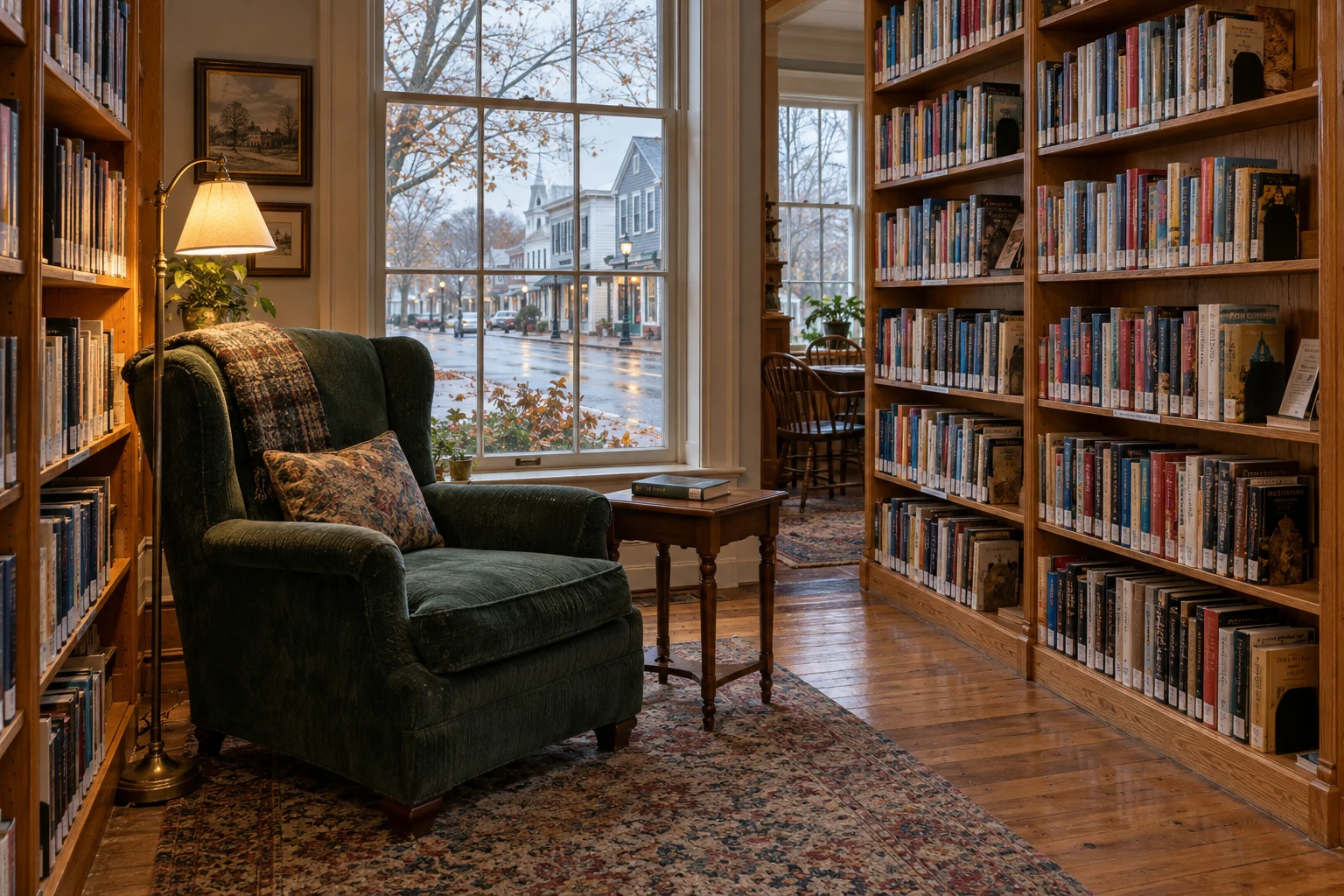
The chair I imagine is comfortable enough to make me stay, perhaps with slightly worn upholstery and a low table nearby. It sits where the daylight still reaches the page, looking out toward the street.
From there, I would be able to see November continuing without needing to be outside in it. Someone might cross the sidewalk with a collar turned up, while a few leaves move along the curb. Across the road, a shopkeeper could be switching on the lights.
I like the thought of reading in a place where the town remains visible. Every so often, I would lift my eyes from the book, watch something ordinary happen, and then find my place again.
There is a small pleasure in discovering that a page has held my attention longer than I expected. I might sit down intending only to sample a chapter, then become interested enough to forget the other books resting beside me.
By the time I looked up again, the light at the window would have changed.
The Quiet Is Full of Small Sounds
A small-town library need not be silent to feel peaceful. I picture the soft movement of people going about their afternoon: pages turning, a chair being drawn back, someone asking where a particular section begins.
There could be a parent helping a child choose a book, or two neighbors greeting each other quietly near the entrance. A person at a computer might ask for help, and a member of staff would come over to look at the screen.
I would find that company reassuring. Reading is often something I do alone, yet there is comfort in sharing a room with other people who have found their own reasons to be there.
Their presence gives the place a life beyond the shelves. Each person has brought a small part of the day inside, and for a while our afternoons overlap.
I could read my book without needing to join a conversation, while still enjoying the sense that the building is being used and appreciated.
What Makes a Small Town Library Feel Personal
In the library I imagine, the details would accumulate slowly. A handwritten recommendation on a display. A well-used table. A shelf of local history with photographs of streets that still exist outside.
I would probably spend longer than intended looking at those photographs. There is something absorbing about seeing an ordinary corner before the roads, shopfronts, or cars became familiar. A building I had passed without much thought might suddenly become interesting because of what used to stand beside it.
The notices near the door would tell another part of the story. Perhaps there would be a reading group, a children’s activity, or a request for help with a community project. Even a simple announcement can suggest how many lives pass through a place.
That is what makes this imagined library feel personal to me. Its character comes from the people who use it and the small choices made by the people looking after it.
A room can become familiar through details like those, long before anyone has learned your name.
That connection between a library and the people around it is something I Love Libraries explores in its piece on how libraries build strong communities.

Letting the Afternoon Take Its Time
I like the idea of allowing this visit to last a little longer than planned. Once I had found a chair and a promising book, I would want to give myself enough time to settle.
The temptation would still be there to check my phone or think ahead to what needed doing at home. Some days, a quiet room does very little to quiet a busy mind immediately.
Perhaps I would read the same paragraph twice before beginning to pay attention. Then the story might start to hold, and the next few pages would come more easily.
That feels closer to a real reading afternoon than imagining instant calm. I like leaving space for the small adjustment between arriving somewhere and actually feeling present there.
The quiet corners of a small town library offer a setting where I can picture that happening. There is a book in my hands, daylight at the window, and nothing unusual required of the next half hour.
Choosing What to Carry Home
Eventually, I would need to decide which of the books beside me to take. There is always a difference between the reading I imagine I will do and the time I am likely to have.
I would probably choose one that had already caught my attention and another I wanted to explore more slowly. The rest could return to their shelves, waiting for a different afternoon.
I like that a library visit can end with possibility rather than a purchase. Borrowing a book leaves room to try an unfamiliar voice, discover that it suits me, or return it and choose something else.
Once the books were checked out, I would put them carefully in my bag and find my coat. Near the entrance, I might stop for one more look at the noticeboard or remember a title I had meant to ask about.
By then, the windows would be showing more of the room’s reflection than the street beyond.
Leaving the Quiet Corners of a Small Town Library
Outside, the cold would feel sharper after the warmth indoors. I would pull my scarf closer and set off with the books resting against my side, aware that the afternoon had become evening while I was reading.
The walk home would have a small purpose added to it. There would be a story waiting in my bag, already begun or still full of unanswered possibilities.
I would carry that feeling into the sort of old-fashioned evenings I enjoy imagining: something simple for dinner, a lamp switched on, and a little time to return to the page.
Perhaps that is why I keep picturing this November visit. The library gives an ordinary afternoon somewhere to go, and sends a small part of it home with me.
Later, when the curtains are closed and I open the book again, I might remember the chair beside the window and the changing light on the street. For a few pages, the two places would feel connected.