Walking Through Hogwarts: Why Gloucester Cathedral Will Always Feel Magical to Me
There is something different about standing in a place you have known on screen for years and realizing that the magic was built on something real.
◆
Some stories stay safely inside books and films. Harry Potter has never felt quite like that to me.
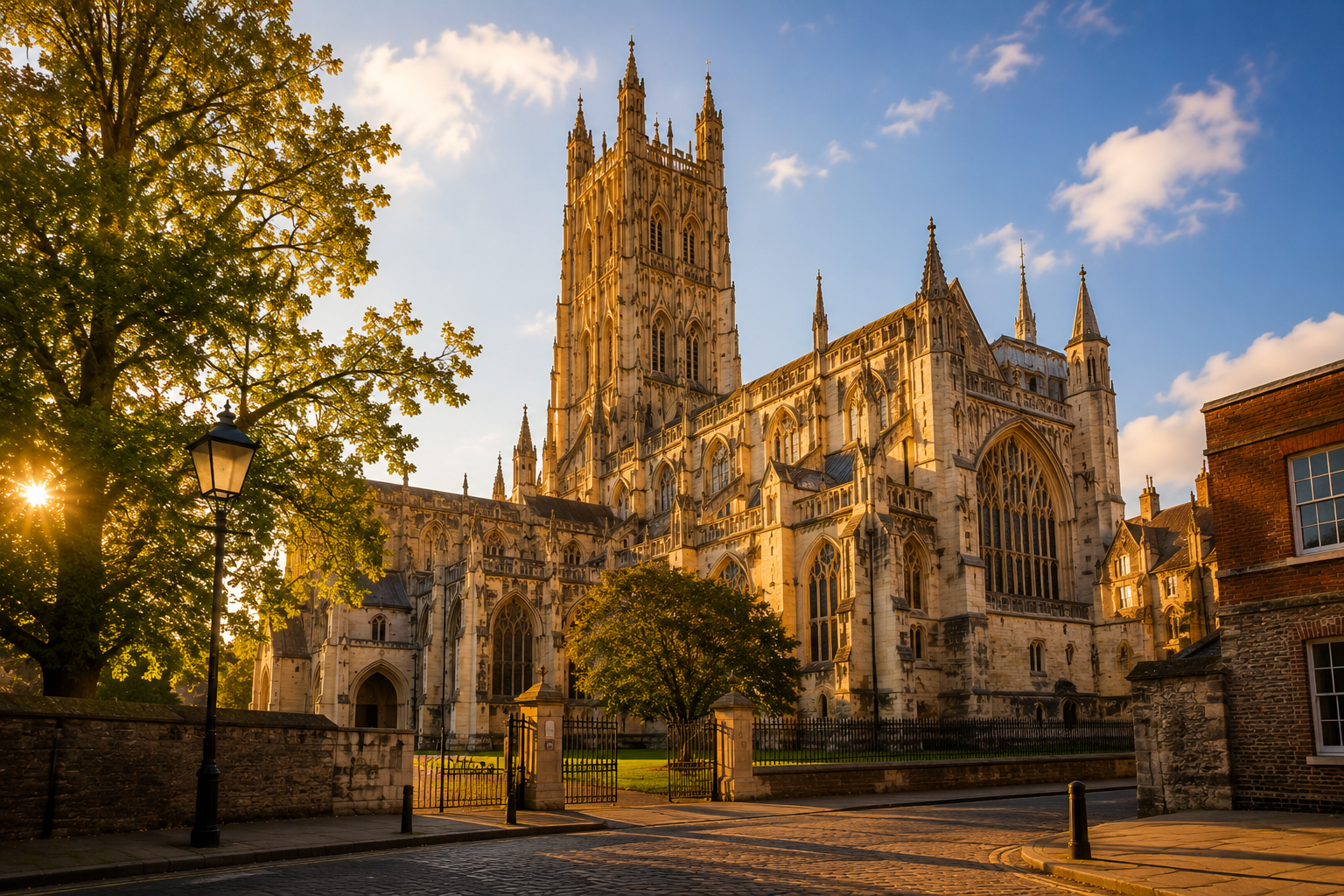
The Gloucester Cathedral Harry Potter connection was one of the things that made visiting the cathedral feel so special to me.
Part of its appeal is the story itself, of course, but another part is the world around it: old stone corridors, candlelit halls, heavy wooden doors, trains crossing wild landscapes, libraries, towers, courtyards, and buildings that seem to remember more than the people walking through them.
Having lived in England and Scotland, that atmosphere has always felt especially close to me. The films may be fantasy, but so much of the world behind them is not.
Some of Hogwarts is made from real castles, real cathedrals, real cloisters, and real Scottish landscapes.
And one of those places is especially personal to me: Gloucester Cathedral.
Gloucester Cathedral Felt Familiar Before I Even Walked Through It
There is a strange feeling when you enter a real place that your mind already knows from somewhere else.
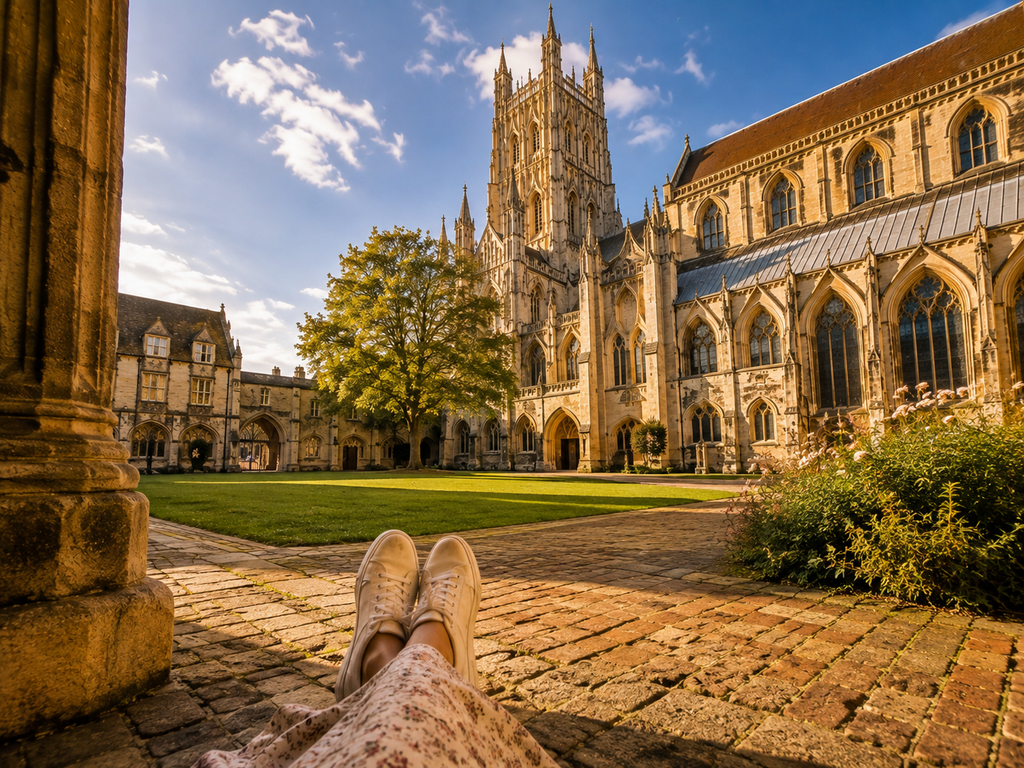
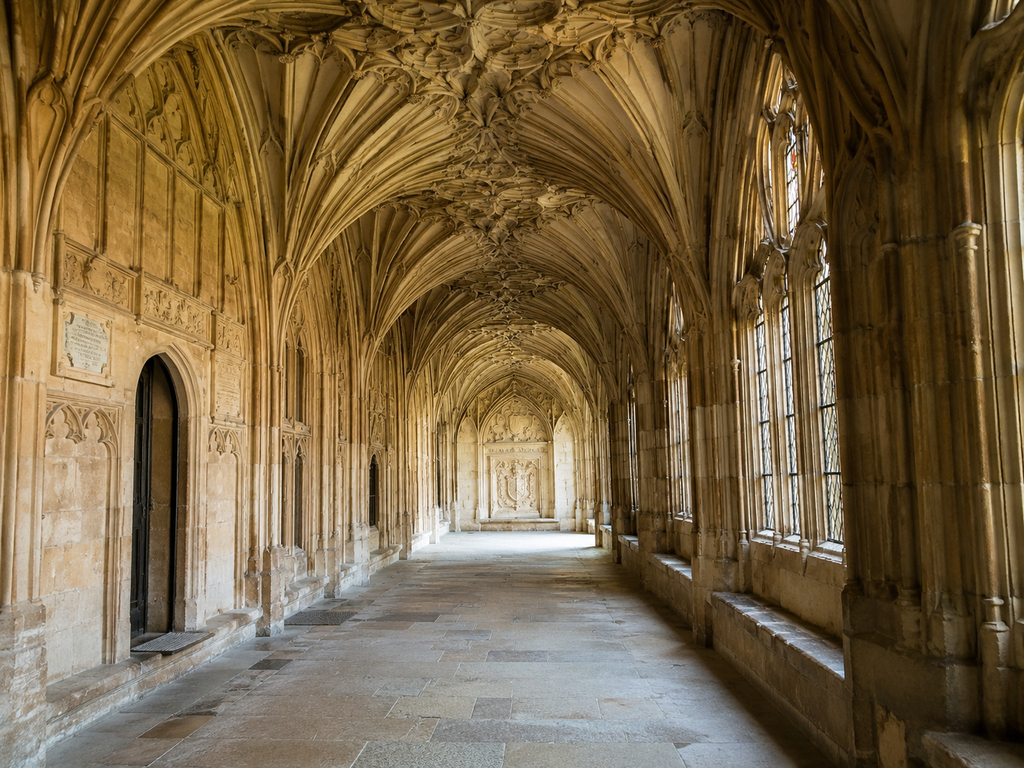
The cloisters of Gloucester Cathedral have that effect.
Their fan-vaulted ceilings, long stone passages, stained glass, shadows, and worn floors already have the kind of atmosphere filmmakers usually have to invent. Walking there, it is easy to understand why the space became part of Hogwarts.
For the films, sections of the cathedral’s cloisters were transformed into Hogwarts corridors. They appear in Harry Potter and the Sorcerer’s Stone — released in Britain as Harry Potter and the Philosopher’s Stone — as well as Harry Potter and the Chamber of Secrets and Harry Potter and the Half-Blood Prince.
But what I love most is that the cathedral does not feel magical because Harry Potter was filmed there.
It was already magical.
The films simply borrowed what centuries of stone, craftsmanship, silence, and history had already created.
The Corridors Are More Recognizable Than I Expected
When I think of Hogwarts on screen, I tend to remember the corridors almost as much as the Great Hall.
Students are always moving through them: going to lessons, whispering about something they should not know, running toward trouble, or discovering that the castle has changed again.
Gloucester Cathedral supplied some of those wonderfully familiar spaces.
In the first film, the South Cloister appears as first-year students are led toward the Gryffindor common room. Other parts of the cloisters appear around the troll sequence. In Chamber of Secrets, the cathedral becomes part of the darker side of Hogwarts, including the corridor where the warning about the Chamber appears and a passage shown flooded after trouble in the girls’ bathroom.
Years later, the cloisters returned in Half-Blood Prince.
Knowing those scenes were created in a real medieval cathedral changes the way I see them. The arches and stone are not a set designed to look old. They are old.
The Ceiling Alone Is Worth Looking Up For
Even without the films, I could spend a long time looking at the cloisters.
Gloucester Cathedral is famous for its medieval fan vaulting, and once you look upward it is difficult not to understand why. The stone seems to unfold across the ceiling in repeating patterns, intricate without feeling delicate.
It has the kind of detail that modern fantasy constantly tries to recreate.
Perhaps that is one reason historic places work so well on screen. Real age is difficult to imitate perfectly. A stone wall that has existed for centuries does not need artificial weathering. A corridor built for an entirely different life carries its own atmosphere into the story.
Hogwarts Was Never Just One Place
The Gloucester Cathedral Harry Potter Connection
One of the things I enjoy about the Harry Potter films is that the Hogwarts we remember was never simply one castle.
It was assembled from different real places, studio sets, and visual effects until they became one imaginary whole.
That makes visiting the filming locations interesting in a different way. You are not really visiting Hogwarts. You are discovering the pieces from which your memory of Hogwarts was built.
Alnwick Castle Gave Hogwarts Its Open-Air Magic
Alnwick Castle in Northumberland is one of the most recognizable examples.
Its grounds and courtyards appear in the first two films, and the Outer Bailey is where Harry’s first broomstick lesson was filmed.
It is almost the opposite of Gloucester Cathedral in mood.
Gloucester gives Hogwarts its enclosed corridors, stone shadows, and monastic quiet. Alnwick gives it open sky, castle walls, courtyards, and the sense of a great school standing somewhere beyond the ordinary world.
Together, the places begin to form something that neither one could create alone.
Lacock Abbey Has the Same Quiet, Medieval Feeling
Lacock Abbey in Wiltshire contributed another piece of the school.
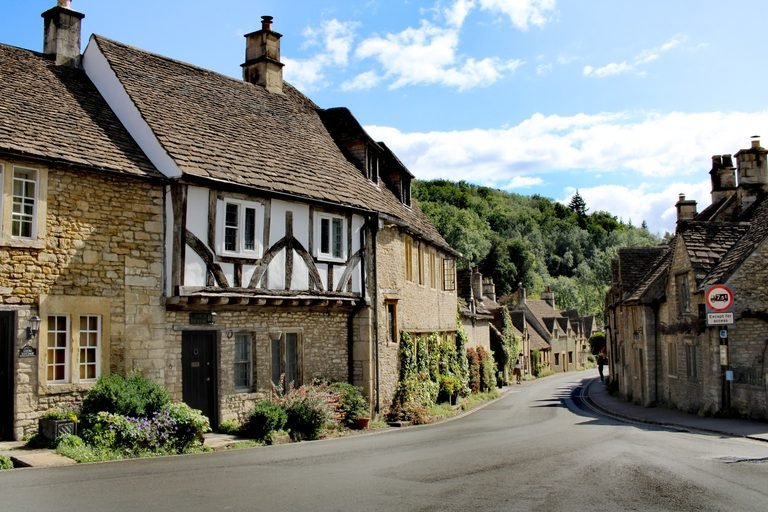
Its medieval cloisters and rooms were used for Hogwarts corridors and classrooms in the first two films, while nearby Lacock village later appeared in Half-Blood Prince.
I love that these locations were not originally built to look mysterious for a camera.
They simply have the proportions, stonework, age, and stillness that fantasy stories borrow so well.
There is a difference between a building designed to look old and a building that has actually watched centuries pass.
Durham Cathedral Is Another Piece of the Same Puzzle
Durham Cathedral also appears in the first two Harry Potter films.
Again, it is the architecture that does so much of the work. Cloisters, stone, arches, and the feeling of enclosed history fit naturally into the world of Hogwarts.
What fascinates me is how many real religious and historic spaces were woven together to create a fictional school that now feels almost like a real place in people’s memories.
And Then Scotland Opens the World Up
If the English cathedrals and castles gave Hogwarts its walls, Scotland gave the films much of their wildness.
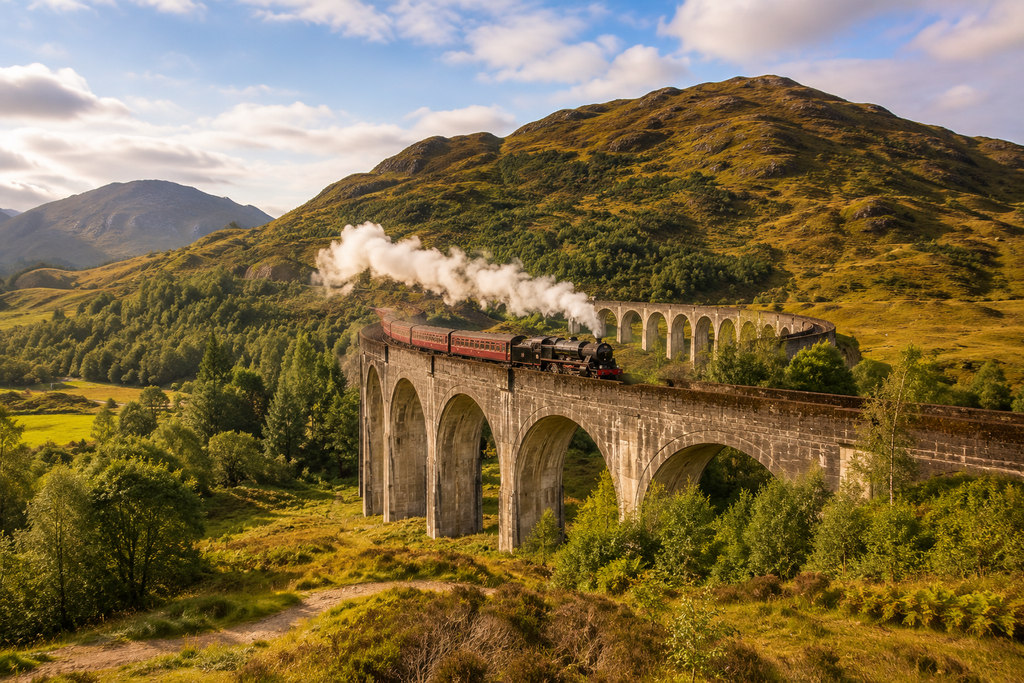
The Glenfinnan Viaduct is now inseparable from the image of the Hogwarts Express crossing the Scottish Highlands. The train, the long curve of the viaduct, the hills, and the vast landscape around it make the journey to Hogwarts feel as important as arriving there.
That part has always meant something extra to me because of my own love for Scotland.
The landscapes already contain everything I want from that world: mountains, dark water, changing weather, distance, history, and the feeling that something could be waiting beyond the next hill.
No castle set could replace that.
The Books Still Come First for Me
As much as I love seeing the real places behind the films, Harry Potter begins somewhere quieter.
It begins with a book.
That matters to me because the books leave space for a version of Hogwarts that belongs partly to the reader. Before a film gives you the exact shape of a corridor or the view from a castle, the words allow you to build it yourself.
The films added extraordinary places to that imagination, but they did not replace it.
For a story like this, I still love the idea of having the whole journey physically on the shelf — a Harry Potter hardcover boxed set that can be taken down one volume at a time when the season feels right.
There is something fitting about returning to Hogwarts through paper rather than a screen.
Seeing a Filming Location Changes the Film a Little
After you have stood somewhere yourself, you begin watching it differently.
A corridor stops being only a corridor in a film. You recognize the ceiling. You remember the stone. You know that if the camera turned a little farther, the fantasy would open back into the real cathedral.
I like that rather than finding it disappointing.
For me, knowing how the illusion was made does not remove the magic.
It adds another layer to it.
Gloucester Cathedral Is More Than a Harry Potter Location
I would never want to reduce Gloucester Cathedral to a film set.
Harry Potter is one reason millions of people recognize the cloisters, but the building has a history and beauty that exist completely outside the movies.
That is part of what made being there special to me.
You can recognize Hogwarts and still remember that the real place is older, larger, quieter, and more extraordinary than the fictional use made of it.
The best filming locations are like that.
You arrive because you recognize them from a story, and then the real place gives you a reason to care about it on its own.
Maybe That Is Why These Places Stay With Us
Harry Potter is full of impossible things, but the world never feels completely untethered from reality.
The trains are real. The stone is real. The mountains are real. The cloisters are real.
Magic was layered over places that already carried history and atmosphere.
For someone like me, who loves old England and Scotland almost as much as the fictional worlds they have inspired, that is a large part of the appeal.
I can watch Hogwarts on screen and recognize the fantasy.
Then I can look at my own photographs from Gloucester Cathedral and remember that, for a little while, I really did walk through part of it.
Sometimes the magic is not that a place looks like a story. It is that the story knew which real place to borrow.