5 Classic Novels for Long November Evenings
November has a different kind of quiet from October.
October still carries color with it. Even when the mornings are cold and the rain lasts all afternoon, there are orange trees along the roads, leaves collecting beneath fences, and those occasional bright days when autumn seems determined to stay a little longer. By November, much of that has begun to disappear. The branches are thinner, the gardens look tired, and darkness reaches the windows before the day feels properly finished.
I used to think of November mostly as the space between autumn and Christmas. It can easily become a month we hurry through, waiting for December lights and holiday traditions to begin. But I have started to appreciate it more for precisely the opposite reason. November asks for very little. There are fewer expectations attached to it, and that makes its long evenings feel strangely generous.
After the quiet beauty of October has begun to fade, I find myself wanting books that suit that slower, more reflective atmosphere rather than fighting against it.
These are not the Gothic books I would choose for Halloween, nor the festive stories I want once Christmas begins drawing closer. November seems to need something in between: novels with old houses, fading landscapes, villages, memory, family, regret, second chances, and lives unfolding slowly enough that you can remain inside them for an entire evening.
These are five classic novels for long November evenings, when the light disappears early and there is nowhere I would rather be than inside a good book.
Affiliate disclosure: This post contains Amazon affiliate links. If you make a purchase through one of these links, I may earn a small commission at no additional cost to you.
1. Persuasion — Jane Austen
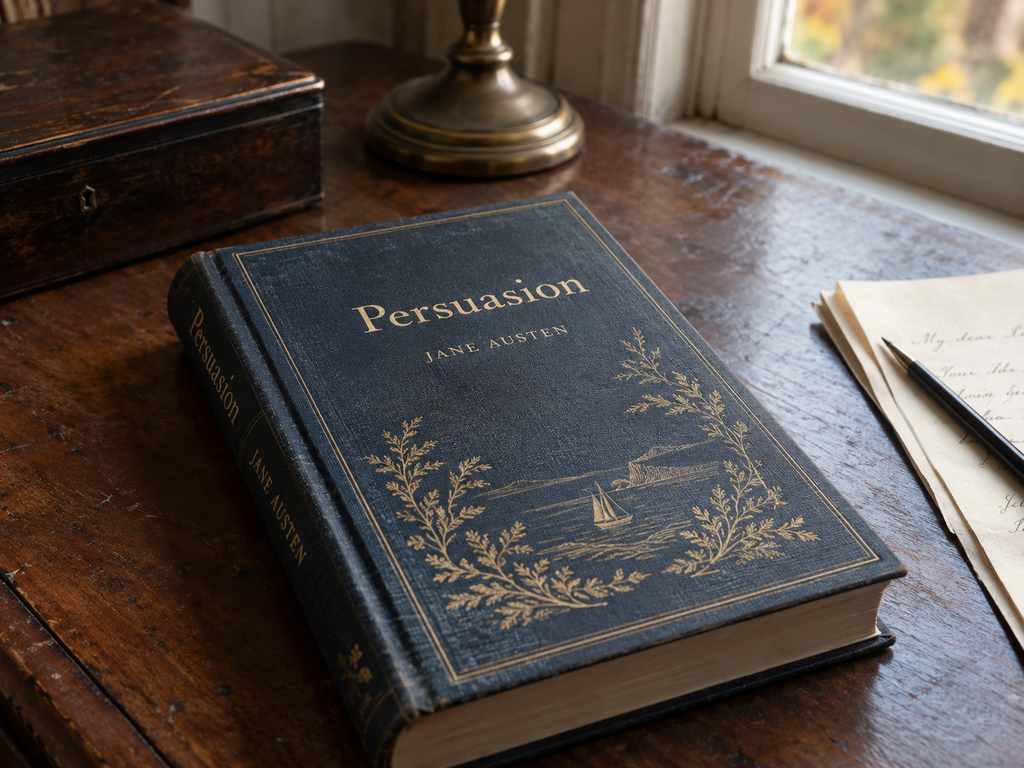
If I had to choose one Jane Austen novel specifically for November, it would be Persuasion.
There is something late-autumn about the entire book, even when the story moves beyond the countryside. Anne Elliot is not standing at the beginning of adulthood waiting to discover what life might become. She is looking back at choices already made, opportunities already lost, and feelings she has spent years believing she must quietly live with.
That gives the novel a very different atmosphere from Austen’s brighter romances.
The countryside around Uppercross feels especially suited to the season. There are walks through fields and lanes, changing weather, hedges losing their freshness, and that unmistakable sense of the year moving toward winter. Nature is not simply scenery in those chapters. It seems to echo Anne’s own position in life: something has passed, something has changed, but the story is not finished.
I think that is part of what makes Persuasion such a comforting November book.
November can look like an ending from the outside. Trees become bare, daylight shortens, gardens disappear into brown stems and wet soil, and many of the small pleasures of early autumn seem to be leaving with them. Yet beneath all of that, life is simply moving into another stage.
Anne’s story understands that.
It is about regret, but it is not trapped by regret. It is about time passing, but it does not suggest that everything valuable belongs to youth. There is a quiet maturity to the novel that feels very different from stories in which life seems to begin only when someone is young enough to be surprised by it.
And then there is Lyme Regis.
The sea, the wind, the steep streets, the coastal walks, the feeling of arriving somewhere where the landscape suddenly opens into something larger — all of it gives the middle of the novel a sense of movement just when Anne’s life also begins moving again.
It would be difficult to imagine a better book for an evening when rain has been hitting the windows since afternoon and the outside world has already gone dark.
Persuasion does not need thunderstorms, ghosts, or enormous drama to create atmosphere.
It simply needs time, weather, memory, and the possibility that something believed to be finished may not be finished after all.
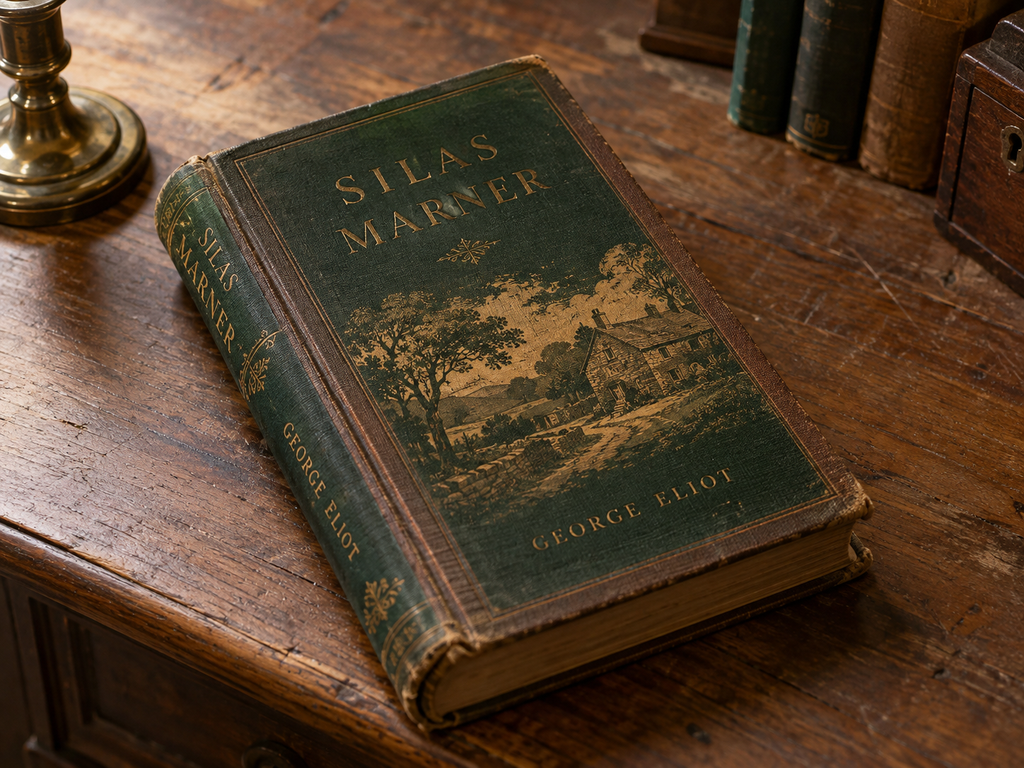
2. Silas Marner — George Eliot
There are few images in classic fiction that feel more suited to a long November evening than a solitary cottage with firelight inside.
That is one reason Silas Marner belongs here.
At the beginning of the novel, Silas lives almost entirely apart from the people around him. He works at his loom, keeps to himself, and gradually allows his life to become smaller and smaller. His world has been shaped by betrayal, suspicion, and isolation, and the gold he earns eventually becomes one of the only things he trusts.
It is not an especially warm beginning.
Yet Silas Marner slowly becomes one of those stories in which the meaning of home changes completely.
Raveloe matters to that transformation. The village has its own rhythms, traditions, gossip, gatherings, families, and habits. People know one another’s histories. Doors open and close. Fires burn in cottages and public rooms. News travels. Lives overlap whether the people involved intend them to or not.
Silas begins outside all of that.
Then Eppie arrives.
What follows is not simply a story about a lonely man learning to love another person. It is also about being drawn back into ordinary human life. A cottage that once represented isolation becomes a home. A man who had turned away from his neighbors gradually becomes part of the community around him.
That movement from coldness toward warmth is exactly why I like the idea of reading it in November.
By this point in the year, warmth begins to mean something again. You notice the lights in houses when walking past them. A kitchen window glowing at five in the afternoon feels different from the same window in July. Coming through the front door after being outside in the cold has its own small sense of relief.
The novel understands the emotional version of that feeling.
There is also something wonderfully unhurried about George Eliot’s world. She allows time for the village itself to exist around the main story. People talk. They misunderstand things. They repeat stories. They judge one another. They help one another. Life continues in all the ordinary ways that make fictional places begin to feel inhabited.
That is precisely the sort of novel I want when the evening is long.
Not something rushing toward the next event, but a book that gives me somewhere to stay.
3. Cranford — Elizabeth Gaskell
Not every November book needs to be melancholy.
In fact, by the middle of the month, I think I need something gentler.
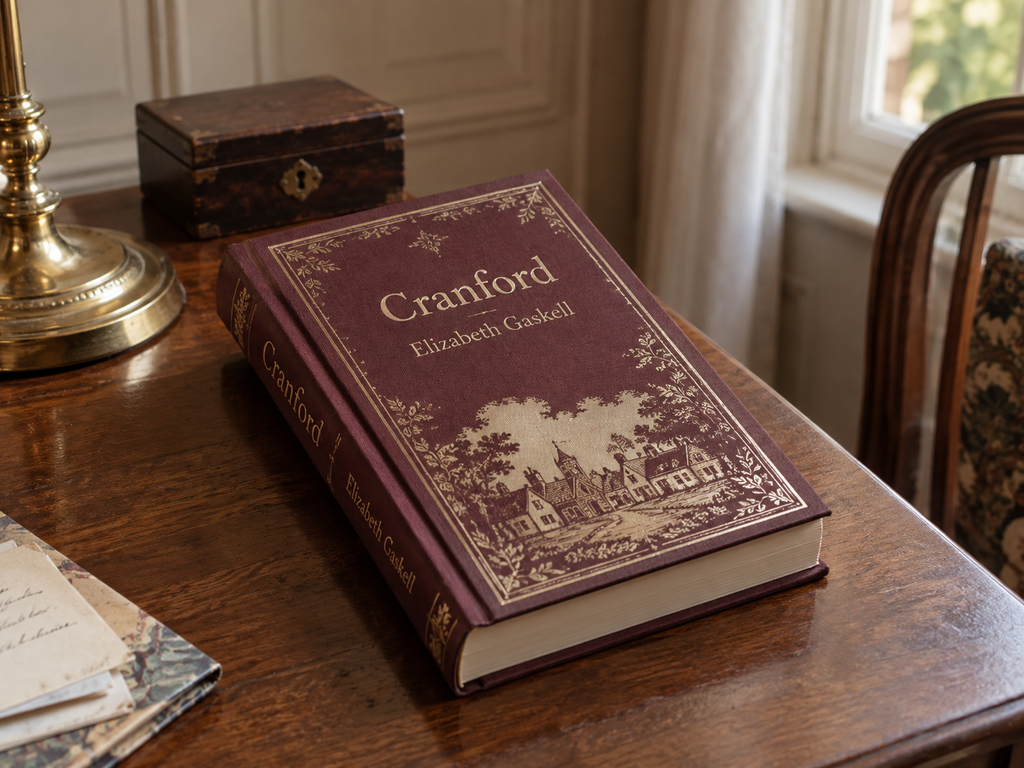
Cranford gives me exactly that kind of world.
The town is filled with small social rules, visits, misunderstandings, modest households, old friendships, quiet pride, financial worries, local news, and people paying close attention to things that would seem completely insignificant anywhere else.
That is part of its charm.
There is no need for an enormous plot when a visit, an unexpected guest, a change in someone’s circumstances, or a piece of neighborhood gossip can temporarily become the most important thing happening in town.
And somehow that makes Cranford feel more real rather than less.
One of the pleasures of older novels is discovering how much life can exist inside apparently small boundaries. Modern stories often seem to assume that importance requires scale: bigger events, greater danger, wider worlds. Cranford quietly proves the opposite.
A sitting room can be enough.
A conversation can be enough.
A familiar street can be enough.
What matters is whether the people inside those places have become real to us.
For November, I particularly like the domesticity of it. As the world outside becomes darker and more stripped back, I find myself drawn toward stories where interior life becomes important — houses, meals, visits, routines, friendships, and the small ways people look after one another without necessarily making a great performance of it.
Cranford is funny too, which matters.
After darker autumn reading, there is something refreshing about a classic that can be affectionate toward its characters without pretending they are perfect. The people of Cranford can be proud, stubborn, ridiculous, generous, anxious, and deeply kind, sometimes all within the same few chapters.
It feels like observing life from a comfortable distance.
Perhaps that is the real appeal of the book on a cold evening.
You are not simply following a story.
You are spending time in a town.
And by the end of a long November night, that can be more satisfying than almost anything else.
4. Howards End — E. M. Forster
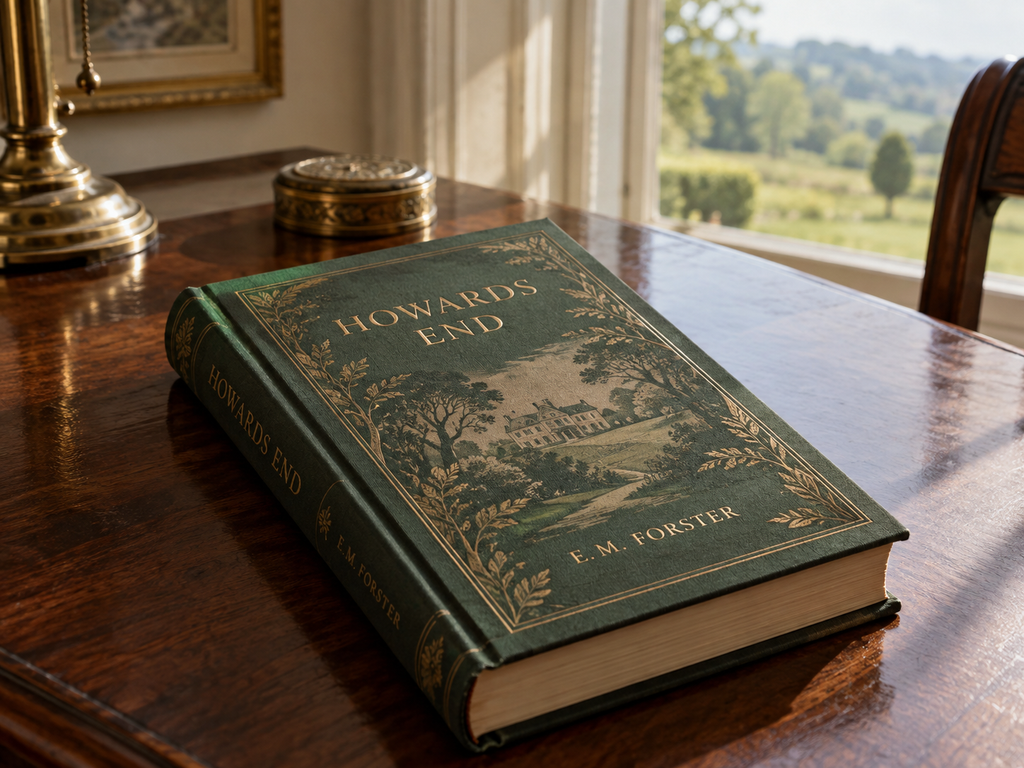
Some novels become inseparable from their houses.
Howards End is one of them.
The house at the center of the novel is more than a building. It carries memory, family history, landscape, inheritance, and a way of living that seems increasingly fragile as the modern world presses closer around it.
That makes the novel especially interesting to read at a time of year when the landscape itself feels exposed.
Late autumn reveals things.
Once leaves disappear from the trees, houses that were half-hidden in summer become visible from the road. Fields seem larger. Old walls and fences stand out more clearly. You begin noticing the actual shape of places that greenery had softened for most of the year.
Howards End has something of that quality.
It looks closely at what lies beneath people’s assumptions about class, culture, money, family, responsibility, and belonging. The Schlegels, the Wilcoxes, and Leonard Bast occupy very different parts of English society, but their lives gradually become entangled in ways none of them can completely control.
At the center of those relationships remains the question of connection.
What do we owe one another?
What makes a place belong to someone?
Can a house carry something that money alone cannot explain?
What survives when families and societies change?
Those are large questions, but the novel rarely feels abstract because so much of its meaning is attached to rooms, gardens, railway journeys, conversations, meals, letters, and actual places.
That physical sense of place is one of the reasons it belongs on The Quiet Hearth.
I have always been drawn to houses that seem to have existed before the current people arrived and will continue existing after they leave. They make individual lives feel temporary in an oddly comforting way. Someone planted the tree. Someone wore down the step. Someone chose the wallpaper. Someone sat near the window long before we ever saw the room.
Then another person comes.
The house remains.
November makes me think about that sort of continuity more than most months do. The year looks as though it is emptying itself, yet so much is simply waiting.
Howards End feels like a novel about what remains when everything around it changes.
5. My Ántonia — Willa Cather
For the last book, I wanted something completely different.
No English village.
No drawing room.
No old coastal town.
Instead, I would go to the Nebraska prairie.
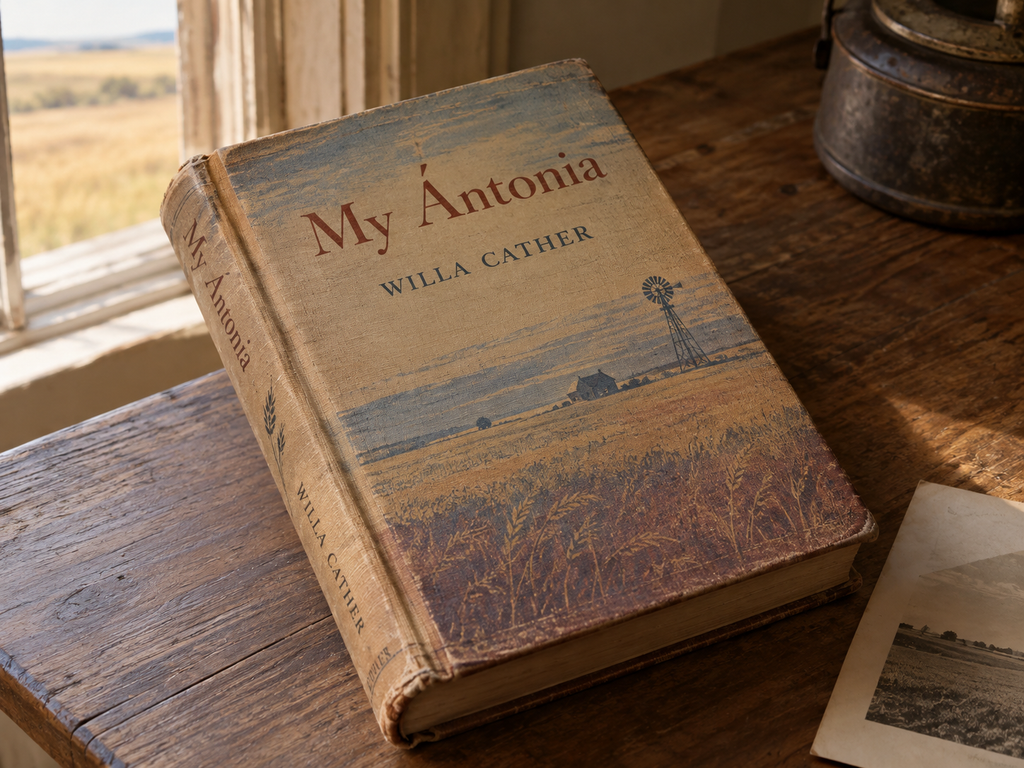
My Ántonia is one of those books where landscape becomes almost impossible to separate from memory. Jim Burden looks back on his childhood and on Ántonia Shimerda, but he also remembers the land itself: enormous skies, fields, weather, distances, seasons, and the feeling of growing up somewhere that seemed both beautiful and unforgiving.
It gives the novel a scale the other books on this list do not have.
The prairie can feel endless.
That openness creates a very different kind of November atmosphere. Rather than retreating into an English cottage or village, My Ántonia makes me imagine cold air moving across enormous fields, harvest finished, grasses fading, bare trees standing against a huge sky, and farmhouses separated by long stretches of land.
There is warmth in the novel, but it is warmth that has to exist against something larger.
Families build homes.
People work.
Meals are prepared.
Children grow up.
Friendships form.
All of it happens while weather and landscape remain indifferent to human plans.
I think that contrast is one reason the book stays with people.
There is also a deep tenderness in the way memory works throughout the story. Jim is not simply describing what happened. He is trying to recover the feeling of a place and time that no longer exists in exactly the same way.
That is something autumn seems especially good at awakening.
Certain smells or kinds of light can suddenly return us to somewhere we have not thought about for years. A cold morning may remind us of a school walk. Woodsmoke can bring back a house. The first frost can make us remember another November entirely.
The season becomes connected to memory almost without our permission.
My Ántonia understands that the places we once lived do not disappear simply because we leave them.
They continue somewhere inside us.
And for a long November evening, I cannot think of many better things for a novel to explore.
Why I Love Classic Novels on Long November Evenings
I don’t think it is accidental that November makes me reach toward classics.
Part of it is the pace.
When darkness comes earlier, the evening itself seems larger. There is less temptation to keep going somewhere or doing something simply because daylight is still available. The house becomes the destination earlier, and suddenly a book that might have seemed too slow in summer begins to feel exactly right.
Classic novels often ask for patience.
They allow descriptions to remain on the page longer. They let conversations wander. They spend time on rooms, landscapes, social habits, weather, family histories, and details that a faster story might remove.
November gives those details somewhere to land.
I already enjoy dark and melancholy classics for cold, gray days, but I don’t always want every autumn book to be Gothic, tragic, or haunted. There comes a point when I want something quieter: stories where the atmosphere comes from ordinary life changing slowly rather than from something waiting in the shadows.
That is why these five books work together for me.
Persuasion gives November its reflection and second chances.
Silas Marner gives it firelight and the possibility of finding home after isolation.
Cranford gives it friendship and small-town life.
Howards End gives it houses, memory, and the question of what really connects people.
My Ántonia opens the doors again and sends us out into enormous American landscapes where memory stretches almost as far as the horizon.
They are very different books.
But each one seems to understand something about the season.
The Month Between Autumn and Winter
November does not have October’s beauty or December’s anticipation.
Perhaps that is exactly why I am beginning to like it.
There is a quiet honesty to the month. The trees are no longer pretending they can hold onto their leaves. The evenings arrive when they arrive. Rain does not need to be romantic. Fields turn brown. Roads stay wet. Gardens rest.
Nothing is trying very hard to impress us.
And because of that, ordinary comforts begin to matter more.
A light left on in another room.
Dinner cooking.
The sound of rain starting after dark.
A dog sleeping nearby.
A book that is long enough that there is no possibility of finishing it tonight.
There is something reassuring about opening a novel knowing that you will still be living inside it tomorrow.
Soon enough, November will begin changing again. The first Christmas lights will appear in windows. Shops will become brighter. Plans will begin filling weekends, and my reading will gradually move toward the quiet weeks before Christmas.
But I don’t want to rush there.
For now, I would rather leave November as it is.
A little gray.
A little bare.
Quiet enough for an old novel.
And long enough to read slowly.