6 Comfort Movies for a Cold Autumn Evening
There comes a point in autumn when going out begins to lose some of its appeal. The evenings arrive earlier, the air outside feels sharper, and by the time the last light disappears behind the trees, home suddenly seems like the best place to be. I love that change. Summer evenings seem to encourage us to keep moving, but autumn gives us permission to close the door, turn on a few lamps, and let the rest of the world carry on without us for a while.
Those are the evenings when I start thinking about comfort movies for a cold autumn evening — familiar stories that make staying home feel like the best possible plan.
There is something about the quiet beauty of October that makes familiar films feel especially inviting. As the evenings grow colder and the light disappears earlier, I find myself wanting stories I already know — places and characters I can return to without needing anything from the evening except a little comfort.
Not necessarily films that are entirely about autumn, and not even films that would normally be described as seasonal. I mean the ones that somehow feel right when the windows are dark before dinner and there are wet leaves scattered across the pavement outside. Films filled with bookshops, old houses, kitchens, family dinners, New England towns, city streets covered in leaves, and people trying to work out where they belong.
There are dozens I could have chosen, but these six are the comfort movies I would happily return to on a cold autumn evening.
1. You’ve Got Mail
There are films that happen to contain autumn, and then there is You’ve Got Mail, which somehow seems to understand exactly why autumn can make ordinary life feel more romantic.
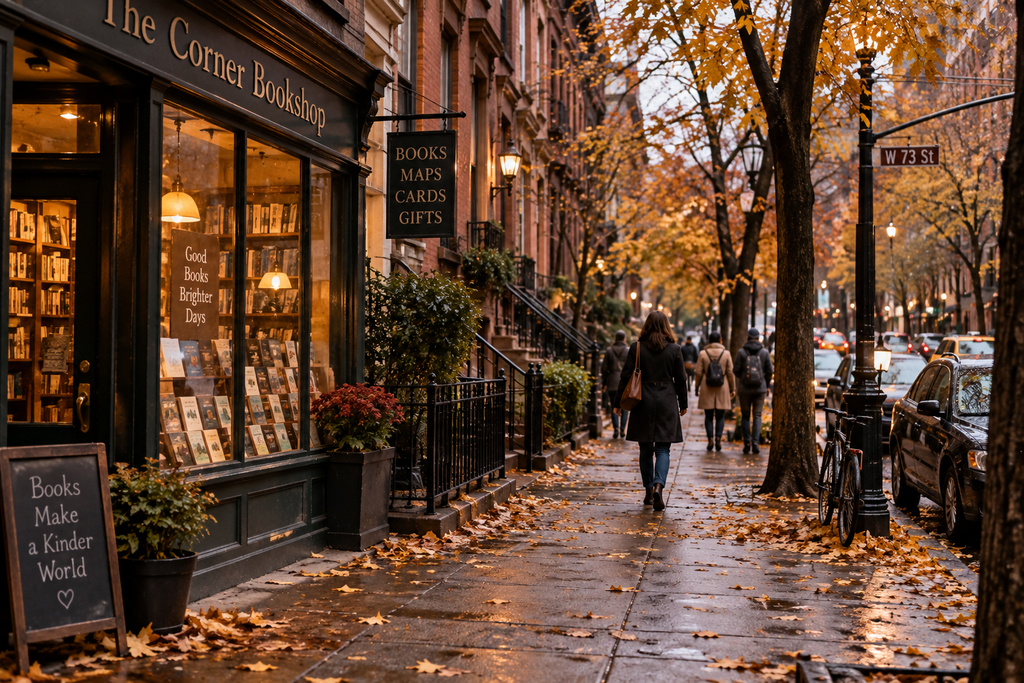
New York is one of the main reasons. The city in this film never feels enormous or anonymous to me. Instead, it feels like a collection of familiar streets, neighborhood shops, cafés, apartments, flower stalls, and corners where people keep unexpectedly meeting one another. When the trees begin changing and the pavements are scattered with leaves, even Manhattan seems to become smaller and more personal.
And then there are the bookshops.
It would be difficult to imagine a more Quiet Hearth setting than a small independent children’s bookshop filled with wooden shelves, familiar stories, and customers who are known by name. The Shop Around the Corner feels like the sort of place where you would walk in simply to escape the cold and then realize an hour has disappeared.
There is something comforting about the pace of the film too. Technology is part of the story, but it belongs to a completely different era of technology — dial-up connections, desktop computers, and emails that felt like letters rather than notifications. Watching it now creates a strange double nostalgia. There is nostalgia for autumn in New York, but also nostalgia for a time when the internet itself still seemed quiet.
The film understands the pleasure of small routines. Walking through the neighborhood. Buying coffee. Going to work. Looking through a shop window. Writing to somebody at the end of the day.
None of these things are extraordinary, which is exactly why the film remains so comforting.
Autumn often makes me notice ordinary things more closely too. The first coat I haven’t worn since spring. The sound of leaves gathering along the pavement. The light in shop windows appearing earlier each afternoon. The slight relief of coming inside somewhere warm.
That is the world You’ve Got Mail seems to live in.
2. Baby Boom
If You’ve Got Mail makes me want to spend autumn in a New York bookshop, Baby Boom makes me want to disappear to an old house in Vermont.
The beginning of the film belongs to a fast, ambitious city life, but the part I always remember most is what comes later: the countryside, the house, the orchard, the winding roads, and the feeling of somebody suddenly discovering that the life they had planned may not be the only life available to them.
There is something almost irresistible about that idea.
Not necessarily abandoning everything and moving to Vermont tomorrow, although autumn has a way of making ideas like that seem surprisingly reasonable, but simply imagining a different rhythm of life. A place where weather matters. Where the seasons visibly change the landscape. Where work still exists, but it no longer feels completely separated from home.
The house in Baby Boom is not presented as effortless perfection. Country living brings problems, frustration, repairs, isolation, and plenty of moments when the romantic version of rural life collides with reality. I think that actually makes the film more comforting rather than less. The countryside is allowed to be beautiful without pretending that beauty solves everything.
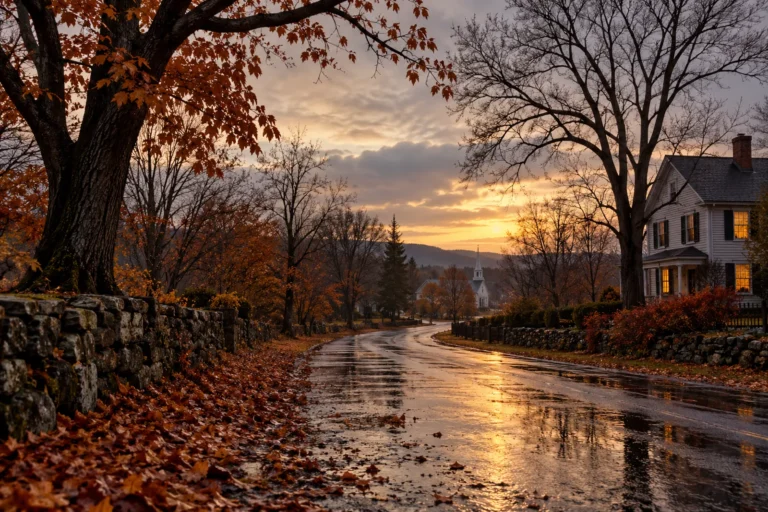
And Vermont is almost impossible to resist once autumn arrives.
Old houses surrounded by trees, small roads disappearing between hills, fields changing color, roadside stands, apples, wooden barns — it is the sort of landscape that makes you understand why people spend entire years waiting for October.
There is also something deeply satisfying about watching a character gradually create a life that feels more like her own. The transformation isn’t really about escaping responsibility. It is about deciding which responsibilities are worth carrying.
That idea feels particularly suited to autumn, a season that always seems to make me reconsider things. Perhaps it is because the year suddenly feels as though it is moving toward an ending. You start noticing what has changed, what hasn’t, and what you might want to do differently before another year begins.
Baby Boom wraps all of that inside a film that is funny, warm, and wonderfully easy to spend an evening with.
3. When Harry Met Sally…
Few films make New York in autumn look quite as inviting as When Harry Met Sally….
There are those famous walks beneath enormous trees as leaves drift around the paths, but it is not only the scenery that makes the film work so well at this time of year. The whole story feels seasonal because it allows time to pass.
People change. Friendships deepen. Relationships begin and end. Years move forward almost without anybody noticing until suddenly everything is different.
Autumn has that same quality.
At the beginning of September, the trees are still green and the evenings can almost feel like summer. Then you notice one yellow branch. A week later there are leaves on the pavement. Suddenly you are closing the curtains at five o’clock and wondering how the season moved so quickly.
When Harry Met Sally… has that sense of movement without hurry.
It is also wonderfully conversational. So much of the film consists simply of people walking, eating, talking, arguing, laughing, and trying to understand one another. It doesn’t need constant drama because the conversations themselves are the story.
That makes it particularly good for the sort of autumn evening when you don’t want something exhausting. There is enough humor to make it light, enough emotion to make the characters matter, and enough familiarity that returning to it can feel almost like meeting old friends.
I also love the interiors. Restaurants, apartments, cafés, bookstores — places where people gather while the city carries on outside.
There is a particular comfort in films where the world beyond the window feels cold but everybody inside seems protected for a little while.
Perhaps that is one reason autumn and old romantic comedies fit together so naturally.
Both make ordinary moments seem more important.
4. Dan in Real Life
Some comfort films are comforting because very little goes wrong.
Dan in Real Life is comforting for almost the opposite reason.
People misunderstand one another. Conversations become awkward. Feelings arrive at inconvenient times. Family members interfere. Everybody is living in everybody else’s space, and privacy seems almost impossible.
And somehow the whole thing still feels warm.
Much of that comes from the family house and the Rhode Island setting. There is something about a large house filled with relatives during cold weather that immediately creates atmosphere. People drift into the kitchen. Somebody is always preparing food. Others are playing games, talking, exercising, arguing, or simply appearing at exactly the wrong moment.
It feels messy in the way real family gatherings often are.
I think that is what I enjoy about it.
A perfectly styled autumn house might look lovely in a photograph, but actual autumn weekends tend to involve shoes near the door, wet coats, somebody looking for something they have misplaced, food being prepared, and people moving between rooms.
That lived-in feeling runs through the film.
Outside, the landscape feels quieter. Coastal roads, trees changing color, open spaces, and that slightly gray autumn light make the world seem as though it is slowing down while the house remains full of activity.
There is also something very comforting about the idea of several generations temporarily gathering under one roof. It is not peaceful every minute, but perhaps comfort does not always mean silence. Sometimes comfort is hearing people elsewhere in the house.
A door opening.
Voices from the kitchen.
Someone laughing in another room.
A familiar argument beginning for the hundredth time.
When the weather turns cold, those sounds can make a house feel especially alive.
Dan in Real Life captures that beautifully without making family life unrealistically perfect.
5. Practical Magic
I tend to associate Practical Magic with Halloween, but I don’t think it belongs only to October 31.
For me, it is an autumn film.
The old house alone is enough to make it one.
It is enormous, weathered, slightly strange, and completely unforgettable, surrounded by gardens and a landscape that seems to belong somewhere between reality and a storybook. Inside are wooden floors, old furniture, large windows, kitchens where things are actually made, and rooms that feel as though generations have passed through them.
The house feels alive.
But what keeps the film comforting despite its darker moments is the relationship between the women who live there. Sisters, aunts, daughters — different generations sharing a home, arguing with one another, protecting one another, and repeatedly finding their way back together.
That sense of belonging matters more than the magic.
There is also something wonderfully autumnal about the film’s mixture of warmth and darkness. Autumn is beautiful partly because those two things exist together. Trees glow orange while the days become shorter. Houses feel warmer because the evenings outside are colder. A garden can still be full of life even as everything begins moving toward winter.
Practical Magic understands that contrast.
It can be funny and unsettling within the same few minutes. Cozy and strange. Familiar and slightly mysterious.
Those are qualities I seem to want more as autumn deepens.
By November, I don’t necessarily want the bright cheerfulness of summer entertainment. I want stories with a little shadow around the edges, provided there is still somewhere warm to return to.
And in Practical Magic, there always seems to be a light glowing somewhere inside that old house.

6. Little Women
There are few films I associate with comfort as strongly as the 1994 version of Little Women.
It is not strictly an autumn film. The story moves through different seasons, and winter is particularly important to its atmosphere. But perhaps that is exactly why I like watching it as autumn begins to disappear.
It feels like a bridge between seasons.
The March house is the heart of it for me. It isn’t grand or perfect. It feels worn, busy, loved, and continuously occupied. Someone is reading, sewing, writing, practicing music, coming through the door, warming themselves by the fire, or sitting close to someone else simply because that is where everybody happens to be.
The rooms seem to carry memories.
That is one of the things I love most about old houses in films. They rarely feel like backgrounds. They become part of the family.
And Little Women is ultimately a story about home changing while somehow remaining home.
Children grow older. People leave. New relationships appear. Some people return and others cannot. Rooms that once held one version of a family eventually hold another.
There is sadness in that, but also enormous comfort.
Autumn carries a similar feeling for me. Every year it returns looking familiar, but the person watching it is never exactly the same. The same trees change color. The same evenings become dark. The same cold arrives.
Yet another year has passed.
Perhaps that is why certain films become comfort films in the first place. It is not simply because they make us happy. It is because they remain waiting while our own lives continue changing around them.
You can watch a film at eighteen and notice one thing. Watch it again at thirty and notice another. Years later, a character you barely considered before may suddenly become the person you understand best.
The film hasn’t changed.
You have.
There is something reassuring about returning anyway.
The Comfort Movies I Want When the Evening Turns Cold
I sometimes think we underestimate the pleasure of watching something familiar.
There is constant pressure to find something new — another series, another film, another recommendation, another release everybody is talking about. But on a cold autumn evening, I rarely want the feeling that I need to keep up with anything.
I want a film I can settle into.
Something where I already know the streets.
I know the house.
I know which conversation is coming.
I know which scene will make me laugh.
I even know how it ends.
That familiarity does not make the experience less valuable. Sometimes it is exactly what makes it valuable.
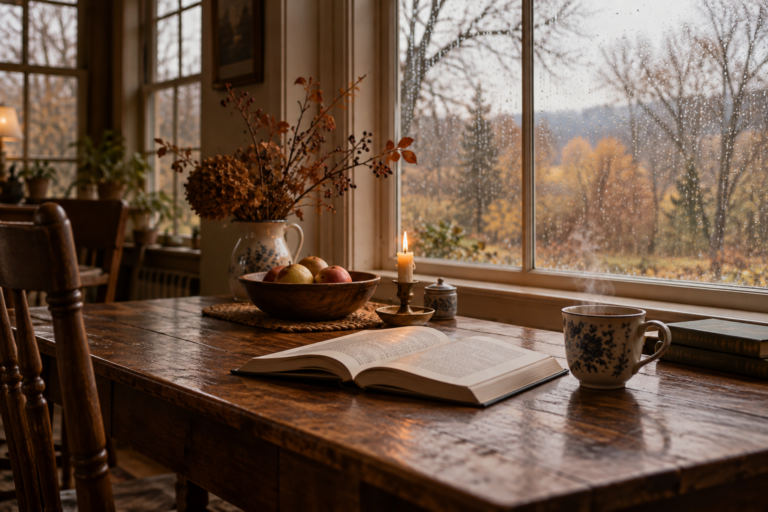
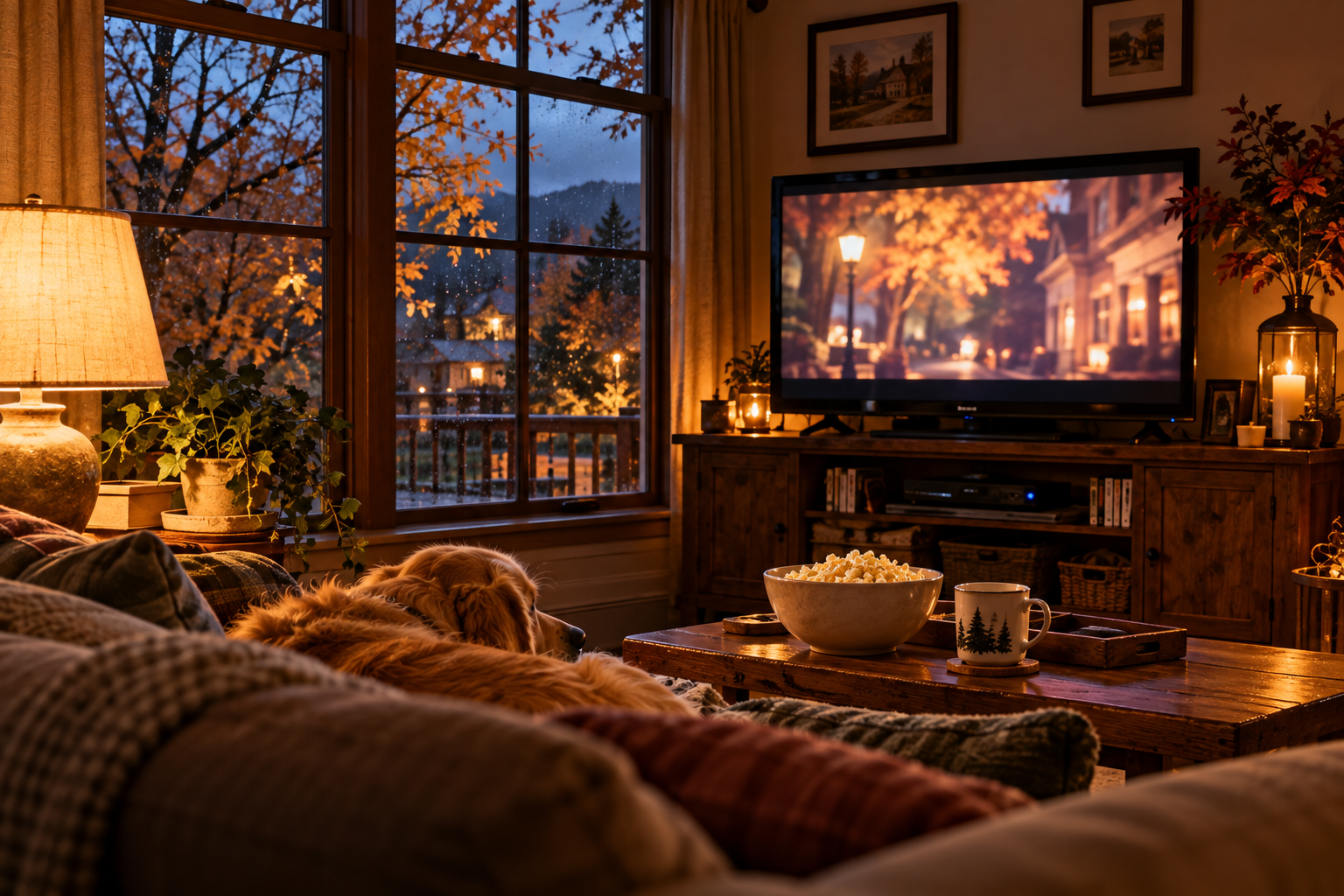
A comfort movie allows part of your attention to wander. You can look out of the window when rain begins hitting the glass, leave the room for a minute, return without worrying that you have missed some complicated twist, and gradually realize that you are more relaxed than you were when the film began.
There is also something about a slow rainy day at home that makes an evening like this feel especially comforting.
Not an elaborate one.
Just the moment when the outside world is finished for the day. The curtains are closed. The kitchen has been tidied enough that it can wait until morning. The lamps are on instead of the main lights, and somewhere beyond the windows the temperature is falling.
Then comes the surprisingly difficult question:
What should we watch?
On some evenings, I want something new, but when I’m choosing comfort movies for a cold autumn evening, familiarity usually wins
But autumn seems to make me nostalgic.
For films I already know.
For houses I have never lived in.
For towns I have never visited.
For versions of New York, Vermont, Rhode Island, and New England that somehow feel familiar despite existing mostly on a screen.
Perhaps that is what comfort films do best.
They create places we can return to without traveling anywhere at all.
And when the evening outside is cold enough, that can be more than enough.