Inside Britain’s Oldest Pubs That Are Still Serving Today
There are places where age feels decorative, and then there are places where it seems to have settled into the building itself.
A genuinely old British pub belongs to the second category.
The floors are rarely completely level. Beams pass overhead at heights that would never make sense in a modern building. Stone walls become thicker around doorways, fireplaces seem large enough to have shaped the room around themselves, and small windows make the light outside feel farther away than it actually is. Nothing needs to be deliberately styled as historic because the building has had centuries to acquire the atmosphere on its own.
That is the kind of pub I love.
Not a modern bar decorated to suggest an older Britain, but the real thing: buildings that have survived changing roads, changing monarchs, fires, wars, new owners, new drinking habits, and generations of people coming through the same doors.
When I started looking properly into Britain’s oldest pubs, however, I discovered something almost as interesting as the buildings themselves. The history is often much less tidy than the signs outside suggest.
A surprising number of pubs claim dates such as 793, 947, or 1189. Some of those dates have become so familiar that they are repeated almost everywhere, yet the surviving evidence can tell a different story. Historic England notes that tales surrounding ancient inns often combine real historic fabric with later legend, and in some cases the supposed founding date cannot be supported at all.
I do not think that makes these places less interesting.
If anything, it makes them more interesting.
A pub does not need an impossible medieval origin story to feel extraordinary when the building itself has already survived three, four, five, or even six hundred years.
So this is not an attempt to declare one unquestionable winner. Instead, these are seven pubs and inns with remarkable histories that can still be visited for a drink today, along with the parts of their stories that the historic record actually supports.
1. The George Inn, Norton St Philip — Somerset
If I were choosing one pub to represent the whole idea of this article, I think I would begin here.
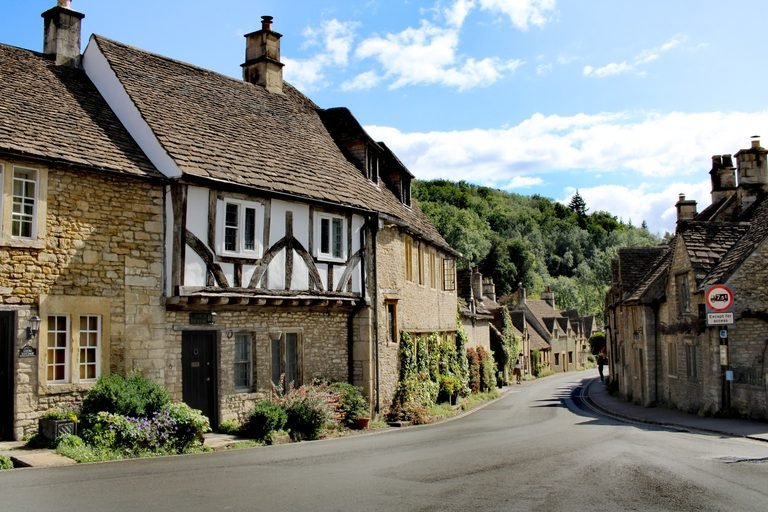
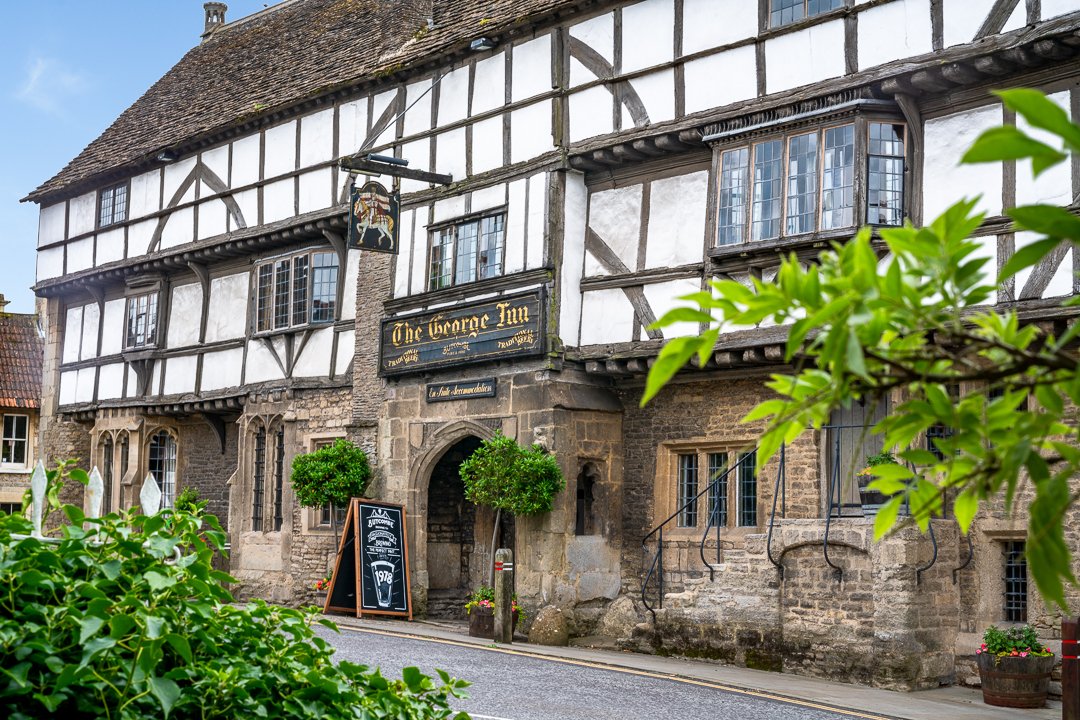
The George rises above the village street at Norton St Philip with the unmistakable proportions of a building that belongs to another age. The lower level is stone, while the long upper floor is timber framed, creating the kind of façade that almost looks too historical to still be functioning as an ordinary pub.
Yet it is.
Historic England describes the building as Grade I listed, and its own research into historic pubs says The George is likely England’s earliest surviving purpose-built inn. The inn is associated with the 14th century, while Historic England’s archive notes that it was originally connected with the wool trade and was used as accommodation for merchants attending local fairs. It is traditionally said to have received a licence to sell alcohol in 1397.
CAMRA describes it as one of the country’s oldest inns and says it has been continuously open since the medieval period. The old structure still contains massive beams, thick stone walls, large fireplaces, a cobbled courtyard, and a gallery leading toward the bedrooms.
And this is the detail that makes it so appealing to me: it is not preserved as a museum.
You can still walk through the door and sit down.
The same building that once accommodated medieval merchants is now serving food, drinks, and guests in the twenty-first century.
There is something wonderfully ordinary about that continuity.
History is not behind glass here. Someone is probably ordering dinner beneath it.
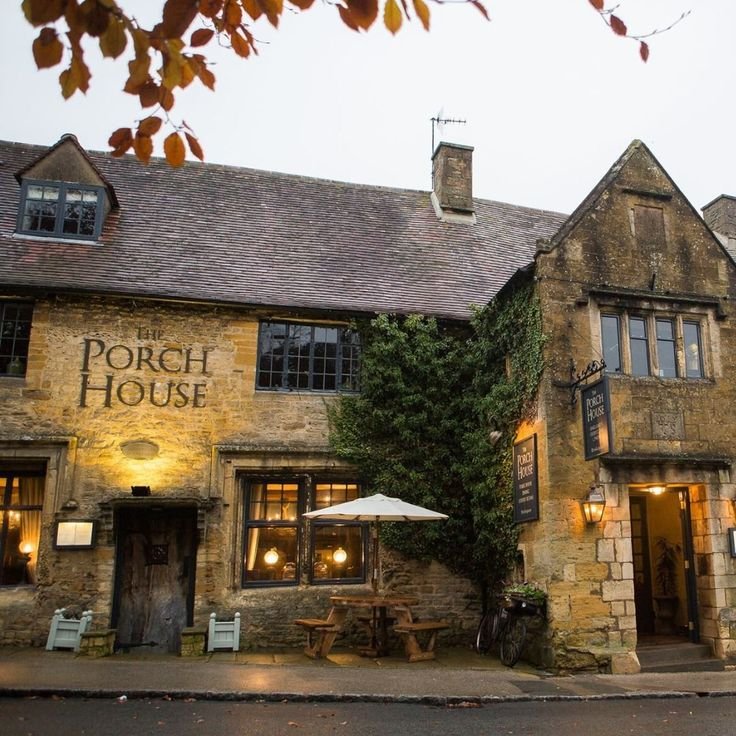
2. The Porch House — Stow-on-the-Wold, Gloucestershire
The Porch House is exactly the sort of place where history and legend become difficult to separate.
It advertises itself as England’s oldest inn, traditionally dating its origins to 947 AD, and CAMRA repeats that claim, saying the building is believed to have existed as a hostelry from that period and that Guinness recognized it as England’s oldest inn.
There is also a local tradition that the site began as a Saxon hospice for travelers and pilgrims. The Stow and District Civic Society notes that timbers associated with the building have reportedly been dated to around the year 1000.
But this is where proper research becomes important.
Historic England’s statutory listing is much more cautious. It describes the surviving building as possibly 16th century, substantially remodeled in the early 17th century, and characterizes it as a good Jacobean town house.
That does not mean the earlier story must be entirely false. Sites can have much older histories than the structures standing on them.
It simply means we should not confidently say that the building we see today has been operating unchanged since 947.
And I actually prefer knowing that distinction.
The Porch House is still tremendously old, full of irregular proportions, low beams, worn stone, and the sort of interior where a fireplace seems to belong to the architecture rather than having been added for atmosphere. It remains open as a pub, restaurant, and inn today.
The legend may draw people through the door.
The building itself is enough reason to stay.
3. The Sheep Heid Inn — Duddingston, Edinburgh
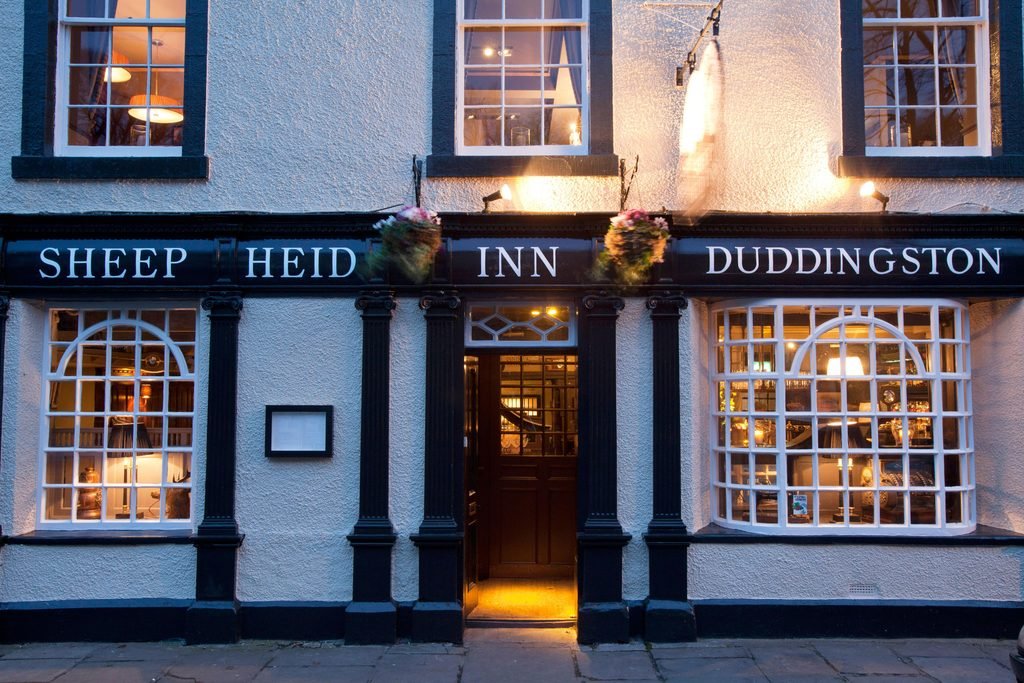
A short distance from the center of Edinburgh, in the village of Duddingston beneath Arthur’s Seat, stands a pub whose historical claim is much better documented than many of the more famous English contenders.
Historic Environment Scotland records that the history of the Sheep Heid Inn goes back to 1360, when the first inn on the site is recorded, adding that it may therefore be among the oldest licensed premises in the country.
The surviving building has changed considerably over the centuries, and parts of the present structure are later, but the continuity of an inn on the site is what makes the place remarkable.
It also has the kind of history that makes an old pub feel less like a building and more like a witness.
Sir Walter Scott and Robert Louis Stevenson are recorded among its later literary visitors, while clubs and local organizations gathered there across the nineteenth century.
Today it still operates as a pub in Duddingston. Edinburgh’s official tourism organization describes it as the city’s oldest pub and notes the tradition of drinking on the site stretching back to the fourteenth century.
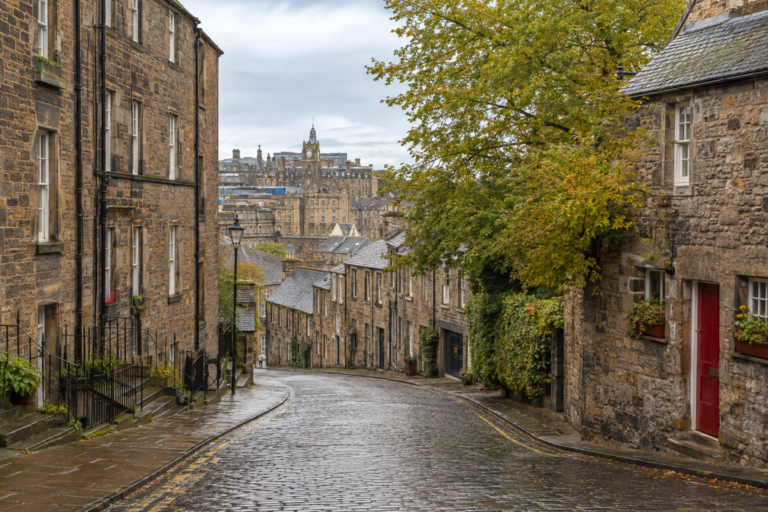
This is exactly the sort of place I would want to find after wandering Edinburgh on a gray afternoon.
The white façade and dark trim are fairly restrained from outside. It does not need to announce itself as ancient with exaggerated beams or a theatrical medieval sign. The history is simply there.
And perhaps that is one reason it appeals to me so much.
Some old places seem to perform their age.
Others merely carry it.
4. Bell Inn — Nottingham
Nottingham has an unusual problem when it comes to old pubs.
It has several of them competing for the same title.
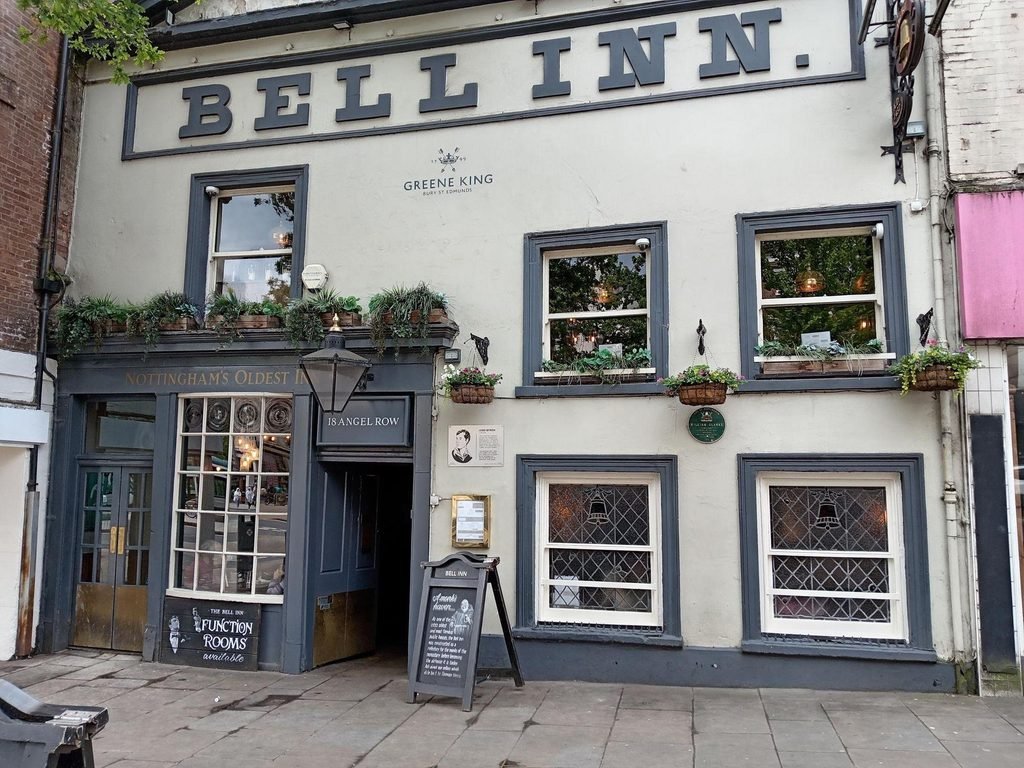
The Bell Inn is therefore particularly interesting because the building itself provides something tangible.
Historic England dates it to the late fifteenth century, although the façade was altered around 1820. The surviving structure still contains substantial medieval timber framing, old ceiling beams, and rock-cut cellars beneath the building. Historic England’s listing is cautious about the drinking history, stating that the building has been used as a public house since the mid-eighteenth century.
The pub itself and Nottingham tourism sources give an earlier tradition, associating the site with an establishment date around 1437 and describing centuries of brewing and drinking history beneath the building.
Again, the exact date depends on what we mean by “pub.”
Is it the age of the structure?
The first evidence of an alehouse?
The first licence?
The first inn on the site?
Those questions are why declaring one absolute oldest pub becomes so difficult.
But from a Quiet Hearth point of view, I am not sure the argument matters very much.
The Bell is genuinely old.
Its timber frame has survived the transformation of Nottingham around it, and drinks are still being served beneath those beams today. The pub’s current operator lists it as open daily.
That is remarkable enough.
5. Ye Olde Fighting Cocks — St Albans
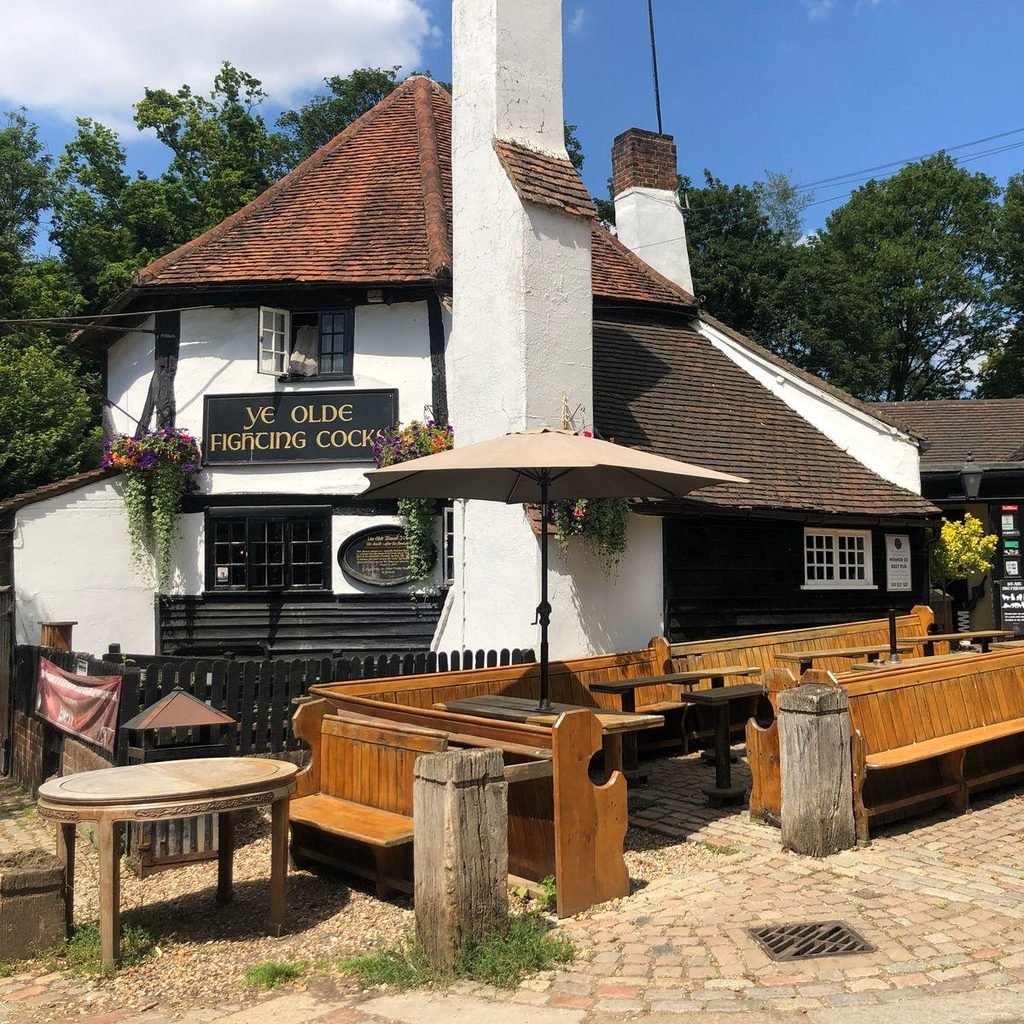
Few British pubs have a more famous “oldest pub” story than Ye Olde Fighting Cocks.
For years it was associated with the extraordinary date 793 AD.
Unfortunately, that date does not stand up well to historical scrutiny.
Historic England’s investigation into Britain’s oldest-pub claims notes that the year 793 appears to have originated on an early twentieth-century postcard rather than in medieval documentation. The building itself appears to have begun as a dovecote associated with the monastery, with its timber frame later reassembled on the current site around 1600.
The St Albans & Hertfordshire Architectural and Archaeological Society reaches a similar conclusion. Its research found evidence that the building was operating as an alehouse by 1756, then under the name Three Pigeons, but found no basis for treating the eighth-century date as proven pub history.
And yet I still want to visit it.
This is exactly why I do not think debunking the oldest-pub claim damages the place.
Look at what remains after the legend is stripped away.
An unusual old timber structure beside the river.
Low ceilings.
Small rooms.
A building that has stood in its present location for roughly four centuries.
A documented eighteenth-century alehouse that is still serving today. Its current site lists regular opening hours and food service.
That is already a wonderful history.
It does not need another eight hundred imaginary years added to it.
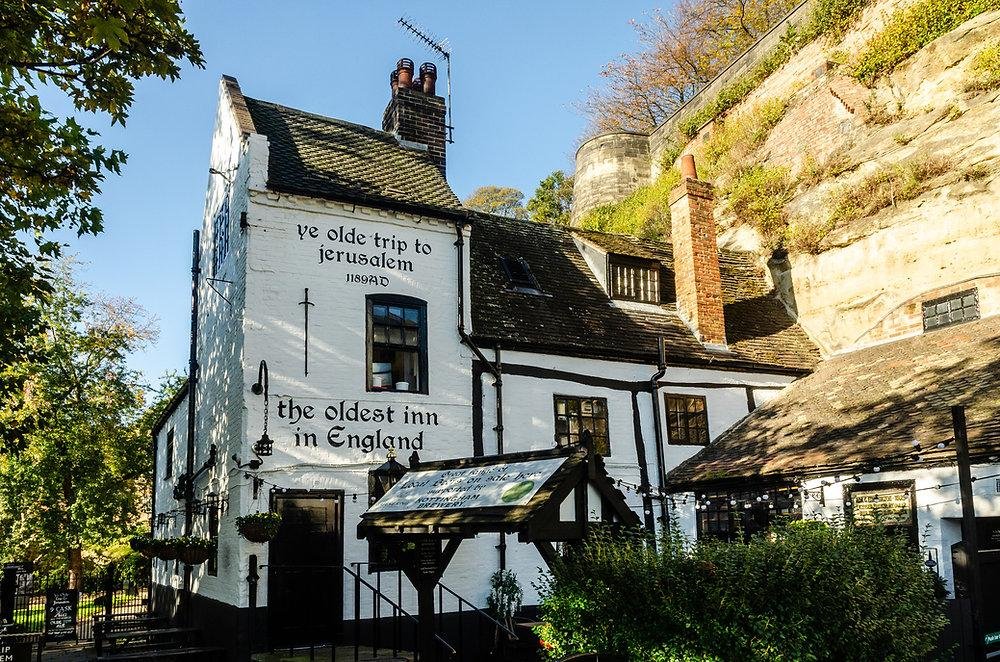
6. Ye Olde Trip To Jerusalem — Nottingham
This may be the most famous old-pub claim of all.
Painted directly onto the building is the date 1189 AD, the year Richard the Lionheart became king and the Third Crusade began.
The traditional story says crusaders stopped here before traveling to the Holy Land.
It is a perfect pub legend.
It is also not supported by the surviving documentary evidence.
Historic England’s detailed listing says the pub’s timber-framed core dates from around the late seventeenth century, with later additions. The building incorporates an extraordinary network of rock-cut caves and cellars beneath Nottingham Castle, some of which may indeed have medieval origins, but the first documented record of the premises operating as a public house is 1760, when it was known as The Pilgrim.
Even the current operator acknowledges that concrete evidence for the 1189 foundation story has not survived and notes that the timber structure dates from the seventeenth century.
Yet this is another case where the real history is, to me, more interesting than the legend.
A pub partly built into caves beneath castle rock is strange enough without crusaders.
The rooms move between ordinary timber-framed interiors and spaces cut directly into sandstone. Historic England describes fireplaces, paneling, stone floors, cave rooms and cellars extending at different levels into the rock.
And it is still very much a working pub today.
If I arrived in Nottingham on a cold rainy evening, I suspect I would care very little whether Richard the Lionheart had actually been there.
I would be too interested in the fact that I was drinking inside a cave beneath a castle.
7. George — Southwark, London
The George Inn in Southwark tells a different kind of story.
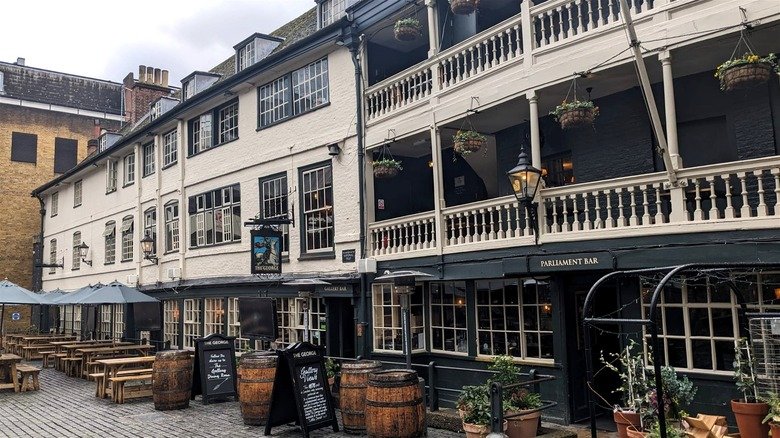
It does not need to claim to be Britain’s oldest pub because it possesses something more specific: it is London’s last surviving galleried coaching inn.
An inn stood on the site by at least 1542, and perhaps earlier, but the building seen today dates from 1677, after the previous George was destroyed in the Southwark fire of 1676.
The surviving section still carries the galleries that once overlooked the inn yard. These open galleries were once characteristic of London’s coaching inns, but almost all of their counterparts disappeared through redevelopment, fire, and wartime destruction.
The George survived.
Charles Dickens knew the site, and the inn appears in Little Dorrit. The National Trust owns the building today, while the pub itself remains in operation under a commercial tenant.
This might be the pub on the list where continuity feels most visible.
You can stand in the courtyard and immediately understand what the building once did. Travelers arrived here. Coaches entered the yard. Rooms opened onto the wooden galleries above. People ate, drank, waited, argued, slept, and continued their journeys.
London has changed almost beyond recognition around it.
The inn has somehow remained.
That kind of survival means more to me than any claim painted onto a wall.
So Which One Is Actually Britain’s Oldest Pub?
After researching these places, I think the most accurate answer is that the question is probably too simple.
There are several different things people mean when they ask for the oldest pub.
The oldest building that now contains a pub.
The oldest documented drinking establishment.
The oldest continuously operating inn.
The oldest surviving purpose-built inn.
The oldest pub on a site where drinking may have occurred centuries earlier.
Those are not necessarily the same place.
Historic England itself avoids declaring a neat winner and points out how easily folklore becomes attached to old inns. It does, however, describe the George Inn at Norton St Philip as likely to be England’s earliest surviving purpose-built inn.
The Sheep Heid has a documented inn on its Edinburgh site from 1360.
The Porch House has an extraordinary early tradition, but the surviving structure is much later than the famous 947 date.
And pubs such as Ye Olde Trip to Jerusalem and Ye Olde Fighting Cocks show just how powerful a good origin story can become, even when archival research points toward a later history.
I actually like this messiness.
It feels appropriate.
Pubs have always been places where stories are repeated.
Some stories become history.
Some become legend.
And after enough generations, separating the two can become part of the pleasure.
What I Really Want From an Old Pub
I do not think I need to sit in the mathematically oldest pub in Britain.
What I want is something harder to measure.
I want the low doorway.
The uneven floor.
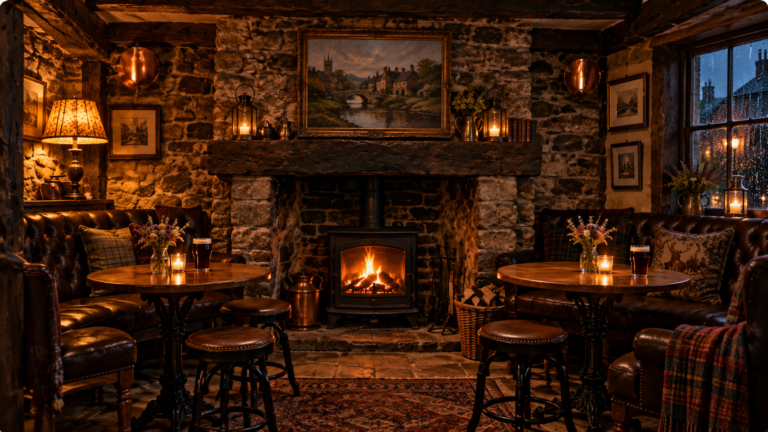
The old fireplace.
A small window looking onto rain.
Timbers darkened by centuries.
A room divided into corners and snugs instead of one enormous open space.
I want to know that the building was already old before anyone alive today was born, and that people have been gathering there for reasons remarkably similar to ours.
Warmth.
Food.
Conversation.
A place to sit after traveling.
A place to wait while the weather passes.
Perhaps that is why these pubs feel so naturally connected to walking in the rain when the streets are quiet. A historic pub becomes much more inviting when you have approached it through wet streets and cold air.
I can imagine closing an umbrella beside the door, stepping across an old threshold, and immediately understanding why pubs became such enduring places in British life.
The weather is outside.
The fire is inside.
Someone else arrived here cold hundreds of years ago and probably felt exactly the same relief.
The Buildings Matter Because They Are Still Being Used
Perhaps the most important thing about all seven places is not simply that they survived.
It is that they are still pubs.
Old buildings can become beautiful museums, private houses, offices, hotels, or monuments, and there is nothing wrong with any of those futures.
But something different happens when the original social purpose remains.
People are still meeting friends at the George.
Someone is still walking into the Sheep Heid for a drink.
Tables are still occupied beneath old beams in Stow-on-the-Wold.
The doors still open in St Albans and Nottingham.
The George’s London courtyard still fills with voices.
The use keeps the history alive in a way that preservation alone cannot.
A pub is not really defined by timber and stone.
It is defined by people coming through the door.
And perhaps that is why Britain’s oldest pubs fascinate me so much.
They are not simply places where history happened.
In a small, ordinary way, it is still happening.