7 Historic British Pubs I’d Love to Spend a Rainy Evening In
There are historic British pubs I would visit because of their history, pubs I would visit because of where they are, and pubs I would visit simply because I like the look of them. But every now and then I find one that seems to bring all three things together so naturally that I begin imagining the entire evening before I have even been there.
For me, the perfect historic British pub becomes even more appealing when the weather outside is slightly miserable.
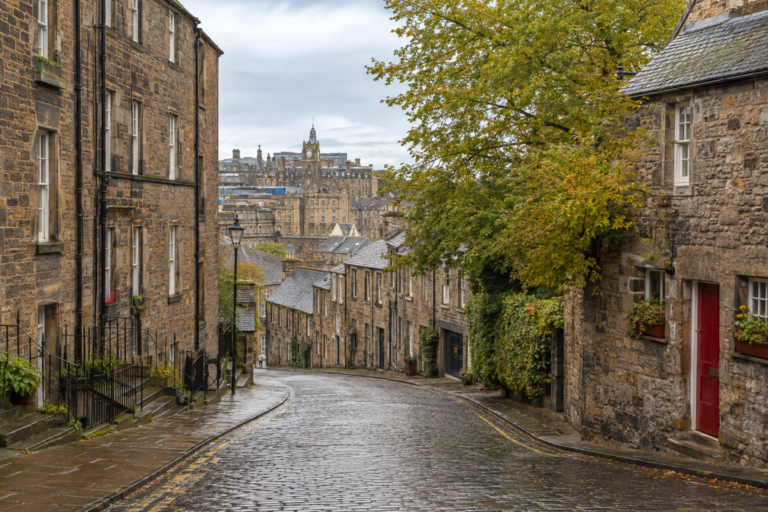
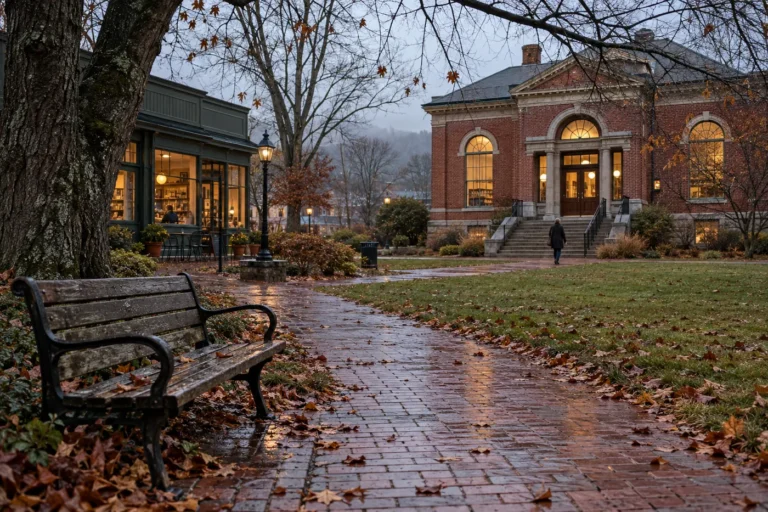
The sky should be gray by mid-afternoon. Rain should have been falling long enough for the road to shine beneath the lamps, but not so heavily that getting there feels like an expedition. The windows should glow against the weather, and the moment the door opens there should be that unmistakable contrast between cold damp air outside and the darker, warmer world within.
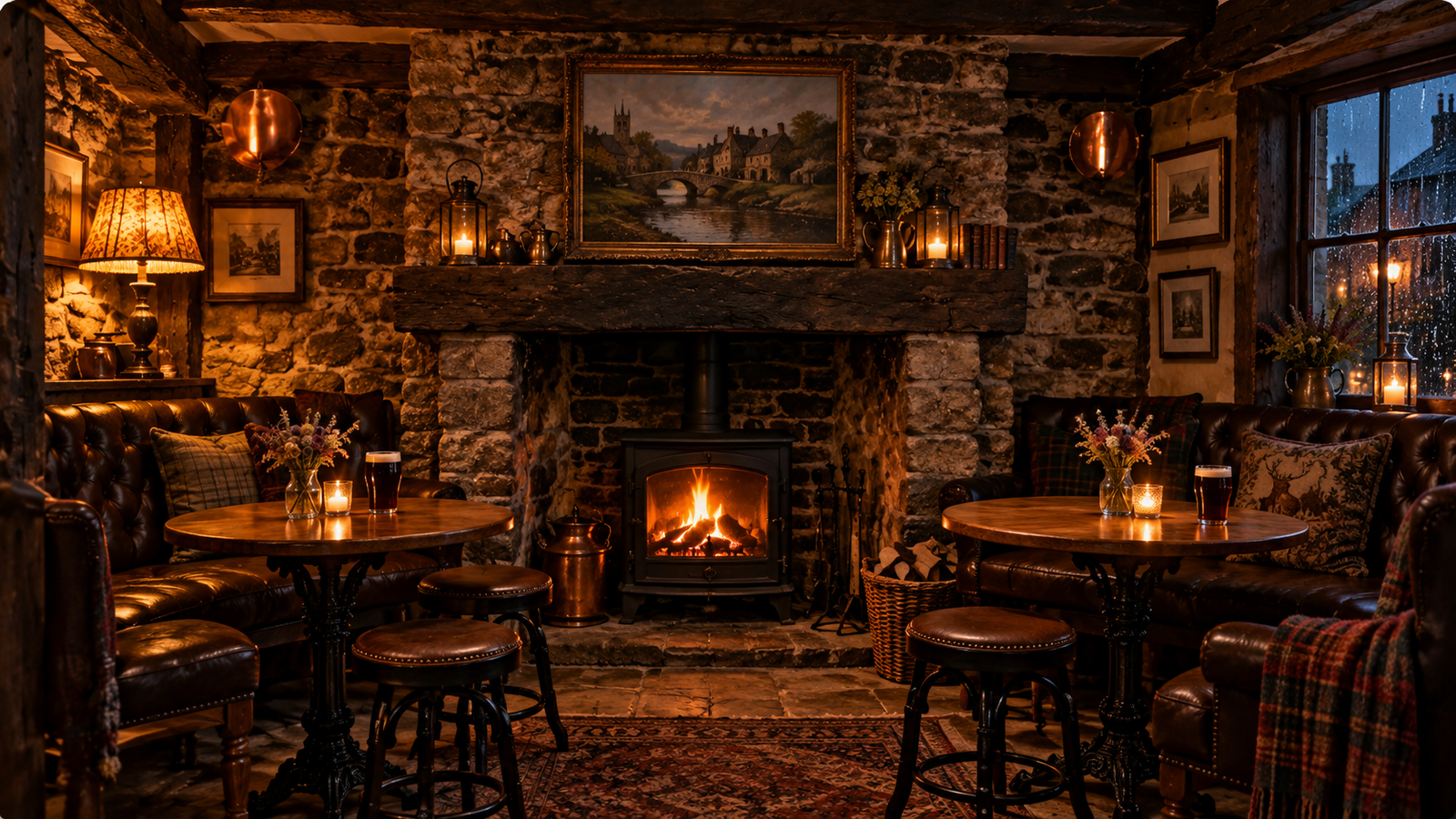
I want low ceilings rather than enormous rooms, old wood rather than something made to look old, and a fireplace that feels as though it has always belonged exactly where it is. I want corners, uneven floors, small windows, heavy doors, and the feeling that generations of people have come inside for essentially the same reason: because the weather was outside and warmth, food, company, and a drink were inside.
After researching Britain’s oldest pubs that are still serving today, I realized that age alone is not really what attracts me. Some of the places with the most dramatic “oldest pub” claims are historically complicated, while slightly younger inns can possess exactly the atmosphere I am looking for. What matters here is not winning a competition.
It is imagining where I would most like to spend a rainy evening.
These seven are the ones I keep coming back to.
1. The Falkland Arms — Great Tew, Oxfordshire
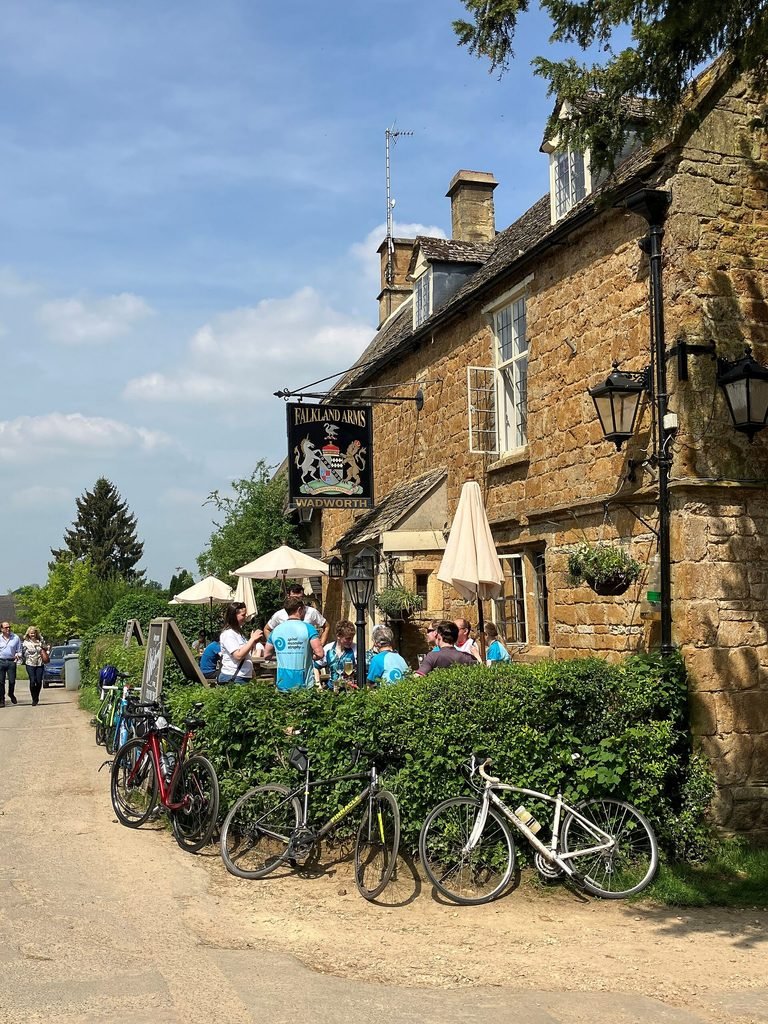
The Falkland Arms may be the closest thing on this list to the pub I picture when I think about a quiet rainy evening in the English countryside.
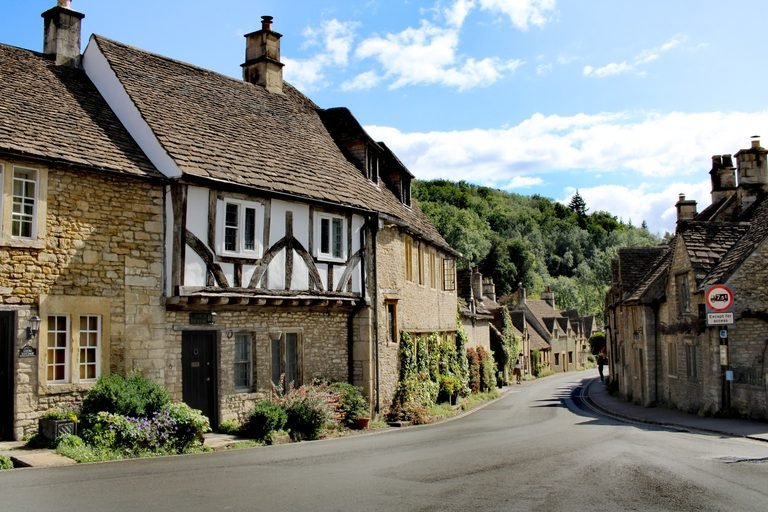
It sits in Great Tew, one of those Oxfordshire villages where stone cottages, narrow lanes, and mature trees already seem designed for autumn weather. The pub describes itself as a 16th-century Cotswolds inn, while Historic England dates the surviving building to the late seventeenth century, possibly with earlier elements. What is not in doubt is the character of the place: marlstone walls, a Stonesfield-slate roof, leaded windows, and a large open fireplace are all part of the listed building. The pub is still operating today, with rooms, food, traditional ales, and regular opening throughout the week.
Inside, the pub itself describes flagstone floors, oak beams, ceramic jugs hanging overhead, small corners, and an inglenook fireplace. That combination is almost unfairly well suited to rain.
I can imagine walking through Great Tew while the weather slowly deteriorates, not really minding because the pub is somewhere ahead. By the time I reach it, the lane is wet, the light outside has gone from gray to blue, and the windows are warmer than they looked half an hour earlier.
This is not the pub where I would want a loud Friday night.
I would want the opposite.
A table near the fireplace, somewhere just far enough from the door that every new arrival brings a short rush of cold air without making me want to move. A pint, something simple to eat, and no reason at all to leave until the rain has either stopped or become irrelevant.
Of all seven places, this may be the one where I can most easily imagine losing track of the weather entirely.
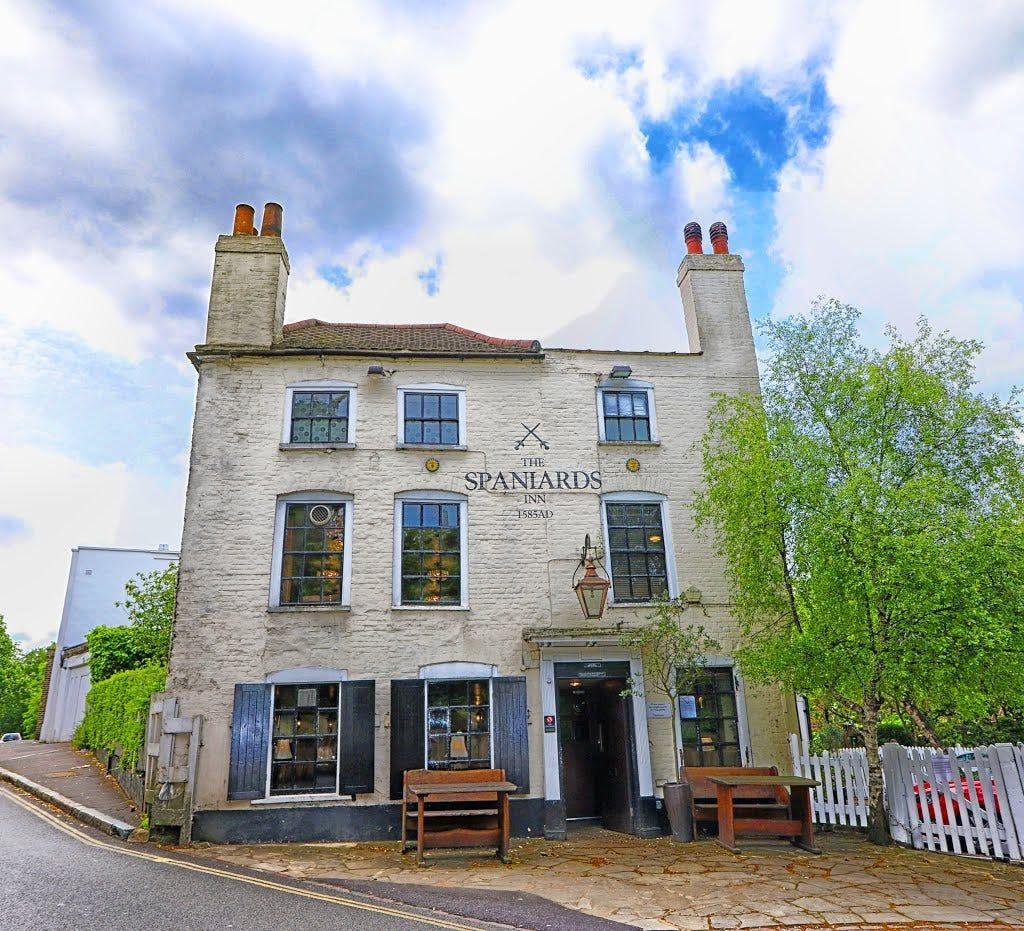
2. The Spaniards Inn — Hampstead, London
London rain has a completely different personality from rain in a Cotswolds village.
It catches headlights, darkens brick, gathers beneath trees, and makes the city feel both larger and more enclosed. That is exactly why The Spaniards Inn interests me.
The pub stands beside Hampstead Heath and is Grade II listed. Its own history dates the inn to 1585, while Historic England describes the surviving building as seventeenth century, altered but still possessing considerable character. The pub remains open daily and still emphasizes its wood paneling, open fires, small corners, and historic interior.
This is also one of those pubs where literature has become part of the atmosphere. The Spaniards Inn is mentioned in Dickens’s The Pickwick Papers, and the pub associates itself with John Keats as well, although some of the more romantic stories around historic pubs inevitably sit somewhere between documented history and tradition.
I think I would approach this one differently.
I would want to walk first.
Not far, and certainly not during the worst kind of rain, but enough to experience Hampstead Heath beneath a low sky and to arrive with a coat that had begun to feel damp around the shoulders. There is something appealing about the idea of crossing open ground or tree-lined roads before reaching an old pub, because the warmth inside feels more deserved.
Once there, I would not need anything complicated.
An old corner, the fire somewhere nearby, the muted noise of conversations that do not concern me, and rain still moving beyond the windows would be enough.
It feels like the kind of pub where an hour could easily become three.
3. Ye Olde Cheshire Cheese — Fleet Street, London
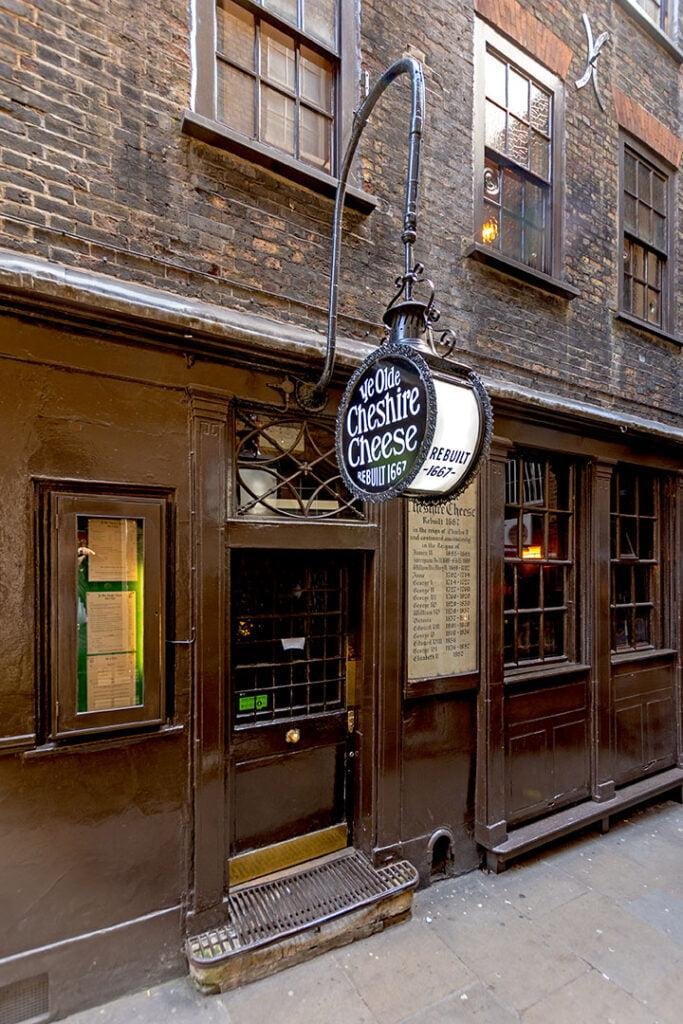
If The Spaniards feels like escaping London without entirely leaving it, Ye Olde Cheshire Cheese feels like disappearing into an older layer of the city.
The present pub on Fleet Street is a late seventeenth-century building, much altered over time, with a vaulted cellar beneath the courtyard. The City of London describes it as a “rambling, twisting 17th century hulk” and notes its long association with literary figures including Charles Dickens, G. K. Chesterton, and Mark Twain. It remains a functioning Samuel Smith pub today, open seven days a week.
This one appeals to me precisely because it does not seem to reveal itself all at once.
I like pubs with rooms that lead to other rooms, stairs that make you wonder what is above them, cellars beneath floors that have already carried centuries of footsteps, and corners where the architecture feels slightly confusing.
On a rainy evening, Fleet Street outside would be all movement, umbrellas, buses, office windows, wet stone, and the reflected light of the city. Then you step inside somewhere like this and the scale changes completely.
Suddenly there are lower ceilings.
Darker rooms.
Old tables.
A pint placed somewhere people have been placing drinks for generations.
That transition is part of what attracts me to historic pubs. They can make a busy city momentarily feel small again.
I do not think I would want to visit Ye Olde Cheshire Cheese on a beautifully sunny day. I am sure it would still be fascinating, but somehow it seems like a place that ought to be reached under a dark sky.
Preferably with rain on Fleet Street.
4. The Crown Inn — Chiddingfold, Surrey
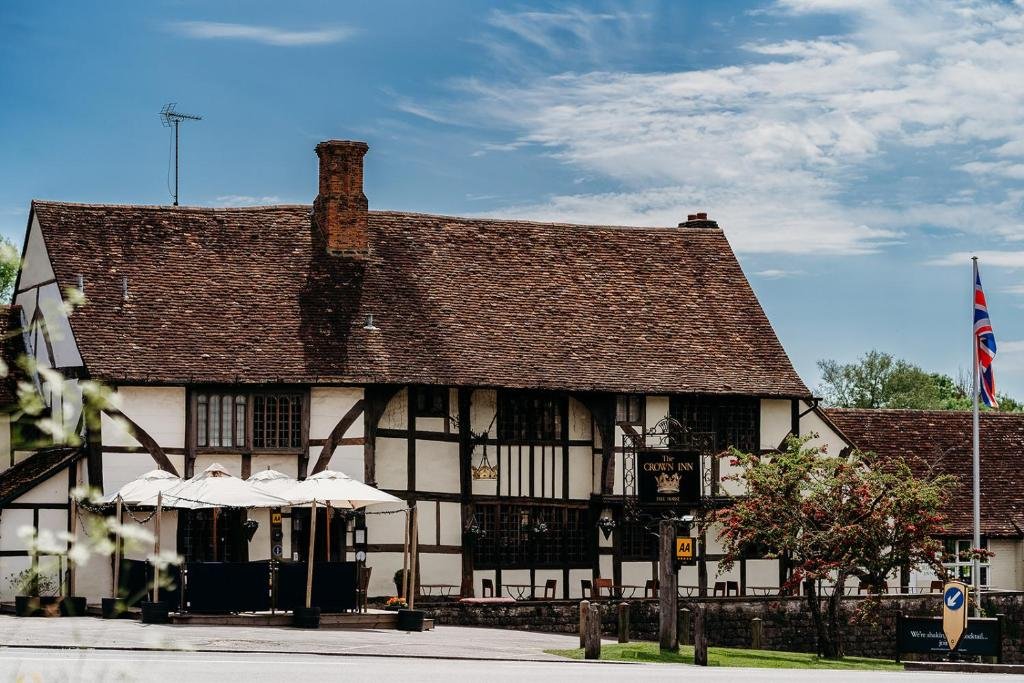
The Crown in Chiddingfold might be the pub on this list where the building itself would keep distracting me from whatever conversation I was supposed to be having.
Historic England dates it to the fourteenth century and gives the building Grade II* status. It is a timber-framed Wealden structure with deep fireplaces, while the inn itself describes oak beams, sloping floors, creaking floorboards, stained glass, and a stone fireplace dated 1614. The Crown remains independently run and open as an inn, restaurant, and pub on the village green.
That combination of age and setting is exactly what I want from a rainy-evening pub.
Chiddingfold is not somewhere I imagine arriving in a rush. I picture the village green already darkened by rain, water gathering along the edge of the road, and the pub looking almost disproportionately inviting compared with everything outside.
Then there is the fireplace.
Some pubs have fireplaces because customers like fireplaces.
Others seem to have fireplaces because the entire building was organized around them hundreds of years before anyone thought about “atmosphere.”
The Crown belongs much closer to the second category.
I think that difference matters. A modern fireplace can make a room cozy, but an old one gives the room a center of gravity. Chairs naturally turn toward it. People gather around it. Wet coats seem temporarily forgivable near it.
I would want dinner here, but nothing overly complicated. The whole point would be staying long enough to watch the evening become fully dark outside while the room around me remained warm.
There is also something appealing about knowing that travelers have been stopping around this same village for centuries. The Crown’s own history connects the site with medieval travelers and records deeds from 1383, although some of its stories are traditional rather than independently proven.
That is enough history for me.
I would rather sit beside the fire than argue about exactly who sat there first.
5. The Star Inn — Harome, North Yorkshire
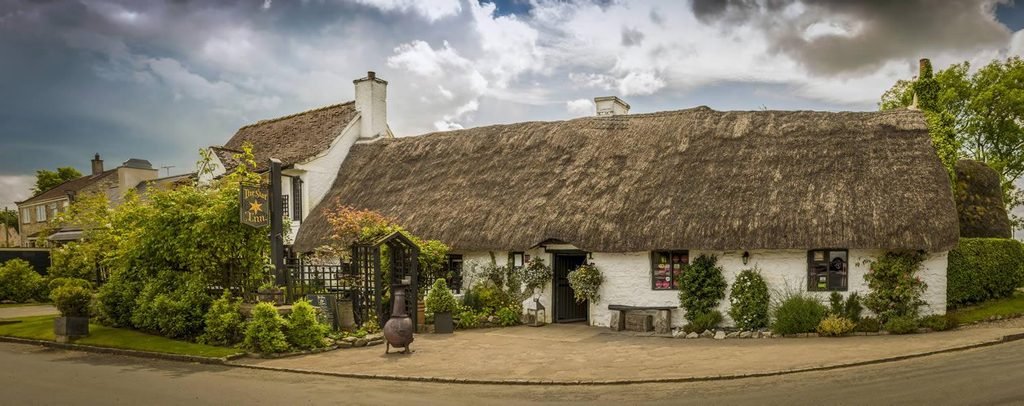
The Star at Harome is slightly different from the other pubs here because today it is also one of Britain’s best-known gastropubs.
Its official site describes it as a historic inn with rooms, while Historic England dates the listed building as probably seventeenth century with earlier origins, constructed from whitewashed rubble with a thatched roof and surviving historic structural elements. The inn’s own history notes the uncertainty around its earliest stories, which I appreciate, and documents its later development into a destination for food under Andrew Pern. After a serious fire in 2021, the damaged sections were rebuilt and restored, and in 2026 The Star remained open with a Michelin star and regular bar and restaurant service.
There is something particularly appealing about a thatched village pub on a wet Yorkshire evening.
Rain changes thatched buildings visually. The roof becomes darker, the whitewashed walls look brighter by contrast, and the light spilling from small windows seems warmer than it would on a dry afternoon.
The Star is probably where I would make an evening of the food rather than simply stopping for a drink, but I would still want the beginning of the evening to feel like a pub rather than a formal restaurant.
Arrive early.
Find the bar.
Order something.
Let the coat dry.
Look around.
Then slowly allow dinner to become the reason there is no need to go anywhere else.
I also like the fact that the building has had to survive modern history as well as ancient history. The 2021 fire badly damaged part of the inn, but the historic bar and Mouseman furnishings were saved and restored during the rebuilding.
History is often described as though preservation means preventing anything from ever changing.
Real buildings do change.
They are damaged, repaired, altered, adapted, and used again.
Perhaps that is why I find operating historic pubs more interesting than perfectly untouched rooms.
They are still alive.
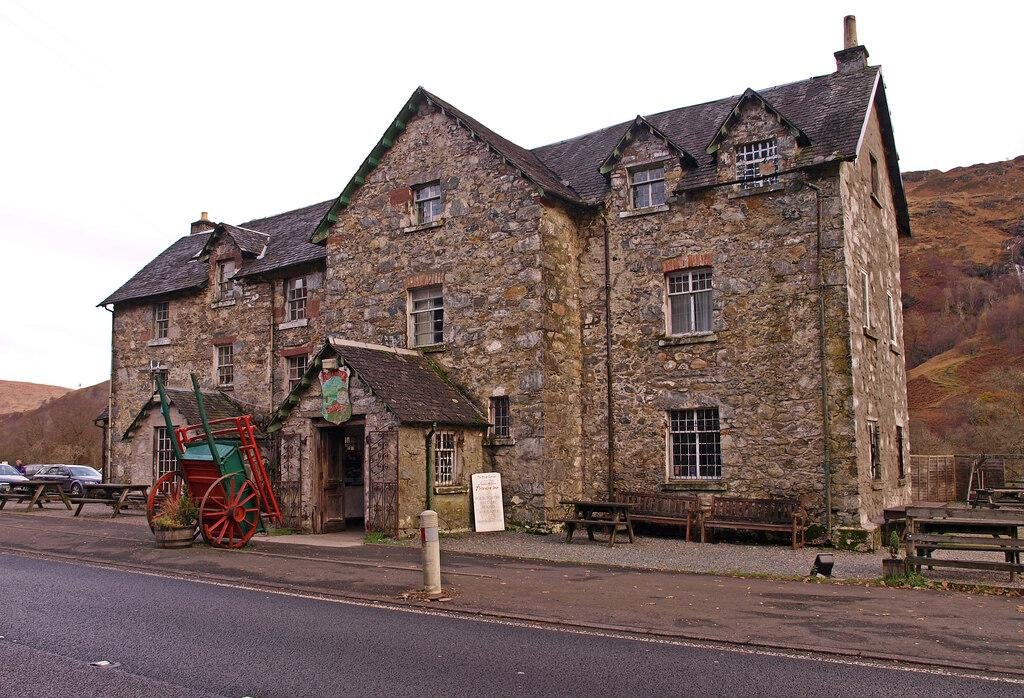
6. The Drovers Inn — Inverarnan, Loch Lomond
If I could choose the weather for this one, I would make it properly Scottish.
Low cloud.
Steady rain.
Wet road.
Dark hills disappearing in the distance.
The Drovers Inn stands near the northern end of Loch Lomond and has a long history connected with travelers and cattle drovers. Historic Environment Scotland dates the listed building to the eighteenth century and notes that it appears as an inn on a map from 1776, with its likely early function as a droving inn adding to its historical significance. The pub itself uses 1705 as its traditional founding date and remains a working hotel, bar, and restaurant today.
This is probably the least polished pub on my imagined rainy-evening list, and I mean that as a compliment.
Its own description emphasizes a dark, small bar, an open fire, traditional Scottish food, historic furnishings, and an interior packed with old objects and taxidermy. It is not trying to look like a restrained country-house hotel.
I think that is exactly what I would want after a wet day around Loch Lomond.
The rain here would not be decorative.
It would be real weather.
The sort that makes the road darker, the surrounding hills vanish earlier than expected, and the idea of staying indoors for the rest of the evening feel less like a choice and more like common sense.
A fire, a whisky, something hot to eat, and an old inn whose walls have been sheltering travelers for centuries sounds very difficult to improve upon.
This might also be the pub where I would be least interested in checking the time.
If the weather outside became worse, that would only improve the evening.
7. The Royal Standard of England — Forty Green, Buckinghamshire
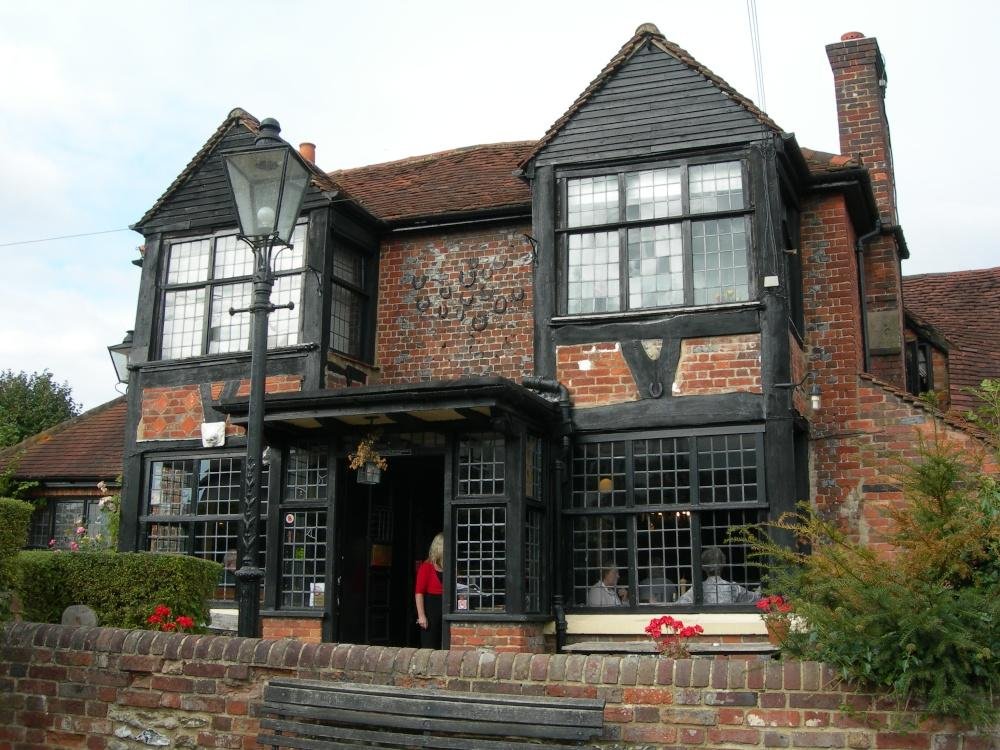
The Royal Standard of England is almost exactly what people imagine when they picture a very old English pub, which is probably why its history has accumulated so many dramatic claims.
The pub promotes a history stretching back nearly a thousand years and presents itself as England’s oldest free house. CAMRA is much more cautious: it calls that precise claim unverifiable, while still rating the interior as being of very special national historic interest and describing a remarkable collection of old rooms, low beams, fireplaces, red-tiled floors, settles, timberwork, and later historic alterations. The pub is operating in 2026 with regular opening hours.
That distinction does not make me want to visit it less.
Quite the opposite.
This is exactly what Article #31 taught me about old pubs: sometimes the desire to attach the earliest possible date to a building distracts from the extraordinary things that are actually there.
A pub does not need to prove that someone was drinking in the same room nine hundred years ago for an old red-tiled floor, huge wooden settle, log fire, and maze of small rooms to feel special.
In fact, I think I would enjoy the Royal Standard precisely by ignoring the debate for an evening.
I would walk there in the rain, if possible.
It sits in the Chilterns near Forty Green, away from the feeling of central London even though Beaconsfield is not far away. CAMRA describes the surrounding area as particularly suited to walking, which makes the pub even easier to imagine as the destination at the end of a damp autumn route.
The best historic pubs often feel earned.
You walk.
The weather turns.
The daylight begins disappearing.
Then somewhere ahead there is a sign, a door, and a room with a fire.
That simple sequence may be one of the oldest pleasures a pub can still provide.
What These Historic British Pubs Have in Common
These pubs are very different from one another.
One is on the edge of Hampstead Heath.
Another sits among the Cotswold villages.
One is buried in the historic streets of London.
Another waits near Loch Lomond beneath Scottish weather.
Some have stronger documented histories than others. Some have been carefully restored, others changed repeatedly over centuries, and one now carries a Michelin star alongside its much older architecture.
Yet the reason I want to visit them is remarkably similar.
They seem to understand bad weather.
That may sound like a strange quality to assign to a building, but I think certain places make more sense when it rains.
A wide modern restaurant can look impressive through enormous windows on a sunny afternoon, while a small historic pub becomes more itself when the sky is dark and the weather has given everyone a reason to come inside.
The low ceiling suddenly feels protective.
The small window feels intentional.
The fireplace stops being decoration.
The thick wall becomes reassuring.
Even the slightly awkward corners begin making sense.
These buildings were created in a world where warmth, shelter, food, light, and company were not atmospheric concepts. They were practical needs.
Perhaps that practicality is exactly what we now experience as coziness.
I Would Want to Arrive on Foot
I think this matters.
If I arrived directly from a warm car and walked five steps into the pub, I would still appreciate the building, but something would be missing.
Part of the pleasure comes from contrast.
I would want at least a short walk beforehand.
A large umbrella.
Wet pavement.
The sound of rain against the canopy.
A coat beginning to feel heavier.
Perhaps a village road with very little traffic, or an older London street where the lights are already reflecting on the ground.
It is the same thing I love about walking in the rain when the streets are quiet: bad weather can make the ordinary route itself feel more deliberate.
The pub becomes the destination, but the rainy walk gives the destination meaning.
When I finally close the umbrella beside the door, I want to actually notice that I am somewhere dry.
The Window Matters Almost as Much as the Fire
I would also want to sit somewhere I could still see the rain.
This is important.
The whole pleasure of being warm inside disappears slightly if I cannot tell what I am being protected from.
A small old window beside a table might be perfect.
Rain moving across uneven glass.
A village street outside.
A streetlamp appearing in the reflection.
Someone hurrying past with an umbrella.
Then turn back toward the room and everything looks warmer because the outside world is still visible.
Comfort needs contrast.
That is probably why rainy days at home work in much the same way. The window allows us to experience the weather without being completely in it.
A historic pub does something similar, except there is another layer to it.
The window itself may be older.
The room may have been sheltering people from rain long before any of us were born.
The feeling is personal, but also strangely continuous.
I Would Not Want the Evening to Be Too Busy
The ideal version of this evening is not a silent pub.
That would feel wrong.
A pub should have life in it.
Glasses on tables.
A door occasionally opening.
Someone laughing in another room.
A dog sleeping somewhere inconvenient.
A conversation near the bar that becomes briefly louder and then settles again.
What I do not want is noise so complete that the building disappears beneath it.
I want to notice the room.
The beams.
The fireplace.
The window.
The sound of rain when conversation pauses.
The best atmosphere, at least for me, sits somewhere between solitude and crowd.
Enough people to make the pub feel alive.
Enough quiet to let the place itself remain part of the evening.
Perhaps This Is What I Love About British Pubs Most
I have always liked the idea that a pub can be more than somewhere to drink.
At its best, it is a room between the public world and the private one.
You are not at home, but you do not feel completely out.
You can arrive alone without necessarily feeling lonely.
You can stay longer than intended without having to explain why.
There is food if you need it.
Warmth if the weather is bad.
Company if you want it.
And often a corner if you do not.
Historic pubs simply make those qualities more visible because generations of people have used them in essentially the same way.
The furniture changes.
The menu changes.
The road outside changes.
But someone still comes through the door because it is raining.
Someone still sits near the fire.
Someone still says they will have one more before heading home.
That continuity is what I find so appealing.
The Rainy Evening I Keep Imagining
If I could take pieces from all seven pubs and turn them into one evening, it would probably begin somewhere between four and five in the afternoon.
The sky would already be darker than the time suggests.
Rain would have been falling for most of the day, gently but consistently, leaving every road and stone wall darker than usual.
I would walk the final part of the journey.
Not far.
Just enough.
The umbrella would be large, the street mostly empty, and somewhere ahead I would begin seeing the pub windows through the rain.
Once inside, there would be an old fireplace, but I would not sit directly beside it. Somewhere close enough to feel it would be better.
There would be a small window nearby.
Something warm to eat.
A drink that does not need explaining.
No television demanding attention.
No particular plan for what happens next.
Perhaps the rain becomes heavier.
Perhaps somebody opens the door and everyone briefly looks toward the sudden cold air.
Perhaps the windows become completely black as evening settles over the village.
Eventually, I would leave.
The umbrella would open again.
The road would still be wet.
And I would probably spend the walk home already wishing I had stayed another half hour.
That, to me, sounds like a nearly perfect evening.
Not because anything remarkable happened.
But because the place, the weather, and the pace all happened to feel right at the same time.