The Last Days of Autumn: When the Season Begins to Let Go
There is a moment every year when the last days of autumn stop feeling like a season we are still inside and begin to feel like something we are already losing.
It rarely happens all at once. There is no particular morning when every tree becomes bare or when the air suddenly declares that autumn is finished. Instead, the change comes quietly. A few more leaves disappear overnight. The light turns paler. The ground stays damp for longer after rain. The evenings arrive earlier than they did only a week ago, and the warmth of October begins to feel surprisingly far away.
These are the days of autumn I find myself noticing most.
Not the brilliant beginning, when every tree is glowing and the whole world seems determined to be beautiful.
The ending.
The quieter part.
The moment when the season begins to let go.
When the Colour Starts to Disappear
At the beginning of autumn, colour is everywhere.
It demands attention.
Trees turn red, orange and gold. Roads are lined with fallen leaves. Even an ordinary walk feels different because the landscape has suddenly become more dramatic than it was a few weeks earlier.
But late autumn has another kind of beauty.
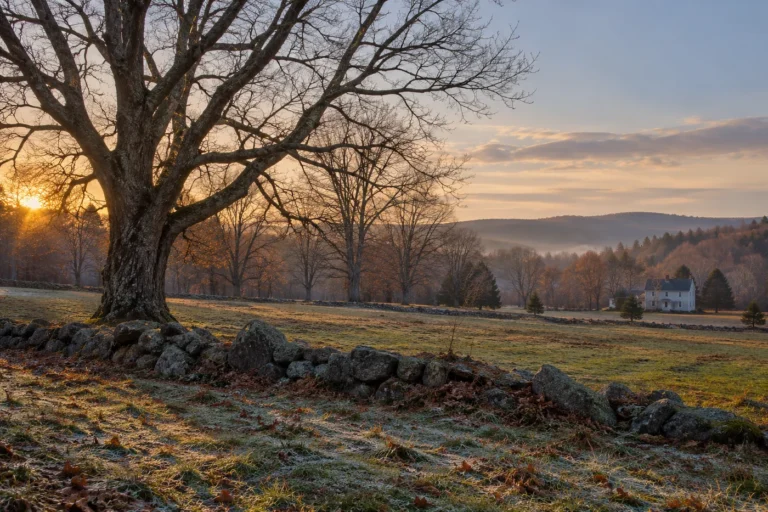
By November, much of that colour has already fallen.
Branches begin showing through.
The trees that looked impossibly full only weeks before become thinner every day, and the landscape slowly opens around them.
At first, I always feel a little disappointed.
I want the leaves to stay.
I want that particular golden light to last longer.
I want another week of October.
But then something changes.
Once the bright part of autumn begins disappearing, I start noticing everything underneath it.
The shapes of the branches.
The darker fields.
The stone walls and fences that summer foliage had hidden.
The soft gray of the sky.
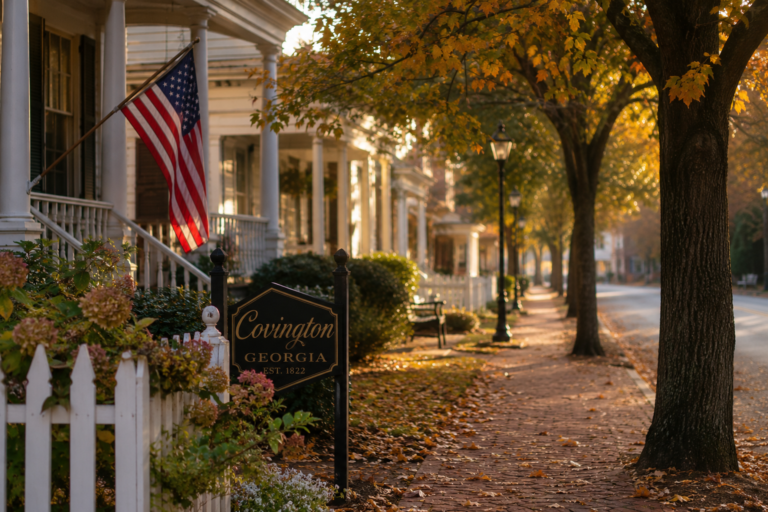
The way a house looks completely different when the trees around it are bare.
Late autumn has less to decorate itself with.
Perhaps that is why it feels so honest.
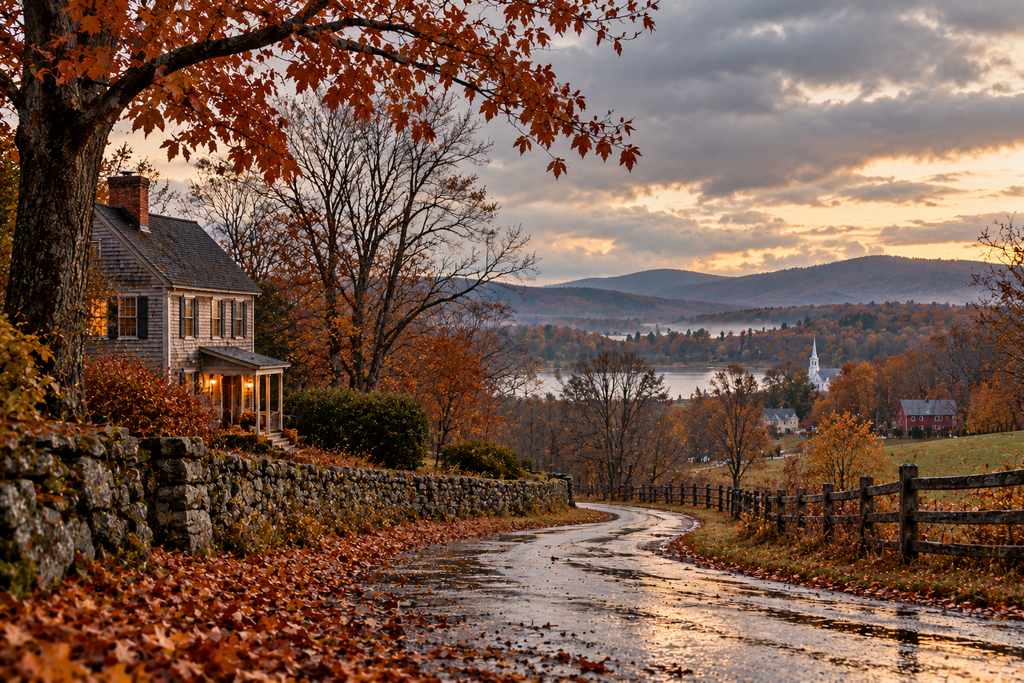
I still love the quiet beauty of October, but the final weeks of autumn feel different to me.
October feels like celebration.
Late November feels like acceptance.
The Sound of Leaves Becomes Different
Even the sound of autumn changes near the end.
Earlier in the season, leaves are still soft enough to collect in deep piles. They move easily beneath your feet and blow across roads whenever the wind rises.
Later, they become darker and flatter.
Rain presses them into the pavement.
The ones that remain beneath hedges and along the edges of paths have begun to lose their brightness.
There is something almost satisfying about walking through this version of autumn.
The world feels quieter.
Birdsong seems more noticeable because there is less rustling in the trees.
Cars sound farther away.
Footsteps become sharper.
Perhaps the landscape really is quieter, or perhaps there is simply less to distract the eye.
Either way, I always become more aware of small sounds at this time of year.
A gate closing somewhere.
A dog barking from behind a house.
Wind moving through empty branches.
Rain beginning gently enough that you notice the first drops individually.
There is nothing dramatic about these sounds.
That is why I like them.
They belong to ordinary days.
The Light Changes Before Winter Arrives
Late-autumn light has its own character.
It never seems to stay for long.
Even bright days can feel fragile because the sun is already low by the afternoon, and shadows begin stretching across roads and gardens long before dinner.
There are days when the sky seems pale from morning until evening.
Not stormy.
Not completely gray.
Simply washed out.
And somehow I find that beautiful.
The world looks quieter beneath that kind of light.
Colours soften.
Windows become more noticeable.
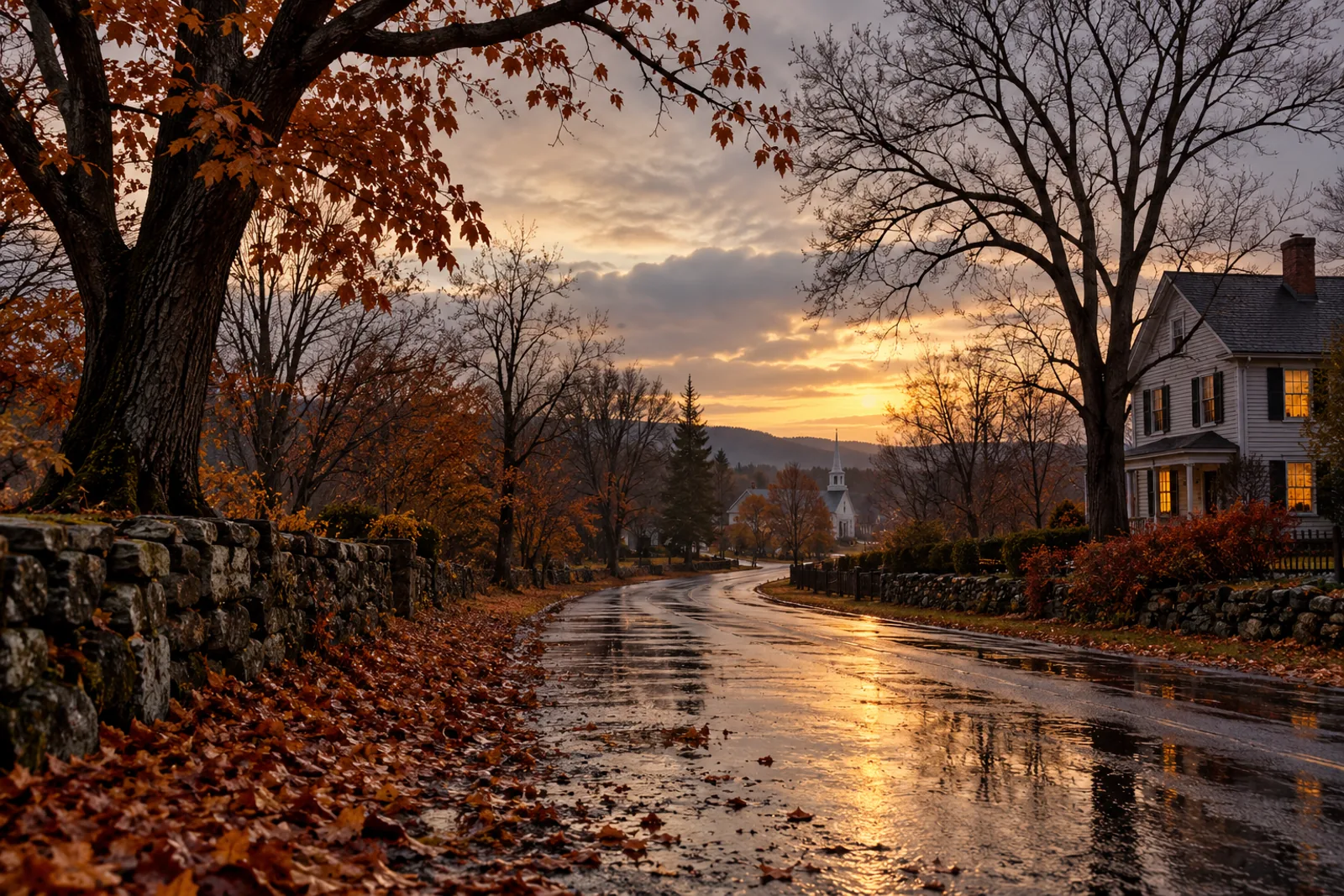
Lamps inside houses begin glowing while there is still a little daylight left outdoors.
This is one of my favourite parts of the season.
Walking somewhere near the end of the afternoon and seeing houses gradually beginning to light up.
One window.
Then another.
A kitchen lamp.
A porch light.
A room glowing behind curtains.
There is something comforting about seeing warmth from the outside.
Perhaps because the cold makes home visible in a way summer never does.
During summer, doors stay open.
People are outside.
The boundaries between the house and the world become softer.
Late autumn closes them again.
And suddenly a warm window can feel like an invitation.
Bare Trees Are Beautiful Too
For years, I think I saw bare trees only as what remained after autumn had finished.
Now I appreciate them more.
There is a simplicity to them.
A tree without leaves shows its entire shape.
Branches twist in directions you could not see before.
Some reach upward almost symmetrically, while others bend strangely because of years of weather, neighbouring trees or whatever happened while they were growing.
Nothing is hidden.
Bare trees make familiar places feel older somehow.
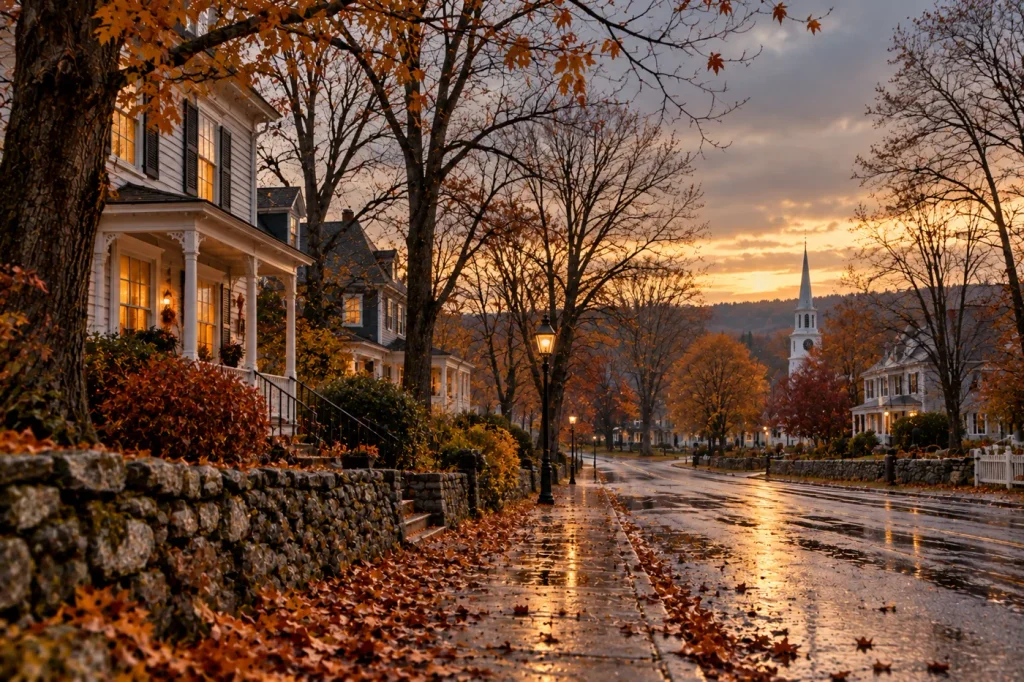
A lane lined with them can look like something from another century.
An old farmhouse surrounded by them suddenly seems more exposed.
Church towers appear where leaves had blocked the view.
Distant hills become visible again.
The landscape becomes larger as the trees become emptier.
There is also something peaceful about knowing the trees are not actually empty in the way they appear.
Nothing is wrong.
Nothing has failed.
They are simply finished with this part of the year.
Perhaps that is why late autumn feels so reflective.
Nature becomes quieter without becoming lifeless.
The Cold Begins to Mean Something
The first cold days of autumn are exciting.
You notice them because they are new.
You reach for a jacket you have not worn for months. The air feels crisp rather than uncomfortable. A cold morning seems like proof that the season has finally changed.
By late autumn, cold becomes more serious.
It lingers.
The grass can stay wet until afternoon.
Cars are cold when you get inside.
The air at sunset has an edge to it that makes you walk a little faster.
You begin checking the weather because frost is no longer surprising.
The first signs of winter start appearing without winter having properly arrived.
I like this threshold.
It is one of those small seasonal spaces that is easy to rush through because everyone is already thinking about what comes next.
But there is something beautiful about being neither fully in autumn nor fully in winter.
The year feels suspended for a little while.
Home Begins to Feel Different
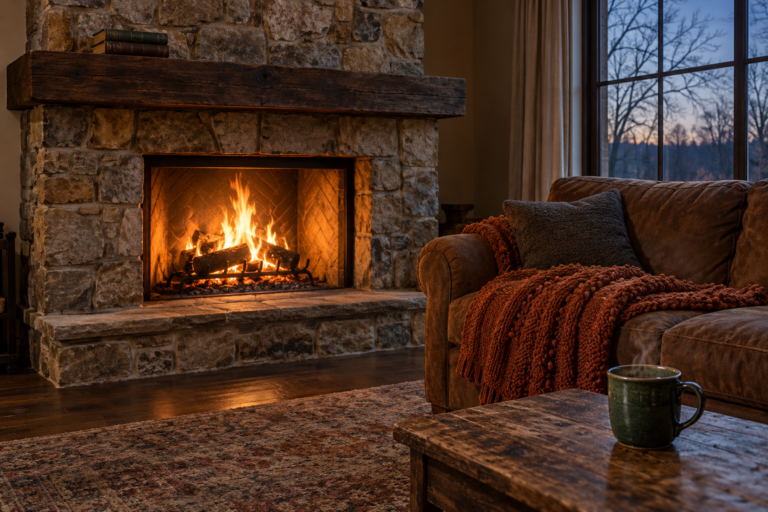
Late autumn also changes the atmosphere indoors.
By this point, the house has adjusted to colder weather.
Blankets are no longer decorative.
Lights come on earlier.
Warm drinks stop feeling like a seasonal idea and become part of the ordinary day again.
The kitchen becomes more appealing.
So does the sofa.
So does staying home without making an excuse for it.
There is less guilt in doing nothing when it is dark at five o’clock.
Perhaps this is one of the gifts of the colder months.
They make stillness feel legitimate.
Summer encourages us outward.
Late autumn quietly turns us back toward home.
I felt the same while writing about Thanksgiving at home—there is something about this part of the year that makes a warm room feel more valuable simply because the world outside has become colder and darker.
Home becomes smaller in late autumn, but somehow more important.
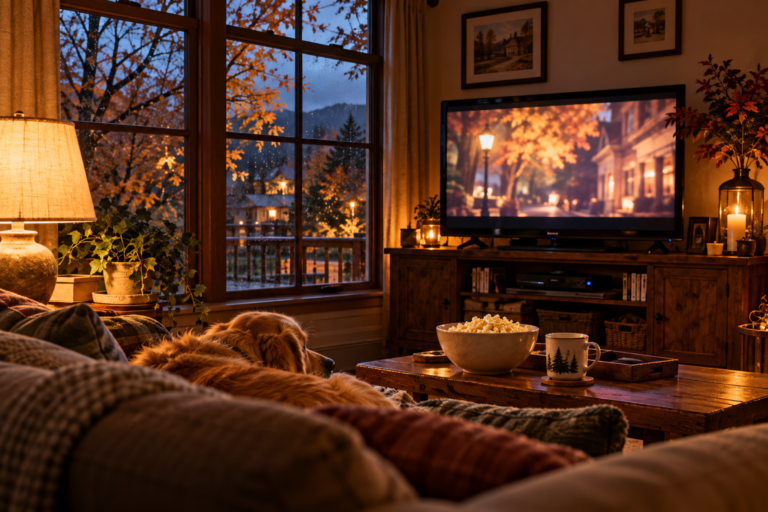
A lamp in the corner.
Something cooking.
A book left open.
A dog asleep nearby.
Rain at the window.
Nothing extraordinary.
Yet these are often the evenings I remember.
The Garden Becomes Quieter Too
Gardens are strange places at the end of autumn.
Most of the work is finished.
Plants that dominated the summer have collapsed back into the soil.
Flowers become rare.
Leaves gather wherever the wind leaves them.
Pots look emptier.
Outdoor furniture seems suddenly unnecessary.
There is always a temptation to tidy everything immediately.
Sweep every leaf.
Cut everything back.
Make the garden look finished.
But I quite like it when some of the season remains visible.
A few leaves beneath the hedge.
Old seed heads.
Branches holding the last stubborn leaves.
A forgotten chair still sitting outside.
There is beauty in allowing the year to look tired.
Not every season needs to end neatly.
Rain Feels Different in November
Autumn rain changes too.
Earlier in the season, rain seems to deepen the colours.
Wet roads become darker.
Leaves shine.
Everything looks richer.
By late autumn, rain creates a more muted world.
Bare branches become black against the sky.
Fields turn darker.
Puddles remain for days.
The landscape loses contrast.
And I love that version as well.
There is a particular kind of November rain that makes the whole day feel like evening.
The sky never really brightens.
Lights stay on indoors.
The windows become streaked.
Nothing outside looks inviting enough to require going anywhere.
Those are some of my favourite slow days.
Not because anything happens.
Because nothing has to.
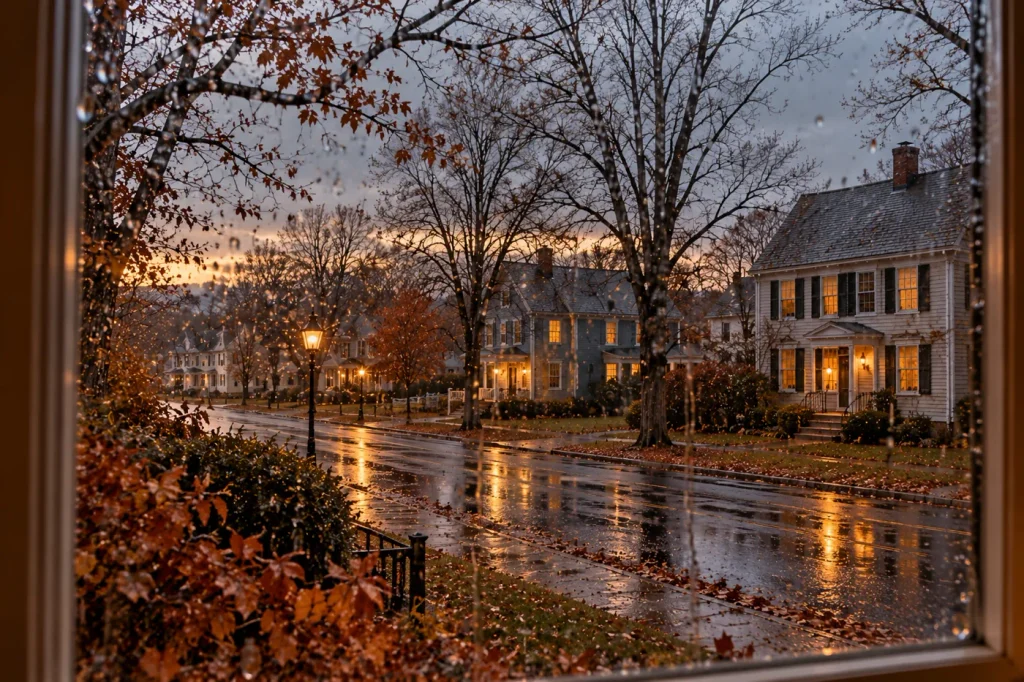
A rainy November afternoon feels like permission.
Stay home.
Read something.
Cook something slowly.
Let the day be smaller.
The Last Walks That Still Feel Like Autumn
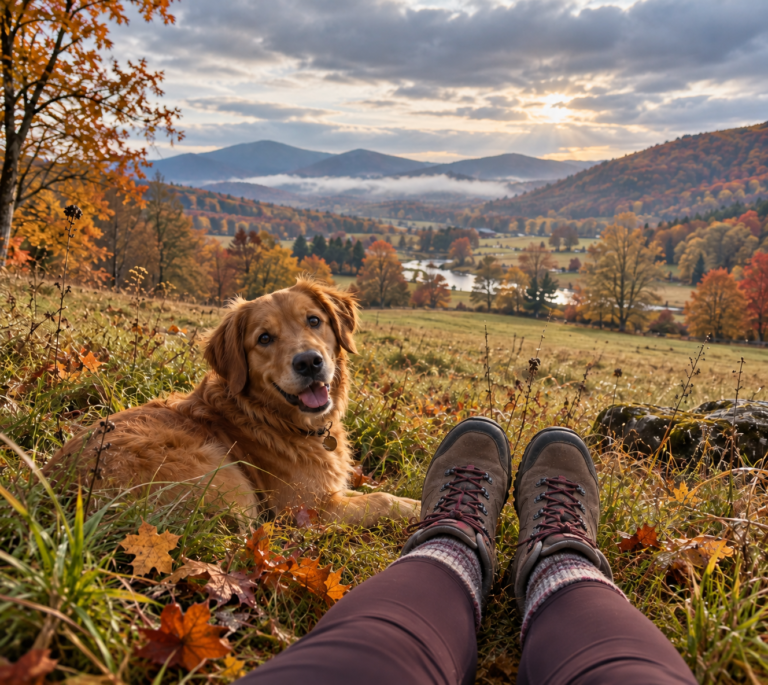
There is usually a point when I realise that a walk is probably one of the final ones that will still feel like autumn.
The leaves beneath my feet are still there.
A little colour remains in the hedges.
There is no snow.
The landscape has not yet fully crossed into winter.
But it is close.
That knowledge changes the walk somehow.
You notice more.
A single yellow tree suddenly matters because almost all the others are bare.
A patch of late sunlight feels warmer because there is so little of it.
You stop to look at things you may have walked past every day.
Seasonal beauty becomes more precious when you know it is nearly finished.
Perhaps that is true of many things.
We often appreciate something most clearly when we realise it is temporary.
November Has Its Own Kind of Comfort
October gets much of the attention.
And I understand why.
It is beautiful.
September has that first promise of change.
December has winter and all the atmosphere that comes with it.
November can seem like the month in between.
Too late for peak autumn.
Too early for winter.
Too brown.
Too gray.
Too quiet.
But perhaps those are exactly the reasons I love it.
November does not perform.
It settles.
There is something comforting about a season once the excitement has passed.
You no longer need to chase the perfect autumn weekend.
You don’t need to find the brightest leaves.
You don’t need to capture the season before it disappears.
It already is disappearing.
And once you accept that, there is something peaceful about simply watching it happen.
Books Feel Better When the Year Slows Down
Late autumn always makes me want to read more.
Perhaps because evenings are longer.
Perhaps because staying indoors feels natural again.
Or perhaps because books themselves belong to slower time.
You cannot rush a book without losing something.
You have to sit with it.
Follow it.
Let the world outside disappear for a while.
That is probably why I associate classic novels for long November evenings so strongly with this part of the year.
There is something about an old novel on a dark November evening that feels particularly right.
The slower pace of the story begins matching the pace of the season.
The Year Is Beginning to Turn Inward
By late November, everything seems to turn inward.
Animals prepare differently.
Trees are finished with their leaves.
People spend more time inside.
The garden quiets.
Even the roads feel emptier after dark.
The year has stopped expanding.
Now it contracts.
I find that comforting.
There are times for growth and energy and long days.
There should also be times for less.
Less light.
Less noise.
Less expectation.
More rest.
Maybe we need seasons partly because we are not very good at giving ourselves permission to change pace on our own.
The world changes around us, and eventually we follow.
Why I Don’t Want to Rush the Last Days of Autumn
This is the part I am trying to become better at.
Not rushing seasons away.
When autumn begins fading, it is very easy to start thinking immediately about winter.
About what comes next.
There is always something next.
Another season.
Another holiday.
Another plan.
But these last days of autumn deserve attention too.
The quiet trees.
The wet roads.
The cold mornings.
The smell of leaves that have been on the ground for weeks.
The fields darkening before sunset.
The houses glowing earlier every evening.
It is a softer version of autumn, but it is still autumn.
And perhaps because there is so little of it left, I want to notice it properly.
The Last Evening of Autumn
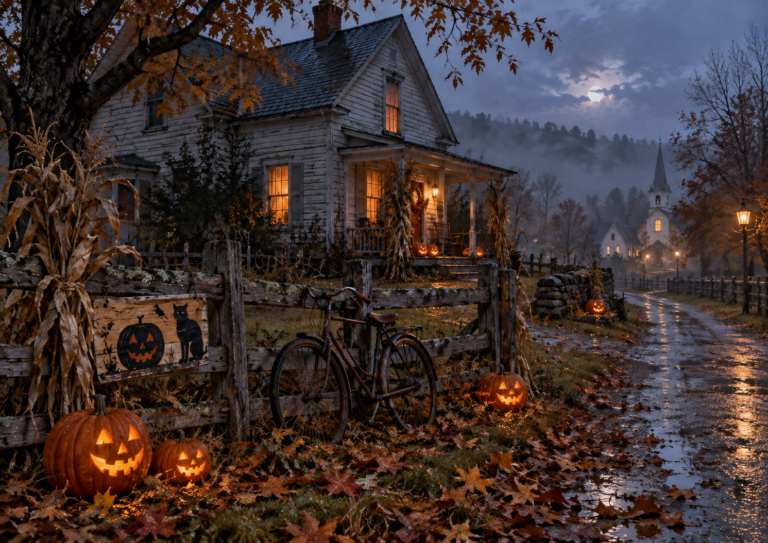
If autumn had a final evening, I imagine it would be very ordinary.
No dramatic sunset.
No perfect line of golden trees.
Probably a gray sky.
A little wind.
Perhaps rain earlier in the day.
Most of the trees would already be bare.
There would be leaves gathered in wet corners of the road and along garden fences.
Someone would switch on a porch light.
A dog would be walked before darkness completely settled.
Smoke might rise from a chimney somewhere.
Nothing would announce that the season was leaving.
That feels appropriate.
Seasons do not really end the way stories do.
There is no final page.
One simply becomes another.
The mornings grow colder.
The remaining leaves fall.
One day you look outside and realise the landscape has changed.
Winter has arrived quietly while you were paying attention to something else.
Letting Autumn Go
I always feel a little reluctant to let autumn finish.
It is the season I want to hold onto longest.
Perhaps because it is so brief.
Perhaps because its beauty is inseparable from the fact that everything is changing.
But I am beginning to think the ending is part of what makes it beautiful.
Autumn was never meant to stay.
The leaves have to fall.
The branches have to empty.
The evenings have to darken.
The year has to move forward.
And maybe there is something useful in watching nature do this without resistance.
The trees do not try to keep October.
They simply let it go.
So perhaps I can too.
Not quickly.
Not without looking back once or twice.
But gradually.
One cold morning.
One bare tree.
One fading afternoon at a time.
Until autumn becomes something I remember rather than something I am standing inside.
And winter quietly takes its place.