A Slow November Walk Through a Small Town
The walk I have in mind begins on a side street, sometime in the afternoon, when there is still enough daylight to stay outside a little longer.
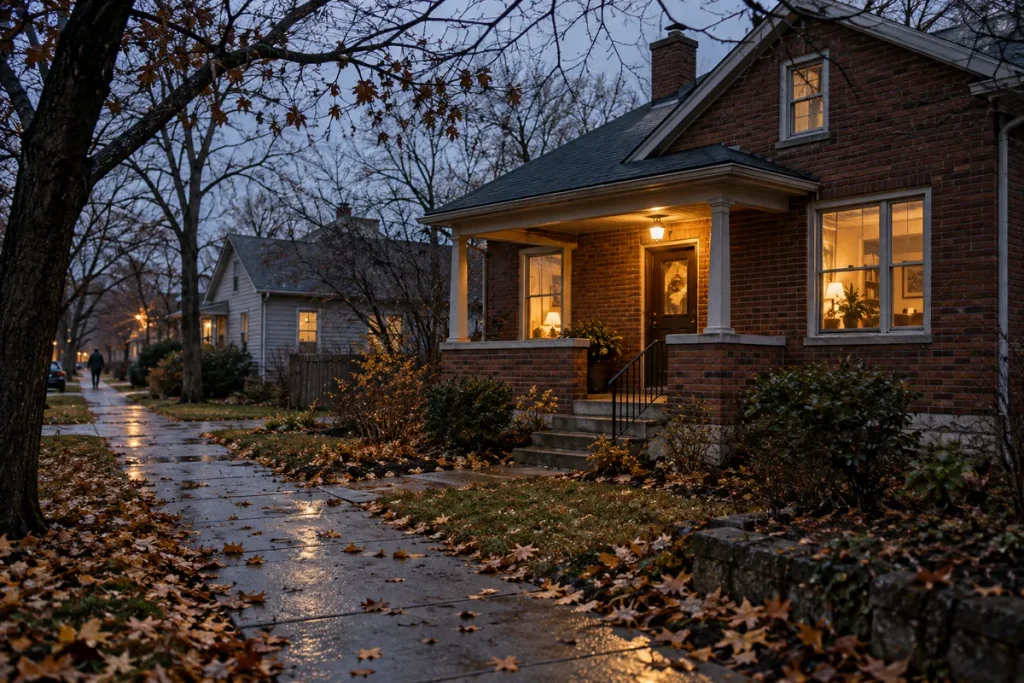
The sidewalk is damp. A few leaves have caught beneath a parked car, and the houses stand behind yards that look almost ready for winter. Somewhere farther along, there is a porch light on already. I would probably notice that first, then the smell of the air, then how good it feels to have put on a proper coat.
This is the kind of slow November walk I find myself wanting: through a small American town, from the residential streets toward the shops and back again before it gets completely dark.
I am picturing an afternoon rather than remembering one particular place. There are plenty of towns I would love to explore this way, but what draws me is the ordinary life along the route. A library still open. Someone carrying groceries. A front door with a pair of muddy boots beside it.
After writing about bare trees and November light, I keep thinking about the places those trees stand around. I want to look beyond the branches and follow the sidewalk for a while. There may be very little happening. That would suit me quite well.
Leaving the House Without a Long Route
I like a walk that begins with a manageable decision: go outside, turn toward the older part of town, and see how far feels right.
There is no need to work out every street beforehand. A coat with decent pockets matters more. So do shoes that can cope with wet leaves, because November sidewalks rarely stay completely clear for long.
At first, I would probably still be carrying the day with me. Something unfinished at home, a message I have not answered, a small job I meant to do before leaving. It takes a little time for those thoughts to loosen their hold.
Walking gives them that time. You have to pay attention at the curb. You move around a puddle, wait for a car, or stop to adjust a sleeve. Then you look up and realize you have been noticing the street for several minutes instead of going over the same thought again.
I would leave room to turn back early too. Some afternoons only need a few blocks. Others seem to offer another corner just as you are considering going home. I like being able to make that decision while I am already outside.
The Houses Along the First Few Blocks
The residential streets would be my favorite place to begin, especially where the homes are older and each yard has developed its own character.
A white clapboard house might have narrow steps and a porch running across the front. Beside it, a smaller brick house could sit closer to the sidewalk, its windows partly hidden behind a hedge. Farther along, there might be a broad old house divided into apartments, with several mailboxes near the door.
I like that variety. The street feels more interesting when you can see how people have used it differently over time.
In November, the yards tell you a little about what has recently changed. Chairs have been taken in. A garden bed has been cut back. Someone has gathered leaves into a pile, then left the rake leaning against the fence while they finish something else.
I would notice the things still outside as well: a sturdy bench, a bird feeder, a faded planter waiting to be emptied. A place does not have to be perfectly arranged to feel welcoming. Often, I am most drawn to the house where a few ordinary jobs are visibly still in progress.
Walking Past the Porches
Porches have a particular place in the American town I am imagining. They give a house a small space between the private rooms inside and the street outside.
At this time of year, that space is quieter. A chair might remain, but the cushion has gone indoors. The doormat is darker from wet shoes. Near the steps, the last stalks in a flower bed bend toward the ground.
I would happily slow down to look at a well-used porch: worn boards near the door, a handrail polished where people reach for it, a light fixed a little off center. Those details suggest the daily business of arriving home.
Someone may come out to collect the mail while I am passing. There is a moment for a nod, perhaps a brief comment about the cold, before each person carries on. I like that small amount of contact. You can feel part of the afternoon without needing to turn it into a conversation.
The porch stays in my thoughts after I have passed it. I can imagine stepping up onto it with cold hands and a bag of groceries, hearing the door close behind me, and being glad there is nowhere else to go that evening.
Where the Side Street Meets Main Street
The change toward the center of town would happen gradually. Houses stand a little closer together, then a building appears with a business on the first floor. At the next corner, the sidewalk becomes busier.
This is where I would pause before crossing. A pickup passes, followed by a car with someone in the back seat looking out. Across the street, a person is trying to manage a paper bag while opening a door. There are plenty of small things to watch while waiting for the traffic to clear.
I would hope for a main street with a few places still serving everyday needs: a pharmacy, a coffee shop, perhaps a hardware store with practical things stacked near the window. A town feels more compelling to me when people have reasons to come into it beyond taking photographs.
The buildings need not all be beautiful. There might be a plain storefront between two older brick facades, or a sign that has clearly been replaced more recently than the windows around it. I would rather see a street being used than expect every part of it to look as though it belongs to the same decade.
The Windows Worth Stopping Beside
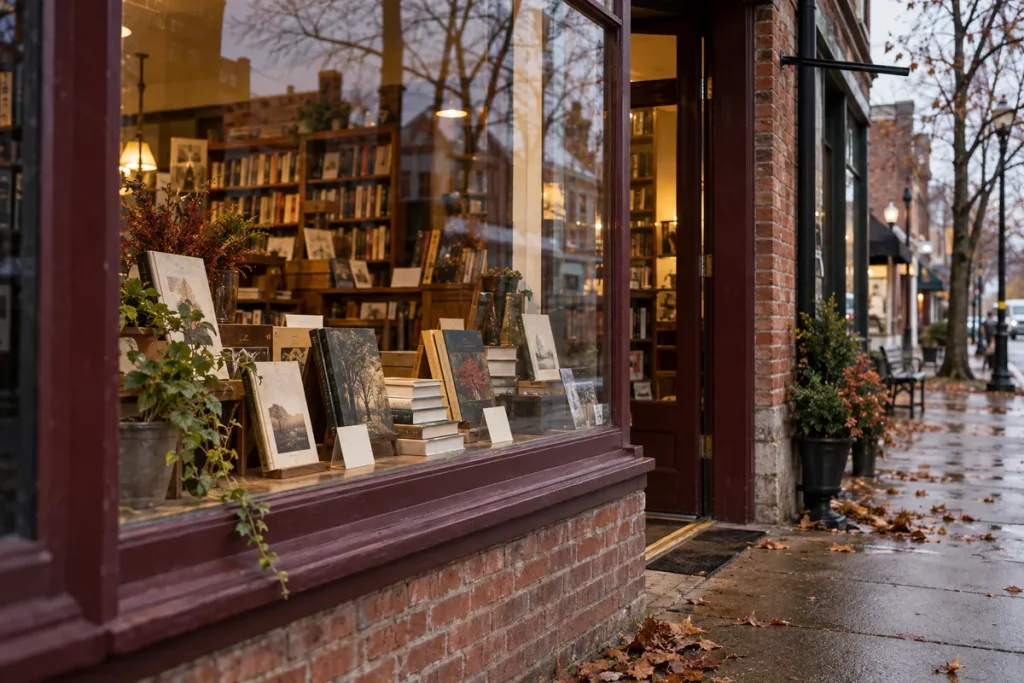
On a cold afternoon, a shop window becomes somewhere to pause for a minute without quite deciding to go inside.
A bookstore would probably keep me longest. I like the thought of a modest display with a few novels, a handwritten recommendation, and a book placed face outward simply because someone there likes it. I would look at the titles, then at the shelves beyond the glass, and begin considering whether the walk could include ten minutes indoors.
A window full of secondhand things would be tempting too. An old lamp, a framed landscape, a small wooden chair: objects that make you wonder where they have been. I might not want to buy any of them. Looking can be enough.
The quieter windows interest me as well. A repair shop with work waiting on a bench. A restaurant that has not opened for dinner yet. Someone moving behind the counter, getting the next part of the day ready.
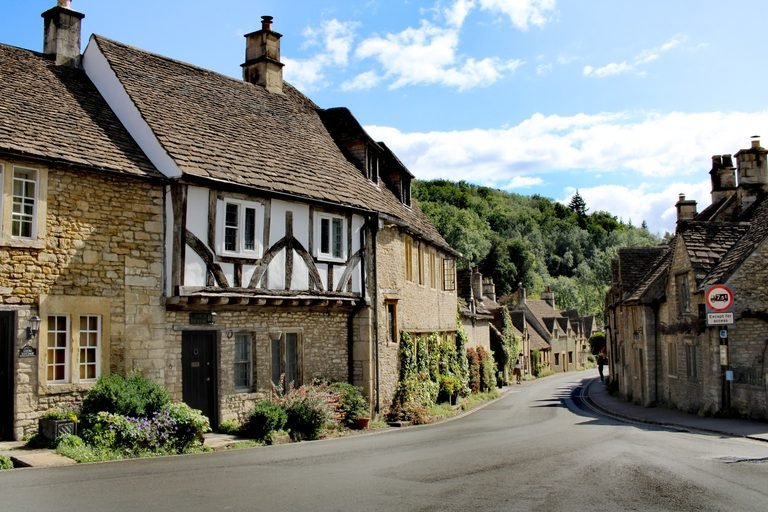
When I wrote about walking through Castle Combe, I kept returning to the feeling of a place still being lived in. The setting here is different, but that interest follows me. Behind the attractive window, I want to be able to sense an ordinary working day.
A Short Stop for Something Warm
By this point, I would probably be ready for coffee or tea, especially if the air had become colder while I was looking at the shops.
The place I picture is simple. A few tables, coats hanging over chair backs, a window that lets you keep watching the street. There is the sound of a cup being set down and a door opening often enough to bring a little cold air across the floor.
I would choose a seat where I could stay in my coat until I warmed up. At first, the cup would be mostly useful for my hands. After a few minutes, I could settle properly and look at the route I had just walked from the other side of the glass.
That change of position is something I enjoy. Outside, you notice the light in a window. Inside, you notice the people going past and wonder where they are headed. The same street has become a view to sit beside.
The quiet ritual of making coffee or tea can be comforting at home; stopping for a cup while out has its own pleasure. I would not need to stay long. Just enough time to feel warm again and decide which street to take back.
Letting the Town Have Its Ordinary Afternoon
One thing I want from this walk is room for the town to be itself. That includes the details that do not belong in an especially cozy photograph.
There may be a delivery truck blocking part of the view, a loud car at the intersection, or a stretch of sidewalk where I have to watch my footing. A store might be closed when I hoped it would be open. The nicest-looking house could have a trash bin waiting at the curb.
Those things would not spoil the afternoon for me. They would remind me that I was walking through somebody else’s Tuesday, or Friday, with all the practical jobs that come with it.
I am fond of atmospheric places, but I do not expect the people in them to maintain an atmosphere for my benefit. The person hurrying across the street may simply be late. The porch light might be on because someone forgot to switch it off that morning.
I can still enjoy how it looks. I can also leave a little space between the story I imagine and the lives actually being lived there. That feels like a better way to look at a place, particularly when I am only passing through.
Taking a Different Street Back
For the return, I would choose a parallel street if there were one, rather than follow every step back the same way.
Behind the shops, the town might become residential again almost immediately. A narrow driveway runs beside a brick building. There is a small yard with a clothesline, then a house whose front door faces a much quieter road.
I like seeing how these parts connect. From main street, a town can look as though its life happens entirely along one row of windows. A few minutes away, you find the streets where people leave for work, bring children home, and put the groceries away.
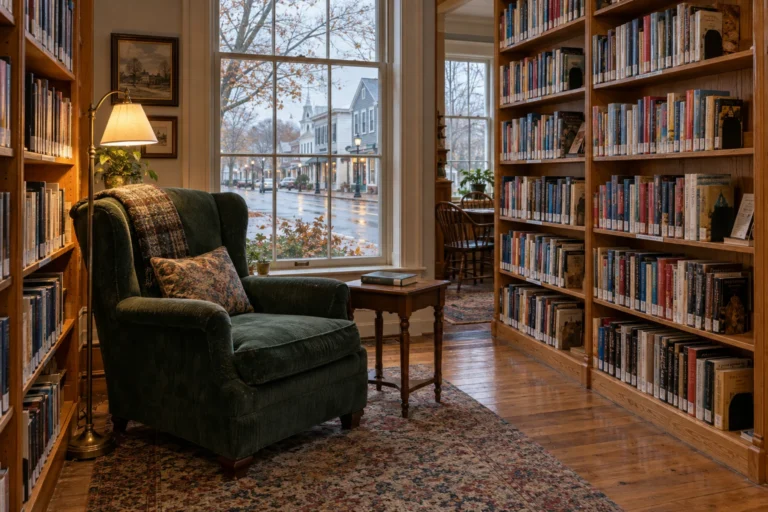
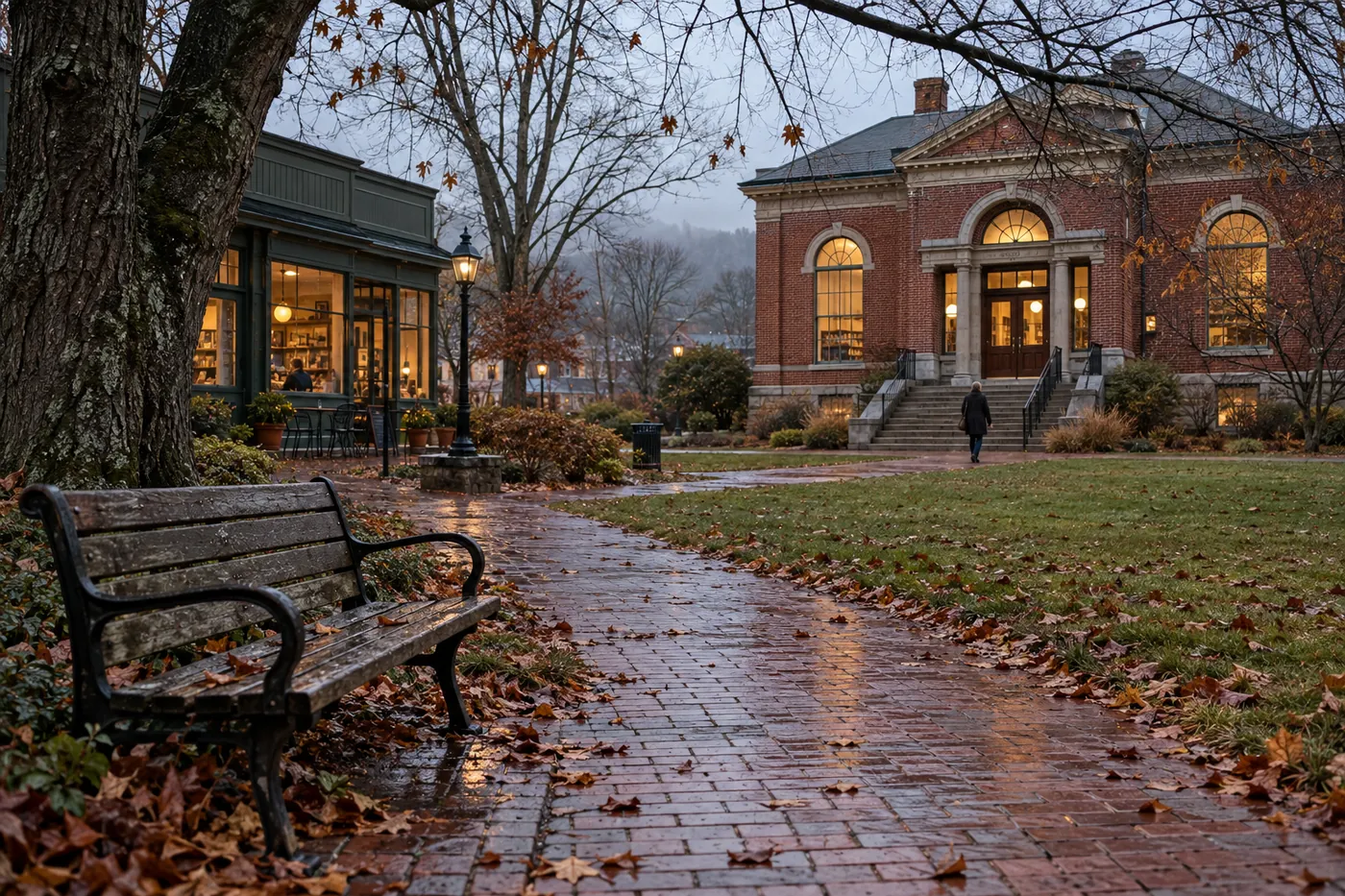
Perhaps the route passes a library or a small green with benches. I would take the path across if it were reasonably dry. A dog might be investigating the leaves while its owner waits, giving it the same few minutes I have been giving myself.
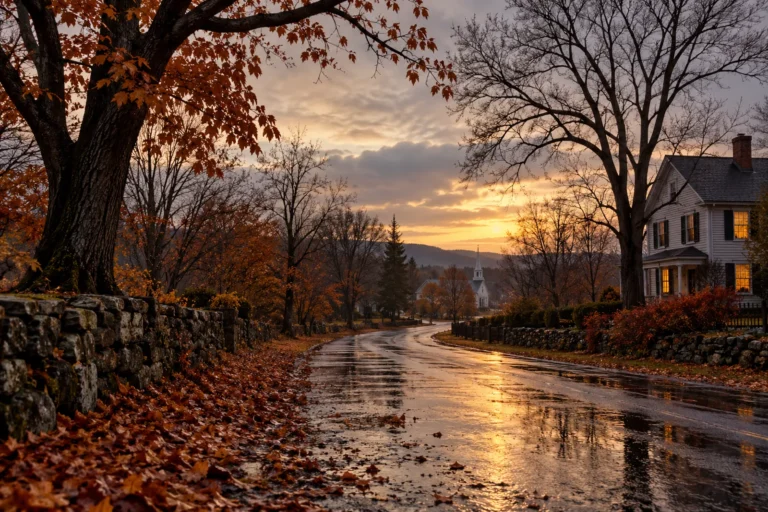
There is some of the pleasure of walking in the rain when the streets are quiet here, even if the rain has stopped. The pace allows the smaller connections to become visible. By the time I reach the next corner, the town feels less like a single view and more like somewhere I can begin to understand.
When the Walk Begins to Feel Like Evening
November has a way of making the return journey feel later than the walk out. You may have been outside for less than an hour, but the day is already changing.
I would notice it in the houses first. A room that looked dark before now has a lamp on. The upstairs windows are brighter. Somewhere, a person crosses a kitchen carrying something toward the counter, then disappears from view.
At the curb, the parked cars have become darker shapes, and I am less interested in stopping beneath a tree to look up. My hands go farther into my pockets. The remaining distance starts to feel just right.
I like the slight pull toward home that arrives at this point. It does not mean the walk has become unpleasant. Being outside has made the idea of going indoors more appealing, and I would let that feeling guide the last few blocks.
Having lived in England and Scotland for several years, I know how strongly certain streets and buildings can stay with me. An American small town would offer different details, but I would be looking for a familiar feeling: the quiet pleasure of passing through a place as people begin settling in for the night.
Bringing the Afternoon Home
At home, there would be the ordinary business of taking everything off: shoes by the door, coat hung up, hands gradually warming. I might not immediately know what to do next. After looking outward for a while, it can take a minute to return to the things waiting inside.
I would like to keep that minute. Perhaps stand in the kitchen, have a little water, and look once more at the light outside before turning on my own lamp.
What stays with me from the slow November walk I am imagining is surprisingly modest. A porch with worn steps. The view from a coffee-shop table. A side street I would have missed if I had been driving. None of those things would need to become a remarkable story afterward.
I think I would simply feel glad to have gone out. The town would have carried on with its afternoon, and I would have spent a little time paying attention to it.
That is the walk I want this season. A few streets, enough daylight to wander, and a reason to come home with cold cheeks and a clearer head. Before the evening gets away from me, I would put something warm on, find a place to sit, and let the rest of the day be a little quieter.