Walking Through Castle Combe: The English Village That Stayed With Me
There are places that impress you immediately because they are grand, dramatic, or famous, and then there are places that stay with you for quieter reasons. Walking through Castle Combe was like that for me. Nothing about the village needed to compete for attention. There were no enormous monuments demanding that I stop and look, and there was no single view that explained the entire place. What stayed with me was the feeling created by all the smaller things together.
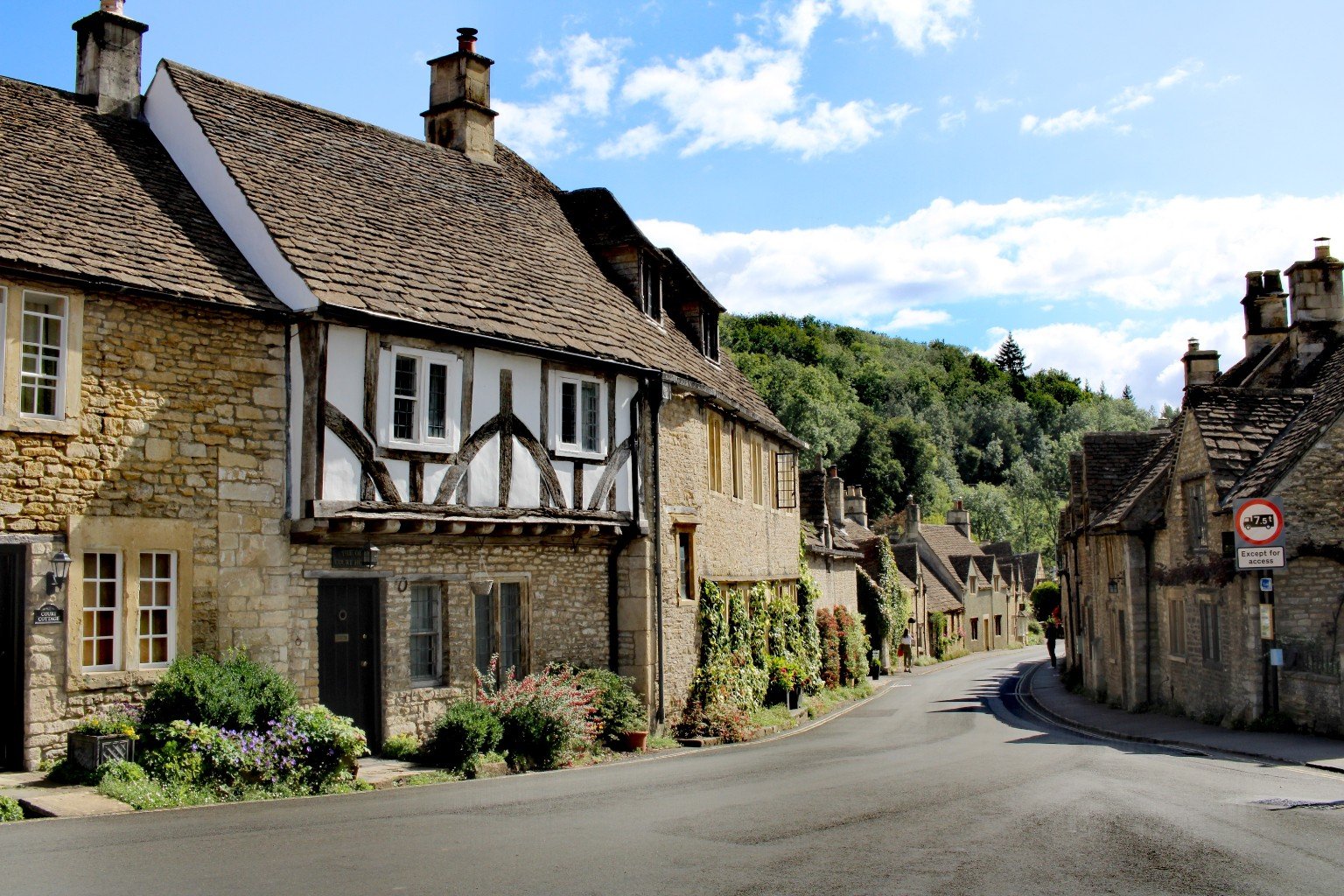
The stone cottages seemed to grow naturally out of the landscape. Flowers climbed around windows and doorways, roofs dipped and changed shape with age, and the narrow streets followed the village rather than forcing the village into a modern pattern. Even on a bright day, there was something old and settled about it.
Having lived in England for years, I saw many beautiful villages and historic places, but Castle Combe has remained unusually clear in my memory. Perhaps that is because it contains so much of the England I still miss: old stone, green countryside, small details around houses, a church rising above the rooftops, and the feeling that generations of ordinary life have passed through exactly the same streets.
The First Thing I Remember Is the Stone
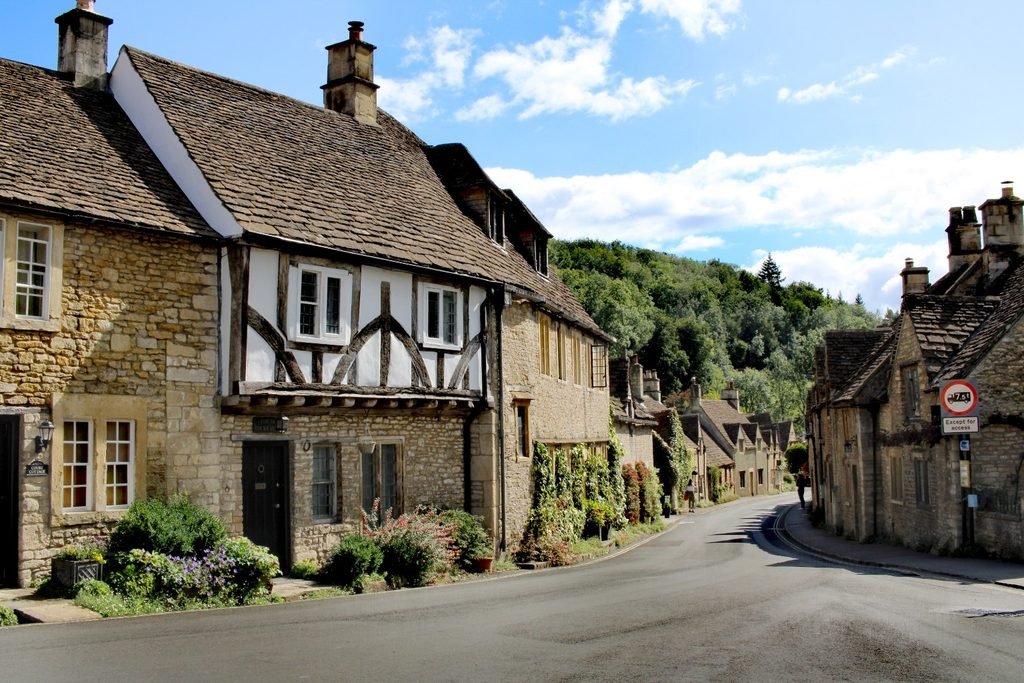
When I think about Castle Combe, I think first about the color of the buildings. There is a warmth to the local stone that photographs never quite reproduce in the same way as seeing it in person. Under sunlight it can appear almost golden, while in shade it becomes softer and more muted, and because so many of the buildings share the same material, the village feels unusually coherent.
The houses are different from one another, but they clearly belong together. Rooflines change, windows vary, porches lean forward, and plants have been allowed to soften walls that would otherwise feel severe. Nothing looks perfectly uniform, and that is part of the beauty.
One of the things I have always liked about old English villages is that age is not hidden. A wall does not have to be perfectly straight, a roof does not have to look new, and a doorway does not need to be symmetrical to be beautiful. Castle Combe feels comfortable with its own age.
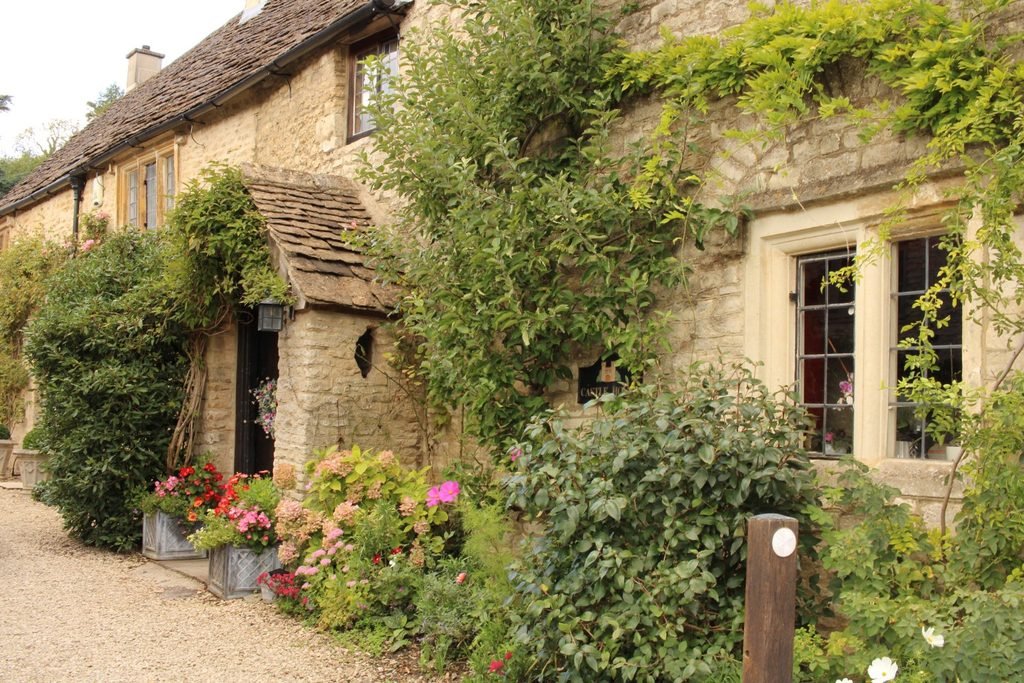
Standing there, I found myself looking at individual windows and doors almost as much as I looked at the street itself. Someone had planted flowers beside one entrance, another house had greenery climbing across the stone, and every few steps there seemed to be another small detail that made me slow down.
That kind of place is very different from somewhere you visit simply to photograph one famous building and leave.
Castle Combe rewards wandering.
A Village That Still Feels Lived In
Perhaps what I liked most was that Castle Combe did not feel like a historic display created only for visitors. However beautiful the village is, these are still houses, doors people walk through, windows people look from, and streets that are part of ordinary life.
That distinction matters to me.
Historic places become much more interesting when I can imagine the ordinary lives that exist within them. I like wondering what it must be like to wake up every morning in a house that other people have traveled across the world to photograph. I wonder whether the stone cottage outside eventually stops looking unusual to the person who lives there, or whether there are still mornings when they notice how beautiful their surroundings are.
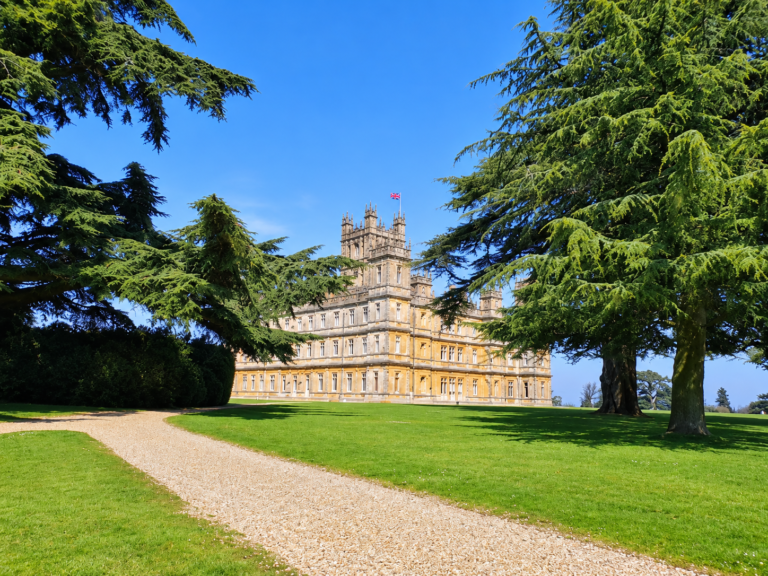
I had a similar feeling at Highclere Castle, even though the scale could not be more different. Highclere is a grand country house surrounded by an enormous landscape, while Castle Combe is intimate and domestic, but both reminded me that historic places existed as real places long before they became destinations for visitors.
The Church Above the Rooftops
One of my favorite photographs from the visit is not a carefully composed postcard view. It is the church tower rising behind the roofs, with flowers blurred in the foreground.
That image feels much closer to how I remember Castle Combe.
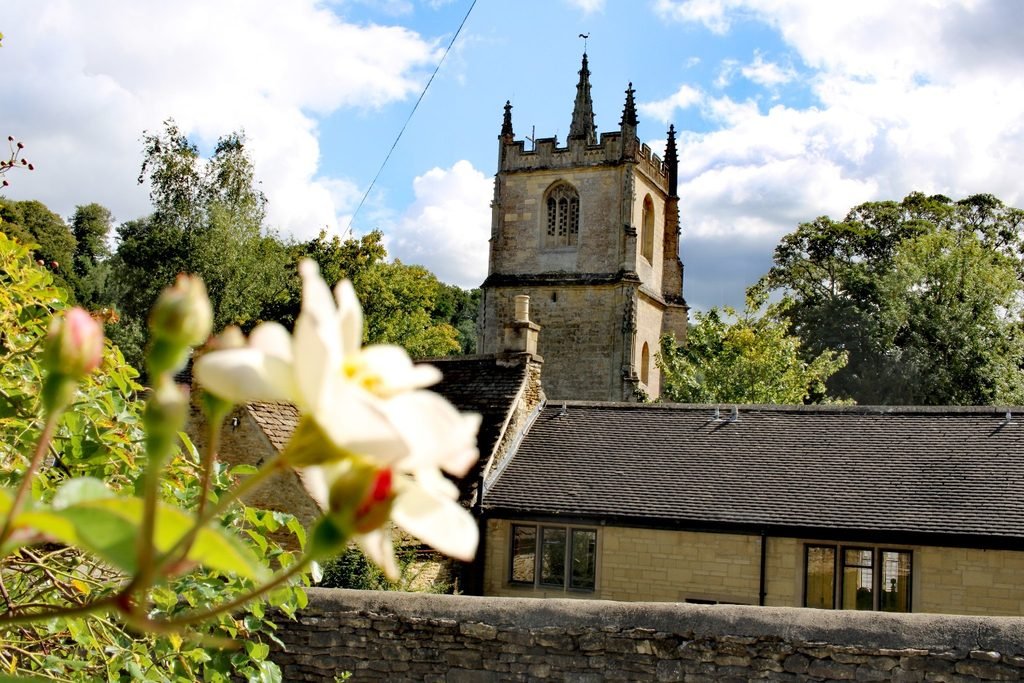
The tower gives the village a sense of continuity. It is visible above buildings that feel domestic and human in scale, quietly reminding you that the place has a history extending far beyond the afternoon you happen to be spending there.
I am often drawn to old churches and cathedrals for that reason. They make time feel visible. You can stand beside a building that has watched people arrive, leave, celebrate, worry, marry, mourn, and continue with ordinary life for generations.
That feeling is much stronger in person than it is in a history book.
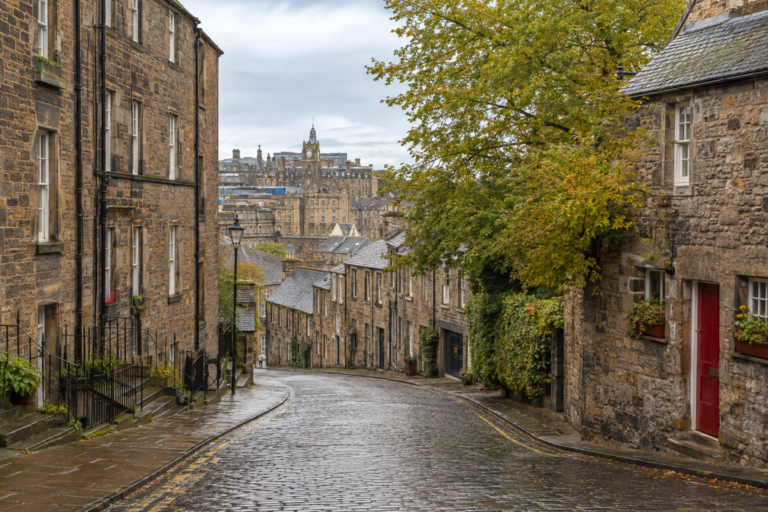
It is one of the reasons Edinburgh has stayed with me as well. Edinburgh creates that feeling on a much larger scale, with entire streets and sections of the city carrying their age openly, but the emotional effect can be surprisingly similar. Old places remind me that the present moment is only one small layer in a much longer story.
Flowers Against Old Stone
There is something particularly beautiful about flowers against weathered stone.
Maybe it is the contrast between something temporary and something that has been standing for generations. Flowers last a season, while the walls behind them may have survived centuries. Together they make the buildings feel softer and more alive.
Castle Combe was full of those small contrasts.
There were roses beside windows, hanging baskets near doors, greenery climbing across walls, and flashes of color against the muted stone. None of it felt heavily designed for effect. It simply looked like people had continued adding life to old buildings.
This is probably one of the reasons I prefer villages like Castle Combe to places that have been restored until every surface feels new. I want an old place to look old. I want to see that the buildings have been changed, repaired, lived in, and adapted.
Perfection would take something away from it.
The Streets Make You Walk More Slowly
Castle Combe is the sort of place where walking quickly would almost defeat the purpose.
There is always another doorway to notice, another roofline, another view opening farther down the street, and another small garden beside a house. Even when there are other visitors around, the scale of the village encourages you to slow down and pay attention.
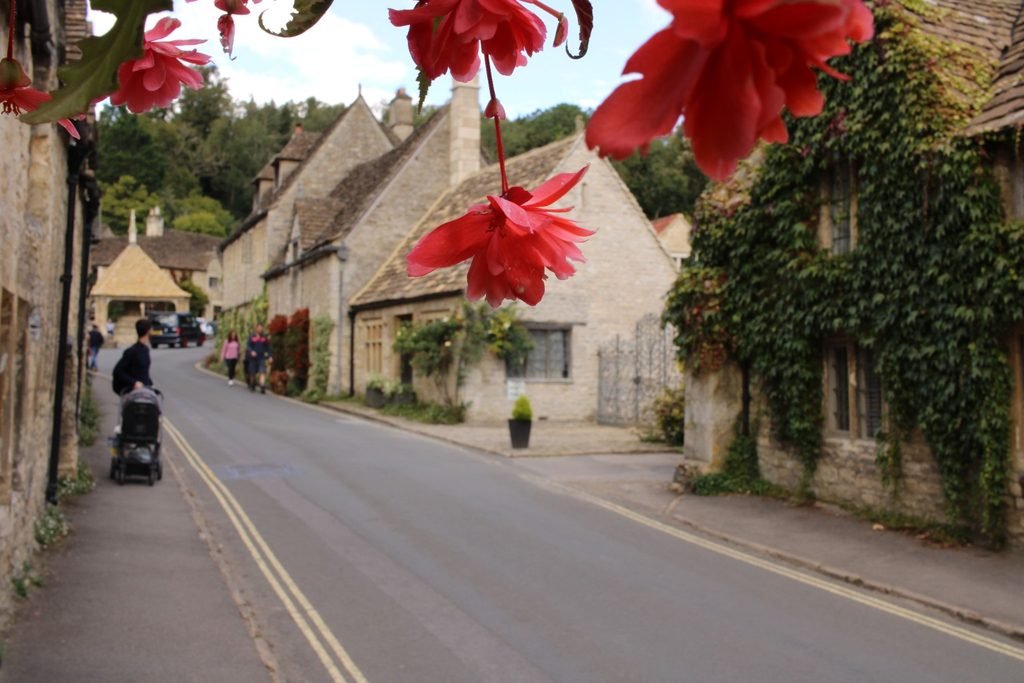
I especially like this photograph because it is not trying too hard to be beautiful. There are people walking, a stroller in the street, flowers hanging above the frame, and the road simply continuing through the village.
That is how memories of places often work for me.
I rarely remember only the perfect postcard view. I remember a corner, a wall, someone walking in the distance, the way the weather felt, or the particular combination of buildings and plants I happened to see while turning around.
Those unplanned details often stay longer.
The England I Still Miss
Living in England changed the way I see places like Castle Combe.
If I had only visited the country as a tourist, I might remember these villages differently. Because England was part of my everyday life for years, places like this became connected to something more personal.
There are things about England I remember through ordinary sensations rather than major events: damp mornings, stone walls, narrow country roads, green fields, old pubs, church towers, villages that seem to appear suddenly after a bend in the road, and houses that look as though they have been standing there forever.
Castle Combe brings many of those memories together.
It represents a version of England that can sometimes seem almost fictional from the outside, particularly to people who know it mostly through films and television. Yet places like this really do exist, and what makes them special is not simply that they are picturesque. People live in them. Cars pass through them. Gardens grow and change. Roofs need repairing. Seasons move across the same walls year after year.
That combination of beauty and ordinary life is what makes them feel real.
Small Details Can Stay Longer Than Famous Views
One of the photographs I like from Castle Combe is simply a close view of a cottage entrance.
There is nothing monumental about it.
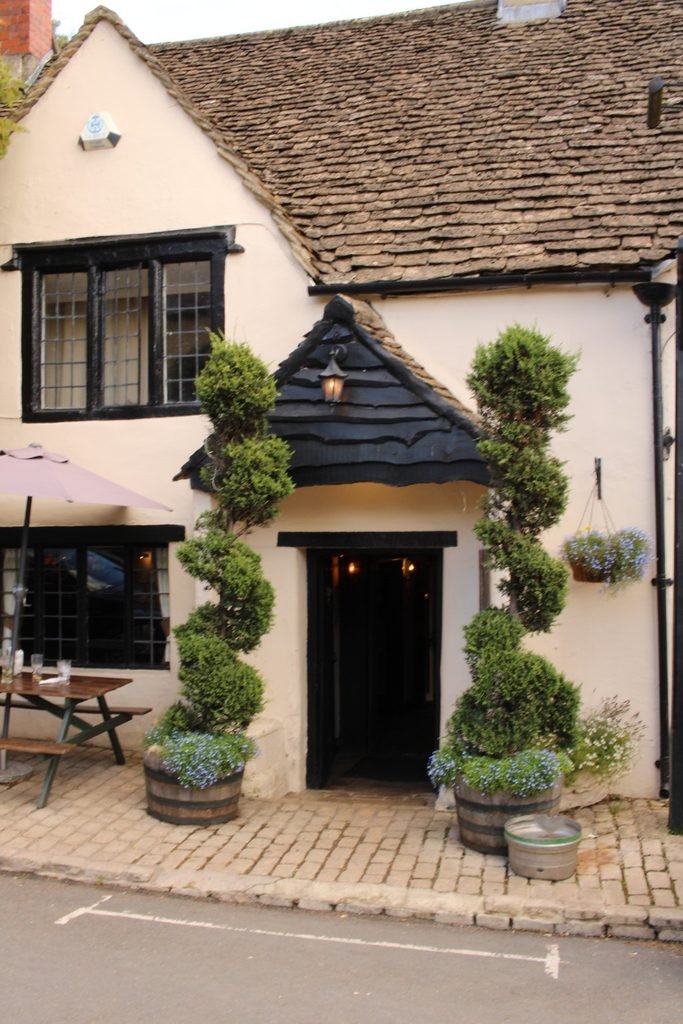
A small porch, old stone, a door, a couple of planters — things that would be completely ordinary to someone living there.
Yet when I look at photographs like this later, they bring back more than the image itself. They remind me of being physically present in the village and noticing details because I had nowhere else I needed to be at that moment.
That is one of the things I value more as I get older.
There is a difference between seeing somewhere and actually noticing it.
Castle Combe made me notice.
Old Places and the Feeling of Escaping Modern Life
I think part of the appeal of old villages is that they temporarily remove some of the visual noise of modern life.
Of course, the modern world is still there. There are cars, phones, visitors, signs, and everything else that belongs to the present day. Castle Combe is not frozen in time.
But old stone buildings and narrow streets change the proportions of the world around you. For a while, advertisements, glass towers, enormous parking lots, and constantly changing technology disappear from view.
Your attention moves toward things that change much more slowly.
Architecture.
Trees.
Gardens.
Weather.
A church tower.
A road that has followed roughly the same direction for generations.
Perhaps that is why places like Castle Combe feel restful to me.
It is not because I genuinely believe life was easier in the past. In many ways it clearly was not.
What I miss is the sense of permanence.
The Same Feeling I Find in Other Old Places
When I think about the places in Britain that have stayed with me, they are surprisingly different from one another.
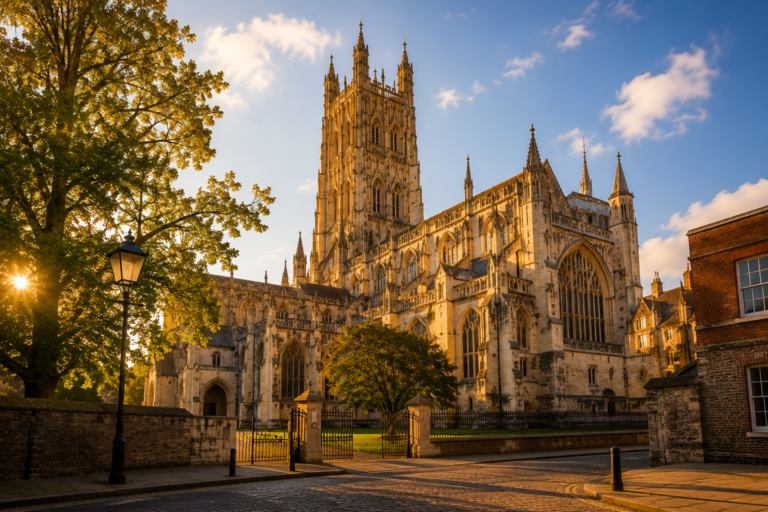
Edinburgh is dramatic, layered, and full of stone on an enormous scale. Highclere Castle is formal and grand, surrounded by the English countryside. Gloucester Cathedral is monumental and filled with history, yet it also carries my personal connection to Harry Potter.
Castle Combe is much smaller than all of them.
Yet it belongs in the same group in my memory.
Perhaps the common thread is not architecture at all. It is the feeling of standing somewhere that existed long before I arrived and will probably still exist long after I am gone.
When I wrote about walking through Hogwarts at Gloucester Cathedral, I described the strange experience of recognizing a place from fiction while also becoming aware of its much older real history. Castle Combe gave me something quieter, but the same awareness of time was there.
What Castle Combe Left With Me
Years later, I do not remember Castle Combe because something extraordinary happened there.
Nothing did.
I remember walking.
Looking at houses.
Taking photographs.
Noticing flowers.
Seeing the church above the roofs.
Watching the road curve between buildings.
And perhaps that is exactly why the memory has lasted.
Some of the places that stay with us are not connected to dramatic experiences. They stay because, for a few hours, we were fully present in them.
Castle Combe made me want to slow down and look properly.
When I see these photographs now, I notice details I had almost forgotten: the texture of the roofs, the greenery climbing across stone, the flowers beside doors, and the way almost every view seems to contain several different shades of the same warm English limestone.
The photographs also remind me of something I miss about living in England — the possibility of finding places like this without traveling into some imaginary version of the past.
They are still there.
People still live behind those windows.
The church still rises above the roofs.
Gardens still change with the seasons, and visitors still walk slowly through the streets taking photographs of details that are completely ordinary to the people who see them every day.
Walking Through Castle Combe Again
If I went back, I do not think I would try to do anything differently.
I would probably walk the same streets, look at the same buildings, stop beside the same walls, and take far too many photographs of doors, flowers, and stone cottages.
That is the kind of place Castle Combe is for me.
It does not make me want to return because there is a long list of things I failed to see.
It makes me want to return because I would like to experience the feeling again.
A quiet English village.
An old church above the rooftops.
Stone houses softened by flowers and greenery.
A road disappearing between buildings that have been standing there far longer than any of us.
Sometimes a place does not need to offer anything more complicated than that.
Castle Combe stayed with me because, for a little while, the modern world seemed quieter there.
And sometimes that is exactly the kind of place I want to find.