Walking Through Highclere Castle: The Real Home of Downton Abbey
There are places you visit because you have seen photographs of them, and there are places that feel familiar before you have even arrived.
For me, Highclere Castle belonged to the second kind.
Like millions of people, I knew it first as Downton Abbey. I had seen the long approach to the house, the grand exterior, the rooms, the staircase, and the surrounding countryside so many times on screen that by the time I stood there in real life, part of me already felt as though I knew the place.
Of course, knowing somewhere through television and actually standing in front of it are completely different things.
The screen gives you a story.
The real place gives you scale, silence, weather, distance, and the strange realization that the building existed long before the fictional family we associate with it.
That was the part I found most interesting.
I had come because of Downton Abbey, but I left remembering Highclere Castle itself.
Seeing Highclere Castle for the First Time
There is something unusual about approaching a building you have seen so many times before.
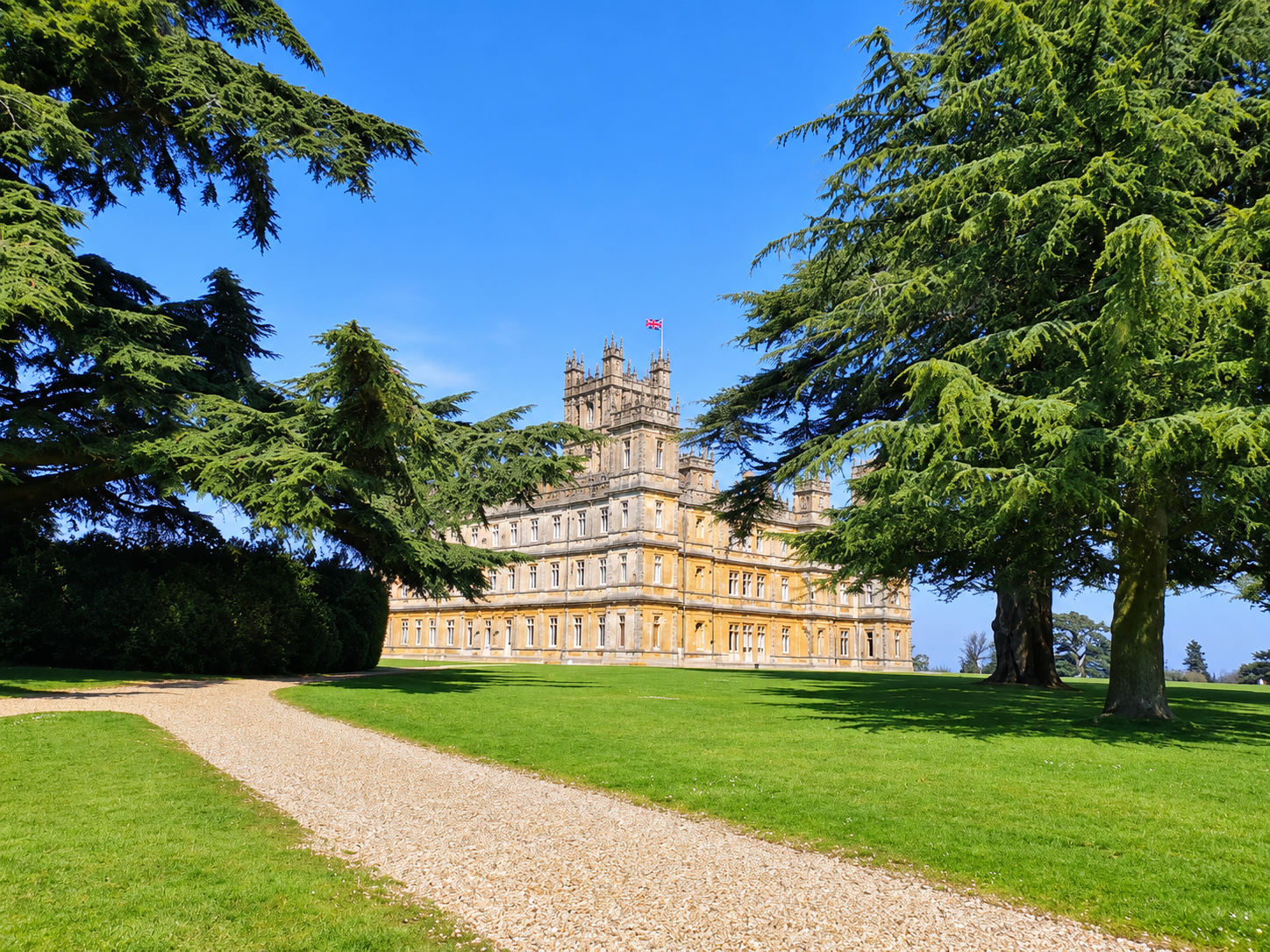
You expect recognition, but the recognition is only part of it. In person, Highclere Castle feels larger and more isolated than it does on television. The countryside around it matters just as much as the house, because the building does not sit in the landscape like something placed there for visitors. It feels as though the entire setting belongs together.
That first view is probably what I remember most clearly.
The house rises above the grounds with the confidence of a place that has been there for generations, surrounded by open space rather than streets, signs, or modern buildings competing for attention.
Even if you had never watched Downton Abbey, it would still be impressive.
But if you have watched it, there is another layer to the experience. Your mind starts connecting what you are seeing with scenes you already know, and for a moment the line between television and reality becomes surprisingly thin.
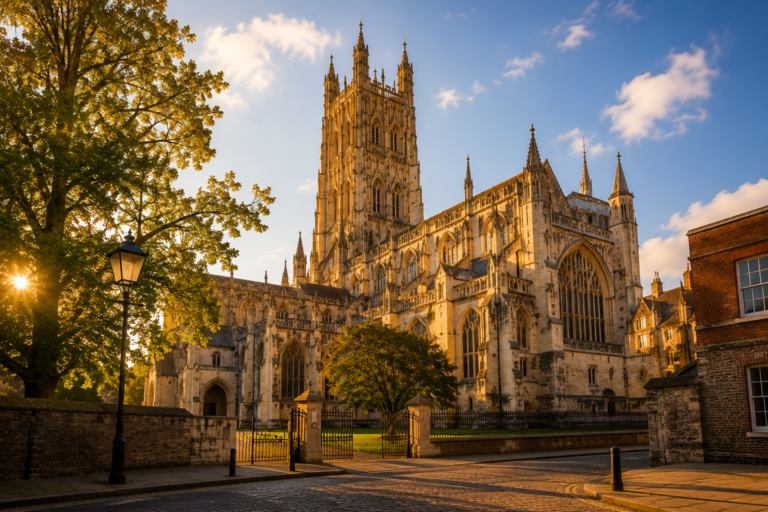
It reminded me of the feeling I had when walking through Hogwarts at Gloucester Cathedral. A place that had existed for years in my imagination suddenly had walls, floors, windows, and a real landscape around it.
The Strange Familiarity of the Rooms
Walking inside was even stranger.
The rooms did not feel unfamiliar in the way historic houses usually do when you visit them for the first time. There was a constant feeling of recognition, even when I could not immediately remember exactly where I had seen something before.
A doorway.
A staircase.
The proportions of a room.
The way the light entered through a window.
You begin realizing how deeply television can fix a place inside your memory.
But the real rooms also feel different from their screen versions. Television directs your attention. A camera decides what you see, where you stand, and what matters in the frame.
When you are physically there, your attention moves differently.
You notice details that have nothing to do with the show. You notice the age of things, the relationship between rooms, the height of the ceilings, the way sound carries, and the feeling of moving through a house rather than watching characters move through a set.
That difference made me appreciate the place more rather than less.
Downton Abbey may have brought me there, but the house did not need the television series to feel special.
A Real House Beneath a Fictional One
One of the things I love about visiting filming locations is the moment when the fictional place and the real place begin separating from each other.
On screen, Highclere is Downton Abbey. It belongs to the Crawleys, their servants, their problems, their celebrations, and all the people who pass through that fictional world.
In reality, Highclere Castle has its own history and identity that existed long before any camera crew arrived.
I think knowing both versions makes visiting more interesting.
You can enjoy recognizing the house from the series while also remembering that Downton is only one layer of a much older place.
There are real generations behind the walls, real people who lived there, real changes in fortune, and real history that cannot be contained inside a television story.
That is something I am always drawn to in old buildings.
They remind you that the present is only the latest layer.
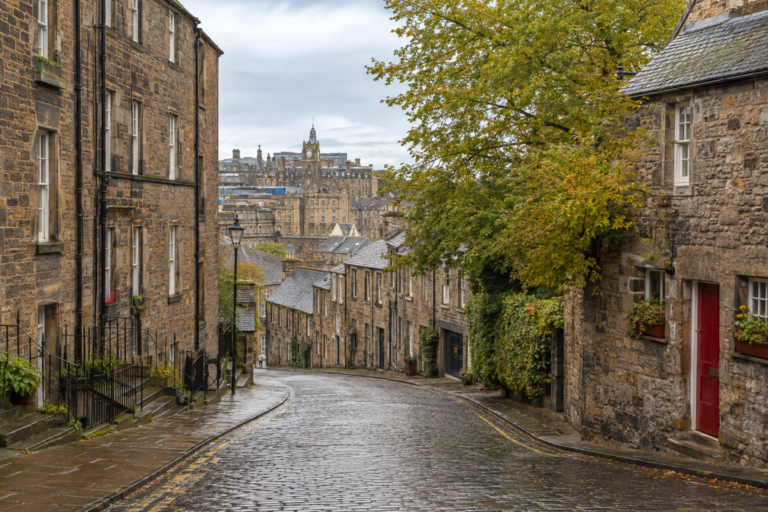
Perhaps that is also why places like Edinburgh stay with me. When I wrote about why Edinburgh has stayed with me, I kept returning to the same feeling: old places make time seem visible in a way that newer places rarely do.
Highclere gave me that feeling too.
The English Countryside Is Part of the Experience
The house is obviously the reason most people visit, but I do not think Highclere would feel the same without the countryside surrounding it.
There is something very English about the relationship between a grand house and the landscape around it. The approach, the lawns, the trees, the open views, and the distance from ordinary roads all contribute to the feeling long before you reach the front door.
Having lived in England for years, this kind of landscape has stayed with me as much as many of the buildings themselves.
There is a particular quietness to it.
Even famous places can sometimes feel surprisingly calm once you stop looking at them as attractions and simply look at where they are.
Highclere is grand, but the landscape softens it.
From a distance, the house feels almost like part of the countryside rather than something dominating it.
That contrast between formality and nature is one of the things I remember most fondly.
Downton Abbey Made the Visit More Emotional
I do not think there is anything wrong with admitting that television can make a real place more meaningful.
Sometimes we are told that we should appreciate historic buildings only for their architecture or history, as though recognizing them from a film or television series somehow makes the experience less serious.
I have never felt that way.
Stories attach emotions to places.
A building may be beautiful on its own, but once you associate it with characters, conversations, music, or moments that stayed with you, visiting it becomes something different.
That was certainly true at Highclere.
There were moments when I was simply looking at a beautiful English country house, and other moments when I could almost imagine the familiar world of Downton Abbey filling the rooms again.
I think both experiences can exist together.
One does not have to cancel out the other.
The Quiet Side of Highclere
The grand rooms naturally attract attention, but what stayed with me most was not only grandeur.
It was the quieter feeling around the place.
Old houses often do that to me.
Even when they are filled with visitors, there are moments when you notice a window, a corridor, a view across the grounds, or some small detail that makes you wonder about all the ordinary days that must have passed there.
That is usually when a historic place becomes interesting to me.
I begin thinking less about famous events and more about everyday life.
Someone once looked through that window when the weather was bad.
Someone worried about something in that room.
Someone waited for a person to arrive.
Someone walked through the same doorway without imagining that strangers would be touring the house generations later.
History becomes easier to feel when you remember that most of it was once simply ordinary life.
Why Places Like This Stay With Me
Highclere Castle fits almost perfectly into the kind of places I find difficult to forget.
It is old without feeling dead, grand without feeling completely distant, and familiar because of Downton Abbey while still having an identity entirely its own.
There is also something about visiting a place you have known through fiction that changes the memory of both.
Afterward, when you watch the show again, the building is no longer only an image on a screen.
You know something about the space beyond the camera.
You remember the grounds outside.
You remember what it felt like to stand there.
The fictional place becomes connected to one of your own memories.
That is what happened to me with Gloucester Cathedral, and it happened again at Highclere Castle.
Returning to Downton After Visiting Highclere
Watching Downton Abbey after visiting Highclere feels different.
I notice the house more.
The exterior no longer feels like an establishing shot designed to tell me where the scene is taking place. It is somewhere I remember standing.
The rooms have a little more depth because I know they continue beyond the edge of the television screen.
Even the landscape feels more real.
Perhaps that is one of the nicest things about visiting filming locations that genuinely matter to you.
You bring something home that photographs alone cannot quite capture.
The next time the story begins, you recognize more than the location.
You recognize your own memory inside it.
More Than the Real Downton Abbey
Highclere Castle will probably always be known to many people as the real Downton Abbey, and I understand why.
That is what first made me want to see it too.
But after visiting, I think of it slightly differently.
Downton Abbey gave me a reason to notice the house.
Highclere Castle gave me a reason to remember it.
There is the famous exterior, the recognizable rooms, and all the connections to a television world I loved, but there is also the English countryside, the history, the silence between rooms, and the simple feeling of standing somewhere that has existed through lives very different from our own.
Some places become special because we discover them.
Others become special because they already feel familiar when we arrive.
Highclere was both for me.
And that is probably why it has stayed with me.