10 Gothic & Dark Academia Classics to Read on a Rainy Autumn Day
For afternoons of rain-darkened windows, warm drinks, old houses, restless ghosts, and books that make the outside world feel very far away.
◆
Some books seem to belong to bright mornings and open windows. Others wait for rain.
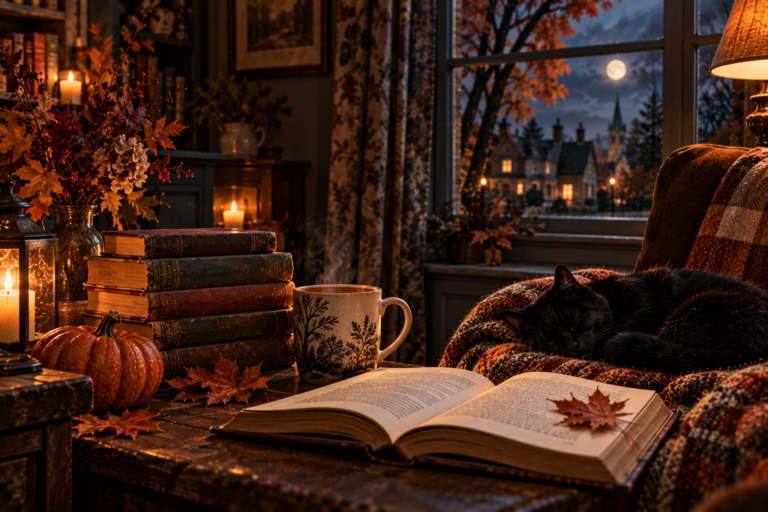
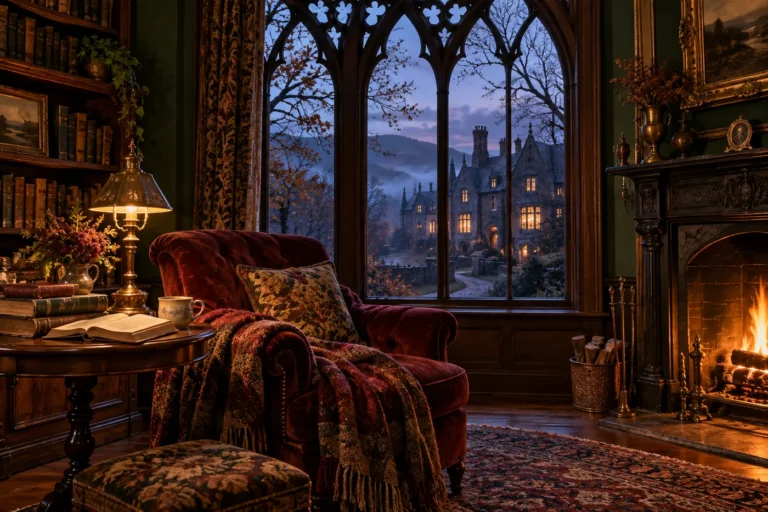
They are the books you reach for when the sky turns the color of slate, the room grows dim before dinner, and the sound of weather against the glass makes staying home feel like a small luxury. Gothic novels and dark academia stories understand that mood better than almost any other kind of literature. They give us old houses, candlelit rooms, windswept landscapes, libraries, secrets, doomed romances, moral unease, and the sense that something is always waiting just beyond the firelight.
This is not a list for racing through ten titles. It is a reading shelf for the colder part of the year — a collection to return to slowly, one stormy afternoon or long autumn evening at a time.
Dark academia classics are especially perfect for rainy autumn days, when I want something atmospheric, old-fashioned, and a little mysterious.
Affiliate disclosure: This post contains Amazon affiliate links. If you make a purchase through one of these links, I may earn a small commission at no additional cost to you.
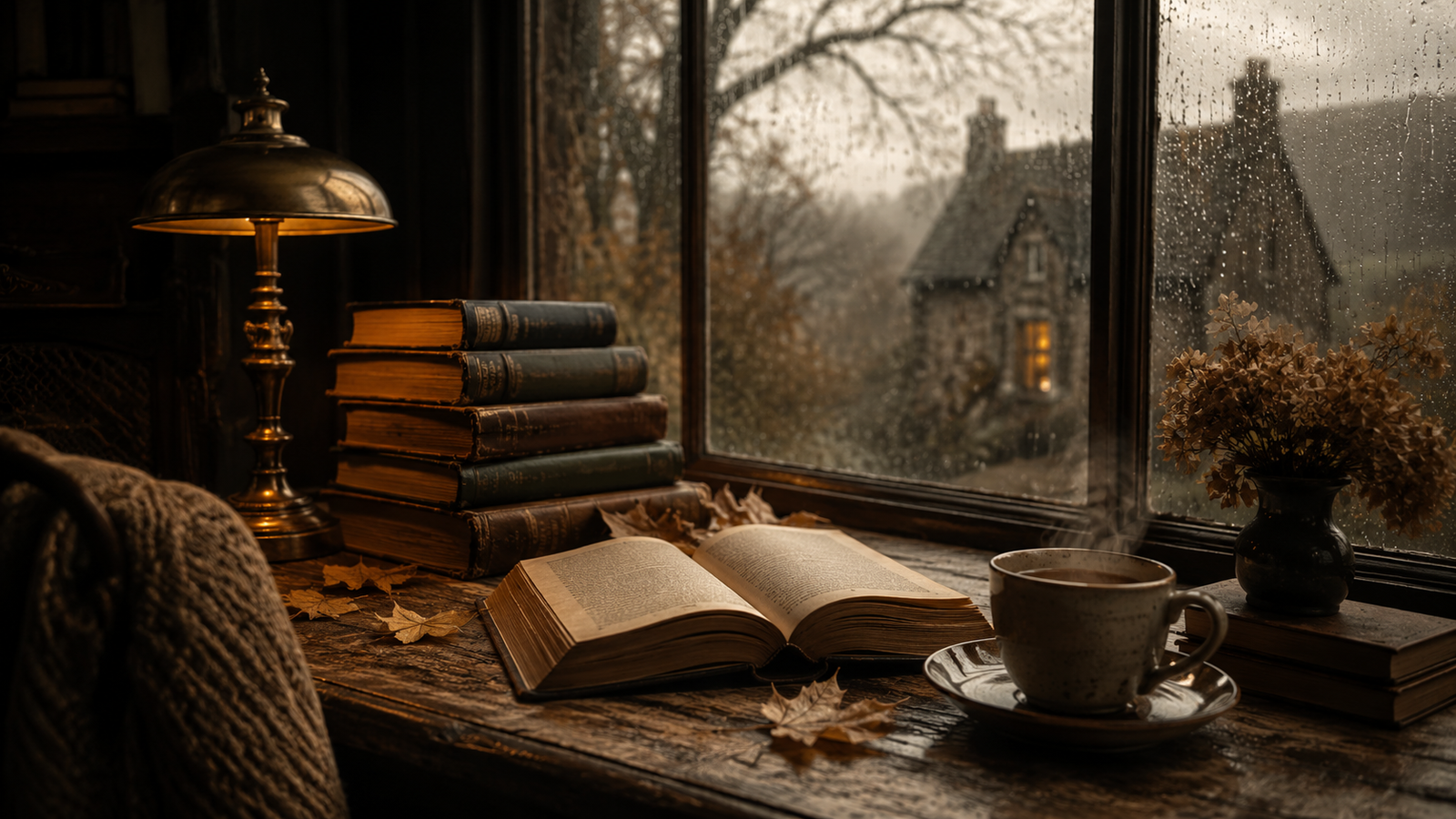
Make coffee or tea. Turn on the lamp instead of the overhead light. Let the rain do what it does. Then choose a book.
1. Wuthering Heights — Emily Brontë
If any novel feels as though it was written by the weather itself, it may be Wuthering Heights.
The Yorkshire moors are not merely a setting here. They feel alive: wild, cold, lonely, and impossible to separate from the people who inhabit them. Catherine and Heathcliff’s story is not a gentle romance, and it is certainly not a comforting one. It is fierce, obsessive, destructive, and full of the kind of emotional weather that makes a quiet room feel even warmer by contrast.
Read it when the wind is strong enough to hear through the walls. This is a book for gray afternoons, dark tea, heavy blankets, and the particular pleasure of being safely indoors while the world outside looks inhospitable.
The mood: windswept moors, old stone, storm clouds, impossible love, and a house full of memories.
Find Wuthering Heights on Amazon
2. Jane Eyre — Charlotte Brontë
Jane Eyre offers something Gothic fiction does especially well: darkness without surrendering warmth.
There are lonely childhood rooms, a mysterious manor, strange sounds in the night, winter roads, hidden histories, and a romance shadowed by secrets. But at the center of it all is Jane herself — observant, self-respecting, inwardly strong, and determined to build a life without giving away the part of herself that belongs only to her.
That balance is what makes the novel such a satisfying autumn read. Thornfield Hall gives us all the atmosphere we could want, while Jane gives the story its steady flame.
The mood: candlelit corridors, cold mornings, quiet resilience, mystery, and the warmth of a fire after a long journey.
3. The Picture of Dorian Gray — Oscar Wilde
For a darker, more elegant kind of autumn reading, step into the beautiful and deeply unsettling world of Dorian Gray.
Wilde’s novel is filled with drawing rooms, art, conversation, temptation, vanity, and moral decay. Everything appears polished on the surface, yet something underneath is steadily rotting. That contrast gives the story its strange luxurious darkness.
It is also wonderfully suited to dark academia readers: ideas matter here. Beauty, youth, influence, conscience, art, and corruption are all part of the story’s architecture. It is the sort of book that leaves sentences lingering in your mind long after you close it.
The mood: velvet rooms, portraits, gaslight, beautiful surfaces, dangerous ideas, and a secret no one should see.
Find The Picture of Dorian Gray on Amazon
4. The Secret History — Donna Tartt
Few modern novels have shaped the dark academia mood as strongly as The Secret History.
A small group of intellectually intense students studies ancient Greek at an elite New England college. From the beginning, we know something terrible has happened. The real pull of the novel is discovering how beauty, exclusivity, obsession, and self-invention can lead intelligent people somewhere very dark.
The New England setting makes it especially irresistible in fall: old campus buildings, changing leaves, cold air, books, classical studies, private rituals, and the unsettling closeness of a small circle that has begun to shut out the rest of the world.
It is longer and more contemporary than many books on this list, but if your ideal rainy-day reading includes old libraries and morally complicated people in wool coats, it belongs here.
The mood: New England autumn, classical languages, old money, secrets, snow, and the dangerous beauty of belonging.
Find The Secret History on Amazon
5. Frankenstein — Mary Shelley
Frankenstein is often reduced to its monster, but the novel itself is far stranger, sadder, and more beautiful than its popular image suggests.
It moves through laboratories, mountains, frozen landscapes, storms, lonely rooms, and long stretches of isolation. At its heart are questions that still feel modern: What do we owe the things we create? What happens when ambition outruns wisdom? What does loneliness do to a person — or to a creature who desperately wants to be treated as one?
The book has the chill of winter long before winter arrives. Read it on a wet evening when the windows are black mirrors and the house has gone quiet.
The mood: storms, scientific ambition, Alpine cold, loneliness, candlelight, and consequences that cannot be undone.
6. Rebecca — Daphne du Maurier
There is a reason Manderley is one of literature’s unforgettable houses.
Rebecca begins with a dream of returning to it, and from there the house seems to hover over the entire novel. The unnamed narrator arrives as the new Mrs. de Winter, but Manderley still feels inhabited by the memory of the woman who came before her. Rebecca is absent and somehow everywhere.
Du Maurier creates tension out of rooms, flowers, clothes, handwriting, servants, social discomfort, and the quiet terror of comparison. The result is Gothic without needing ancient ruins or supernatural creatures.
This is an ideal book for a long rainy weekend — especially if you like stories in which a beautiful home gradually becomes something much less comforting.
The mood: a grand country house, sea mist, rain, jealousy, old rooms, and a presence that refuses to disappear.
7. The Hound of the Baskervilles — Arthur Conan Doyle
Sometimes a rainy day needs fog, a lonely moor, and Sherlock Holmes.
The Hound of the Baskervilles takes the familiar precision of Holmes and Watson and places it inside a wonderfully Gothic landscape. There is an old family curse, a remote estate, dangerous wetlands, strange sounds in the darkness, and the possibility that something unnatural is roaming the moor.
It is one of the most accessible books on this list if you want atmosphere without committing to a very long novel. The mystery moves quickly, while Dartmoor supplies all the weather-beaten unease you could ask for.
The mood: fog, moorland, an old manor, muddy paths, a legendary beast, and footsteps where no one should be walking.
Find The Hound of the Baskervilles on Amazon
8. Dracula — Bram Stoker
Dracula is not subtle about being Gothic, and that is part of the pleasure.
Castles, wolves, night journeys, old legends, letters, journals, ships, storms, graveyards, mist, and a predator who seems to belong to another age — the novel gathers almost every Gothic ingredient and somehow makes them work together.
Its epistolary structure also makes it an enjoyable book to read in pieces. A journal entry here, a letter there, another cup of tea, another burst of rain against the window.
And beneath the familiar vampire imagery, there is a fascinating tension between the ancient and the modern: superstition and technology, old fears and new confidence, a dark past forcing its way into a changing world.
The mood: Transylvanian mountains, candlelight, wolves in the distance, stormy crossings, and something ancient at the door.
9. Northanger Abbey — Jane Austen
If you love Gothic atmosphere but occasionally want to smile at it, Northanger Abbey is a perfect rainy-day companion.
Austen’s novel follows Catherine Morland, a young woman whose love of Gothic novels has trained her imagination to expect mystery everywhere. When she visits Northanger Abbey, ordinary details begin to look wonderfully suspicious.
The book affectionately teases Gothic conventions while still understanding why readers enjoy them. That makes it especially charming for anyone who has ever looked at an old staircase, a locked chest, or a storm outside and hoped — just a little — that there might be a story behind it.
The mood: old abbeys, overactive imagination, country visits, candlelight, gentle satire, and the pleasure of wanting life to feel a little more mysterious.
Find Northanger Abbey on Amazon
10. The Shadow of the Wind — Carlos Ruiz Zafón
For the final book, we leave the English moors and travel to a shadowed, literary Barcelona.
The Shadow of the Wind begins with a secret place called the Cemetery of Forgotten Books, where a young Daniel Sempere chooses a novel that will change his life. His attempt to learn about its mysterious author opens the door to hidden identities, lost love, danger, old mansions, bookshops, and stories buried inside other stories.
It is not a traditional Gothic classic in the nineteenth-century sense, but it belongs naturally beside them in spirit. It loves books, memory, rain-soaked streets, old buildings, and the beautiful melancholy of things that almost disappeared.
This is the book to choose when you want your rainy-day reading to feel immersive — the kind of story that makes you forget, for a few hours, what century you are in.
The mood: old Barcelona, forgotten books, narrow streets, mystery, melancholy, and a story hidden inside another story.
Find The Shadow of the Wind on Amazon
A Reading List for the Darker Half of the Year
The best autumn reading does not have to be frightening. Sometimes it only needs to make the room around you feel different.
A good Gothic novel can make a lamp seem warmer, a storm more dramatic, and an ordinary evening at home feel like a place you deliberately chose to be. Dark academia adds another pleasure: the sense that reading itself is part of the atmosphere — that books, ideas, old buildings, handwriting, history, and quiet concentration still have weight.
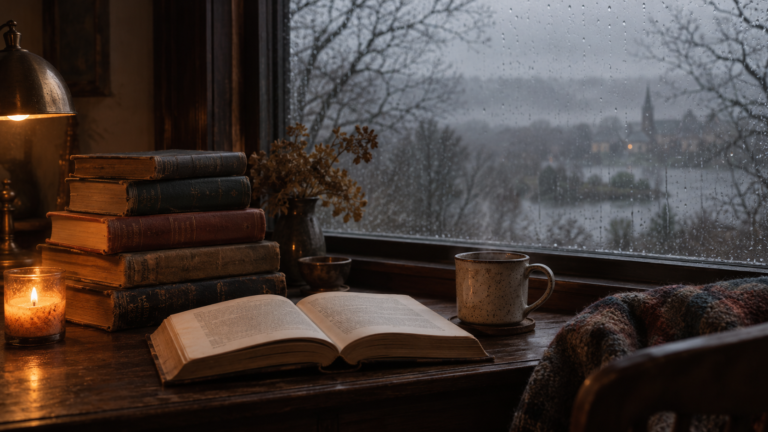
You do not need a manor house, a private library, or a Scottish castle to create that feeling. A chair near a window is enough. So is a mug you like, a small lamp, an old paperback, and an evening with nowhere else to go.
Why Dark Academia Classics Feel Made for Rainy Days
When the next rainy autumn day arrives, choose one book from the shelf, make something warm, and let the weather stay outside.
Stay warm. Read slowly. Let it rain.