Old-Fashioned Halloween: The Atmosphere I Wish the Season Still Had
There is a version of Halloween that I sometimes feel I remember even though I never really lived through it.
It exists somewhere between old photographs, illustrations, family stories, vintage decorations, old films, and the kind of October evenings that seem to belong to another time. The houses are darker. The streets are quieter. Decorations are homemade rather than bought in enormous boxes, and the season seems to rely more on imagination than spectacle.
That is the Halloween I find myself wishing for.
Not because everything in the past was better, and not because modern Halloween cannot be fun, but because the older version seems to have understood something I am increasingly drawn to: atmosphere does not need excess.
A pumpkin on a porch could be enough.
A lantern in a window could be enough.
A paper ghost made at the kitchen table, a bowl of apples, a dark lane, a story told after sunset, or a few children walking between houses with homemade costumes could be enough to make the evening feel completely different from any other night of the year.
That is what I imagine when I think about old-fashioned Halloween.
It feels smaller, stranger, quieter, and somehow more memorable.
I Miss the Idea of Halloween Before Everything Became Bigger
Modern seasonal decorating often seems to work on the assumption that more is always better.
More lights.
More props.
More pumpkins.
More movement.
More sound.
And while there is something undeniably fun about seeing a house completely transformed for Halloween, I think some of the atmosphere disappears when every corner is explained.
Mystery needs a little darkness.
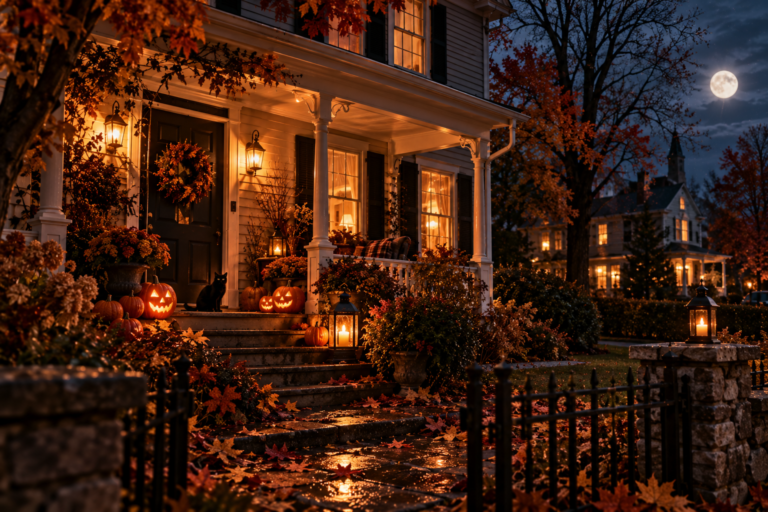
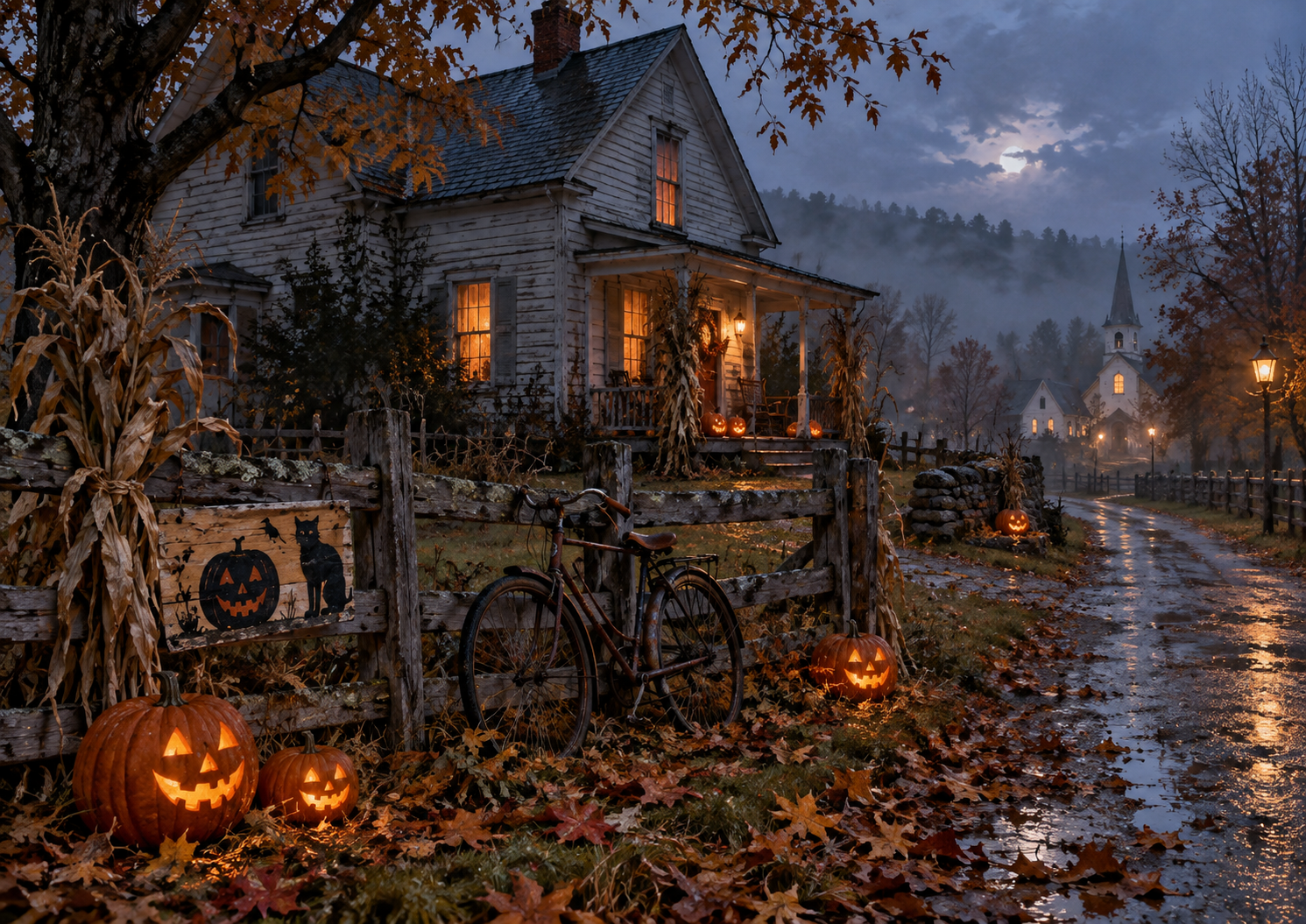
An old house with one glowing jack-o’-lantern on the steps can sometimes feel more Halloween-like than a garden filled with twenty decorations because your imagination has somewhere to go.
Who carved the pumpkin?
Why is only one upstairs window lit?
Why is the gate slightly open?
Why does that porch look completely ordinary during the day and somehow different after sunset?
Those questions are part of the atmosphere.
I think the quiet side of Halloween appeals to me for exactly the same reason. I do not need the season to constantly tell me that it is spooky. I would rather notice it slowly.
Old-fashioned Halloween, at least in the version I imagine, seems to leave more room for that.
The darkness matters.
The weather matters.
The house matters.
The waiting matters.
The Decorations Were Better When They Looked Homemade
There is something charming about decorations that clearly came from somebody’s hands rather than a warehouse.
Paper pumpkins.
Cut-out black cats.
Simple ghosts.
Hand-painted wooden signs.
Candles inside carved pumpkins.
A wreath made from dried leaves, branches, or corn husks.
None of these things have to be perfect.
In fact, I think they become more appealing when they are slightly uneven.
A jack-o’-lantern does not need a complicated carved design to be memorable. Sometimes the strange crooked smile made with an ordinary kitchen knife looks far more convincing than something perfectly symmetrical.
The same is true of old Halloween illustrations.
They often feel a little odd.
Cats have exaggerated backs.
Pumpkins have expressions that are almost human.
Moons are too large.
Witches seem to belong more to folklore than costumes.
There is something slightly uncomfortable about them, but also playful.
That combination is difficult to reproduce when Halloween becomes too polished.
I want it to feel as though someone found a few ordinary things around the house and decided that, for one October evening, they could become something else.
A Pumpkin Should Look Like It Came From the Garden
I know this sounds like a very small thing, but I think pumpkins themselves are part of what has changed.
I prefer them when they look irregular.
Different sizes.
Different shapes.
A little dirt still clinging to one side.
Perhaps a stem that twists in an unexpected direction.
A porch filled only with identical perfect orange pumpkins looks beautiful, but a few mismatched ones somehow feel more real to me.
They remind me that Halloween comes from autumn rather than arriving separately from it.
That matters.
I have never wanted Halloween to replace the season around it. I want it to feel like the darker edge of everything October has already been doing.
The leaves are already falling.
The evenings are already closing in.
The air is already colder.
The garden is already fading.
Halloween simply notices those changes and gives them a story.
That is why I like keeping it connected to the beautiful things autumn brings back into my life rather than treating it like a completely separate season.
Old Houses Seem to Understand Halloween Better
Some houses simply look made for October.
Not necessarily because they are grand or dramatic, but because they have accumulated enough age to feel as though they remember things.
Weathered clapboard.
Uneven porch steps.
Old glass in the windows.
A narrow staircase visible through the front door.
A tree that has grown too close to the house.
A porch light that casts more shadow than brightness.
Those details are enough.
An old house on a summer afternoon might look completely welcoming, but once the light begins to disappear on a late October evening, the same building becomes something else.
Not dangerous.
Just full of possibility.
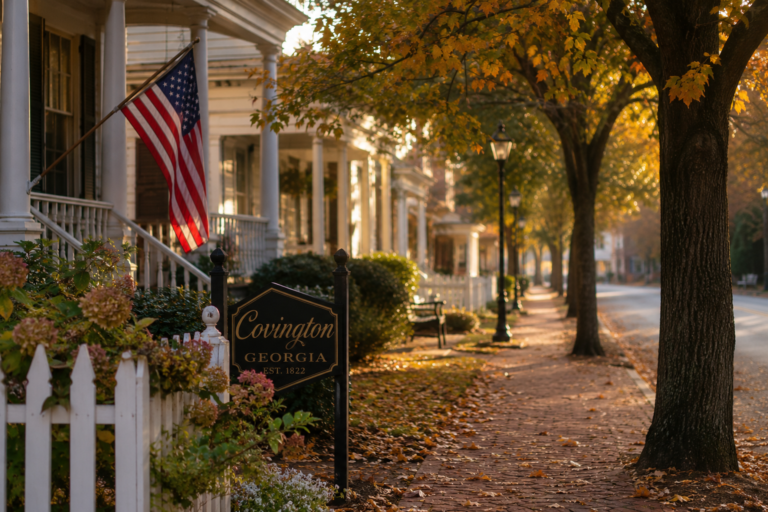
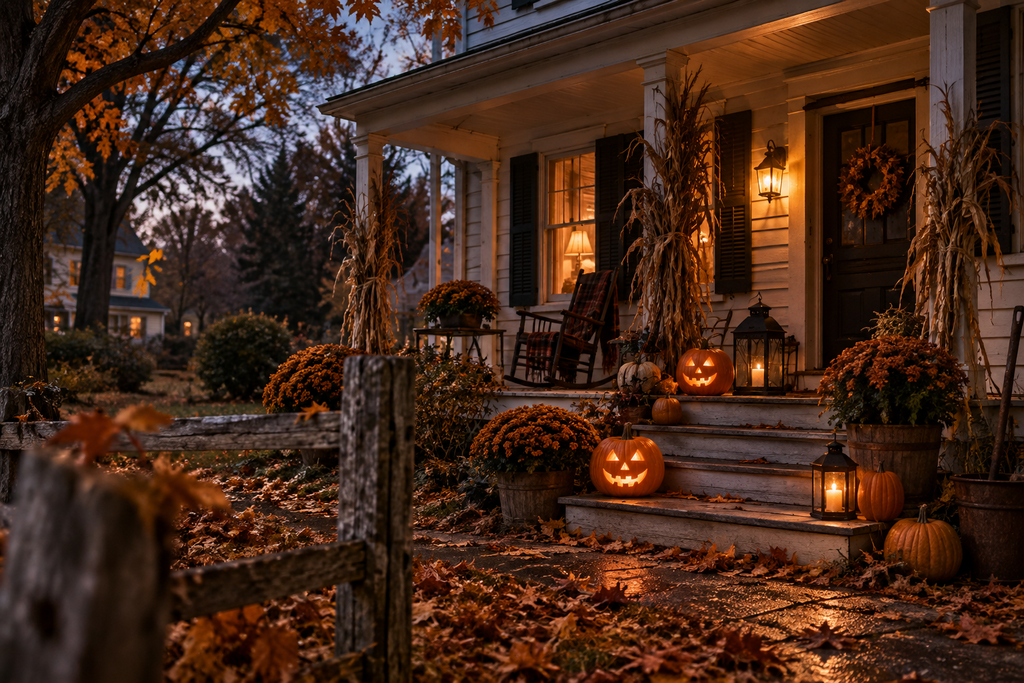
That is one reason I love old American neighborhoods during Halloween. The architecture does so much of the work before a single decoration is added. A Victorian house, a colonial home, an old farmhouse, or even a modest wooden house with a deep porch already carries its own atmosphere.
Add a few pumpkins and fallen leaves and suddenly the whole street feels like the beginning of a story.
Costumes Used to Feel More Mysterious
I think older Halloween costumes often seem more unsettling precisely because they were simpler.
A sheet.
A homemade mask.
An old hat.
A dark coat.
A face painted quickly in the kitchen.
There was less detail, but perhaps that made the imagination fill in more.
Modern costumes can be incredibly impressive, but sometimes they explain exactly what they are meant to be.
Older costumes often look stranger.
A person in an old photograph might simply be wearing a handmade mask with an expression that is difficult to read.
That is enough to make the image stay with you.
It makes me think about how powerful suggestion can be.
A mask does not have to look realistic if the person behind it is standing in the dark.
A costume does not need to be elaborate when the streetlights are low and the leaves are moving across the road.
The surroundings finish the work.
That is part of the Halloween atmosphere I wish we had kept more of.
I Like the Idea of Games That Did Not Need Screens
There is something appealing about the old Halloween games people used to play because so many of them involved ordinary things.
Apples.
Candles.
String.
Paper.
Nuts.
Stories.
Small predictions about the future.
Some were silly, some were superstitious, and some probably made far more sense before modern entertainment filled every evening, but I like the idea of everyone gathering in one room and allowing simple things to become part of the night.
Even something as ordinary as bobbing for apples feels connected to the season in a way that opening an app never will.
There is also something almost theatrical about candlelight when there are no screens competing with it.
Faces look different.
Rooms look different.
Shadows become part of the space.
A simple story can become much more convincing.
That is probably why so many older Halloween traditions seem to revolve around firelight, darkness, and storytelling.
They understood that atmosphere is easier to create when people are actually paying attention to it.
Ghost Stories Belong to a Room Where Everyone Is Quiet
I think ghost stories are one of the traditions I would most like to keep.
Not necessarily because I believe every story being told, but because of the ritual around them.
Someone begins.
Everyone else listens.
The room becomes quiet.
Outside, perhaps the wind moves against the house or rain touches the windows.
The story gets a little darker.
And suddenly every noise from the hallway matters more than it did ten minutes earlier.
There is something wonderfully simple about that.
No effects.
No music.
No screen.
Just a voice and the imagination of everyone listening.
A good ghost story does not even need to show much.
It can be about a road.
A house.
A room that was supposed to be empty.
A person who saw someone standing in a place where nobody should have been.
Those are the stories that seem to linger.
It is the same reason Gothic books for Halloween nights work so well for me. They do not always need to frighten me directly. Sometimes all I want is the feeling that the ordinary world has shifted slightly.
The Streets Should Be a Little Darker
Perhaps one of the biggest differences in the Halloween atmosphere I imagine is simply darkness.
Modern life is very bright.
Streetlights.
Security lights.
Cars.
Phones.
Shop windows.
Televisions glowing behind curtains.
It is difficult for darkness to remain completely dark.
That is obviously useful for many reasons, but October loses something when night becomes too illuminated.
I imagine old Halloween streets with pools of light rather than continuous brightness.
One porch glowing.
Then darkness.
Another house farther down the road.
A lantern near a gate.
A pumpkin flickering on stone steps.
You would have to walk through the darker spaces between them.
That small uncertainty seems important.
Not fear exactly.
Awareness.
The sense that the night is larger than the circle of light around you.
Candy Was Probably Better When It Felt Like a Treat
I know nostalgia can make almost anything seem more charming than it really was, but there is still something appealing about the idea of Halloween treats feeling genuinely special.
Apples.
Caramel.
Popcorn.
Cookies.
Homemade cakes.
Small bags of sweets.
Simple things made because it was Halloween rather than because an entire supermarket aisle had appeared weeks earlier.
I am not suggesting we return to handing homemade food to strangers at the door, because the world has changed and people understandably think differently about that now.
But inside the house, I love the idea of bringing some of that older simplicity back.
Bake cookies.
Make something with apples.
Heat cider.
Make hot chocolate.
Let one seasonal treat actually feel seasonal.
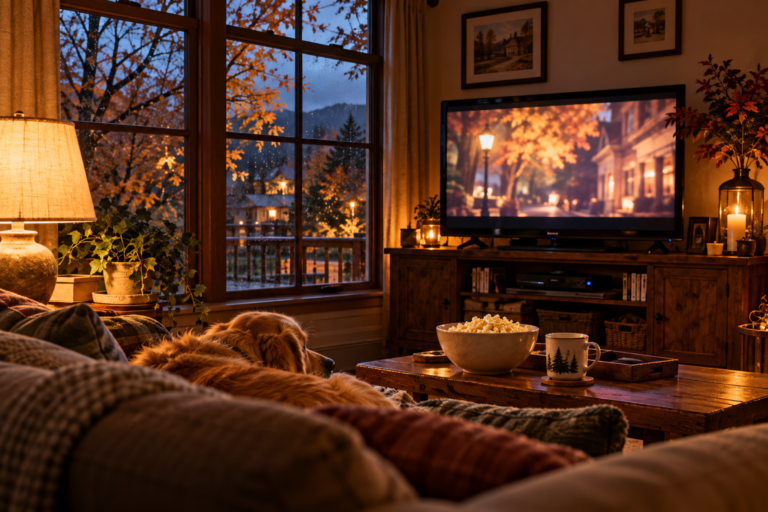
That is one reason I enjoyed imagining a quiet Halloween evening at home so much. Halloween becomes more memorable when the evening is built around a few things we genuinely enjoy rather than trying to fit in everything associated with the holiday.
I Want Halloween to Smell Like October
This might be one of the strongest memories a season can create.
Smell.
Leaves.
Wood smoke.
Apples.
Pumpkin.
Cinnamon.
Rain on pavement.
Cold air when the door opens.
Perhaps even the faint smell of candle smoke after a jack-o’-lantern has been extinguished.
These things make Halloween feel connected to a real place and time.
I do not want the season to smell like artificial candy alone.
I want it to smell like autumn becoming colder.
Like the house has been warm all evening and someone has just opened the front door.
Like a candle has burned for hours.
Like something has been baking.
Like damp leaves have collected near the porch.
Those are the details that make an evening feel lived rather than staged.
The Best Decorations Might Be the Ones That Disappear in Daylight
I love decorations that seem almost ordinary during the day but become completely different once evening arrives.
A carved pumpkin.
A lantern.
A branch in a vase.
An old wooden sign.
A black paper cat in the window.
Nothing particularly dramatic.
But once the room behind the window becomes dark and the candle is lit, everything changes.
That feels much closer to Halloween for me than something designed to dominate the landscape around the clock.
The season should have secrets.
It should look different after sunset.
Perhaps that is why I keep returning to lanterns and pumpkins when I imagine it.
They depend on darkness.
Without it, they are only objects.
With it, they become atmosphere.
I Would Rather Hear Leaves Than Halloween Music
There is a moment on a cold October night when a gust of wind moves a pile of dry leaves across the pavement.
That sound is enough.
It already feels like Halloween.
The same is true of branches moving against a house, rain starting unexpectedly, an old gate closing, or footsteps approaching along a path.
Natural sounds seem to suit the season better than anything deliberately designed to create tension.
I think that is because they are unpredictable.
The wind does not wait for the right moment.
A branch does not know that you have just reached a frightening paragraph in a book.
The house settles when it wants to.
Those ordinary noises become much more interesting when the evening is quiet enough to hear them.
Old-fashioned Halloween, in my imagination, would have had more silence.
And therefore more sound.
There Should Be a Little Folklore Left in It
I do not need Halloween to become historically accurate or overly serious, but I like remembering that it has always carried stories and superstitions with it.
Ghosts.
Witches.
Black cats.
Crossroads.
Bonfires.
Harvests.
Predictions.
The idea of one night when the ordinary boundaries of the world feel slightly less certain.
Even if we no longer believe most of these things literally, I think the stories still matter.
They give Halloween depth.
Without them, the season can become only decoration.
With them, every symbol has a shadow behind it.
The black cat becomes more than a black cat.
The lantern becomes more than light.
The old road becomes more than a road.
A story has been attached to it.
That is what folklore does.
It leaves traces.
I Wish Halloween Still Felt More Local
One thing I especially like about old seasonal traditions is how connected they were to place.
A village had its habits.
A town had its stories.
A family had its own little rituals.
The same holiday could look slightly different depending on where you were.
Modern culture tends to flatten that.
We all see the same decorations, the same products, the same images, and often the same ideas.
I would rather Halloween keep some of its local oddness.
A particular old house everyone knows.
A road children avoid after dark.
A family recipe.
A local story about a field or bridge.
The house that always carves the biggest pumpkin.
The porch that always keeps its light on latest.
Small traditions like that turn a holiday into memory.
They are difficult to buy because they have to accumulate.
A Rainy Halloween Would Be Almost Perfect
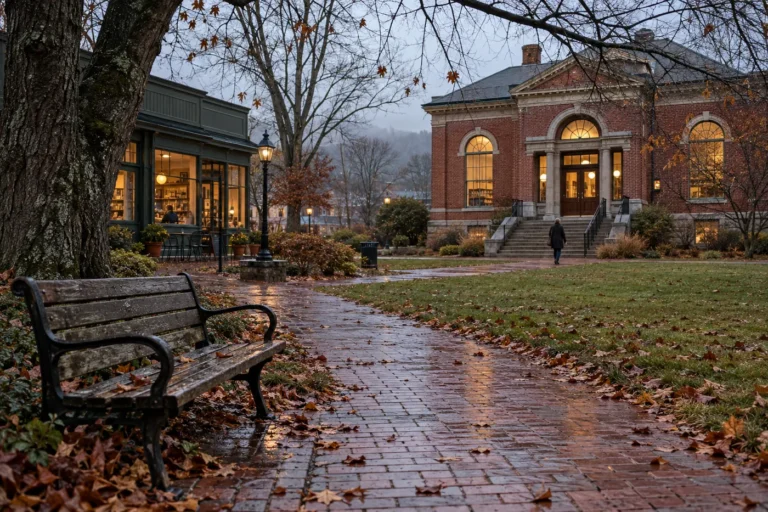
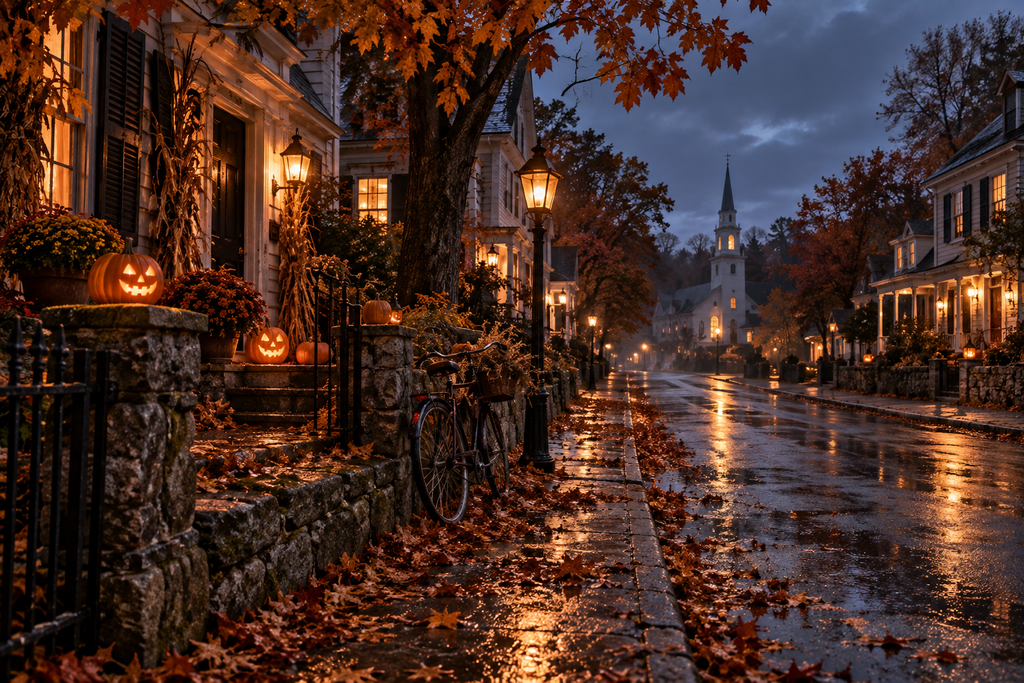
If I could choose the weather, I would probably ask for light rain earlier in the evening and then mist later.
Not a storm.
Just enough rain to darken the pavement and make the leaves shine.
Porch lights would reflect on the ground.
Jack-o’-lanterns would look brighter.
The air would smell colder.
And by the time the rain stopped, a little mist might settle along the quieter parts of the street.
It would be inconvenient, of course.
That is part of why it would feel real.
Perfect weather can sometimes look staged.
A slightly damp, chilly Halloween night feels as though October has decided to participate.
The Evening Should End Quietly
I think my imagined old-fashioned Halloween would become quieter as it went on.
Children would return home.
Doors would close.
Porch lights would begin disappearing.
Pumpkins would continue burning for a little longer.
Somewhere, one house would still have a light on upstairs.
The street would gradually belong to the night again.
That moment interests me almost more than the celebration itself.
Everything has happened.
The costumes have been worn.
The treats have been eaten.
The stories have been told.
And now only the evidence remains.
Wax inside a pumpkin.
Leaves across the porch.
A half-empty bowl near the door.
A chair pulled closer to the fire.
Perhaps a book left open.
The house slowly becoming ordinary again.
There is something comforting in that.
Seasonal moments matter partly because they end.
Maybe What I Want Is Not the Past at All
The more I think about old-fashioned Halloween, the more I suspect I am not actually wishing to return to a particular decade.
I am wishing for a particular feeling.
Slowness.
Imperfection.
Mystery.
Local traditions.
Homemade things.
Seasonal food.
Weather that matters.
Darkness that is allowed to remain dark.
An evening that is enjoyed rather than documented constantly.
Those things are not gone.
We could bring many of them back whenever we wanted.
Carve one pumpkin instead of arranging twenty.
Bake something.
Turn off the main lights.
Tell a ghost story.
Leave the phone in another room.
Walk outside after dark.
Notice the leaves.
Light a candle.
Let the house become quiet.
Old-fashioned Halloween does not really need to be recreated perfectly.
Perhaps it only needs to remind us that atmosphere was never something we had to buy.
October already gives us most of it.
We just have to notice.
And if there is one glowing pumpkin waiting beside the door when the evening turns dark, that may still be enough.