The Kind of Cinnamon Rolls I Want on a Cold, Quiet Morning
There are some mornings when breakfast can be simple and practical, and then there are mornings when I want the whole house to smell like cinnamon, butter, and something slowly baking in the oven.
A cold, quiet morning is usually enough to put me in that mood.
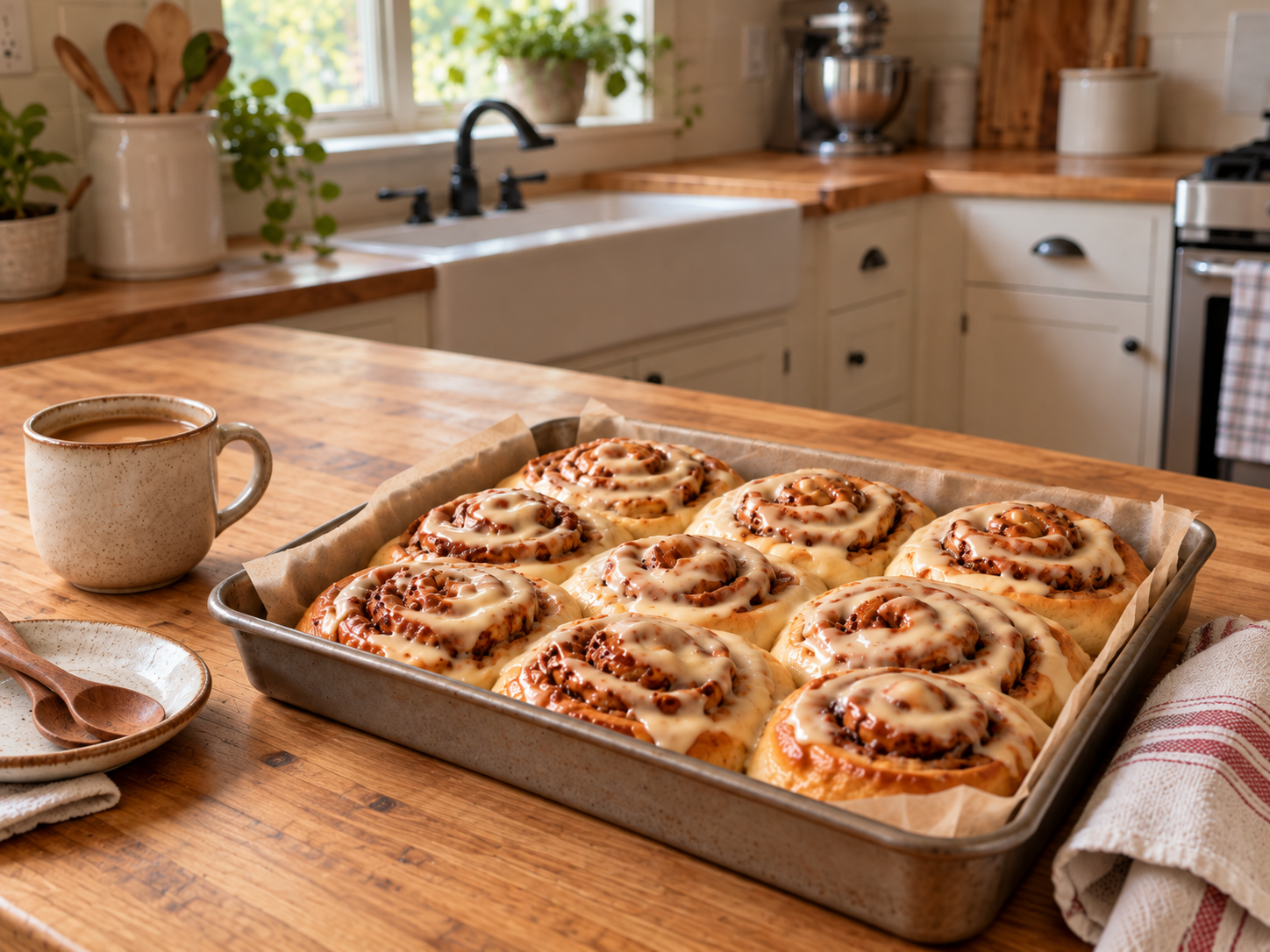
When the light outside is pale, the rooms still feel a little sleepy, and there is nowhere I need to rush to, these are exactly the kind of cinnamon rolls I want on the table. Soft in the middle, golden around the edges, filled generously with cinnamon and brown sugar, and covered with just enough icing to melt into all the warm folds.
For me, baking like this is never only about the finished recipe. It is about the hour before it is ready too: waiting for the dough to rise, making coffee while the oven heats, and watching the kitchen slowly become warmer while the rest of the day has barely started.
These are the kind of cinnamon rolls I want on a cold, quiet morning, when breakfast can take a little longer and there is no reason to hurry.
Why Cinnamon Rolls Belong to Slow Mornings
Cinnamon rolls are not something I would make on a rushed weekday morning. They require too much waiting for that, and honestly, that is part of what I like about them.
The dough needs time to rise. The shaped rolls need another little rest. Then there is the baking itself, followed by those few minutes when you are supposed to wait before adding the icing, even though the entire kitchen already smells like cinnamon.
It forces the morning to move at a different speed.
I think that is why recipes like this suit colder weekends so well. When the weather makes staying home feel like the better option anyway, waiting for dough to rise does not feel inconvenient. It simply becomes part of the morning.
There is something comforting about knowing that breakfast is slowly becoming ready while you are doing almost nothing.
The Smell Is Half the Reason I Make Them
If I had to choose one reason cinnamon rolls feel so comforting, it might not actually be the taste.
It might be the smell.
Cinnamon warming in the oven has a way of filling more than just the kitchen. It moves through the house and makes everything feel warmer, even before you have taken the first tray out.
Brown sugar, butter, yeast, and cinnamon together create one of those smells that immediately feels familiar.
The same thing happens when I bake apple pie. The house changes before the food is even ready.
Soft Cinnamon Rolls with Vanilla Cream Cheese Icing
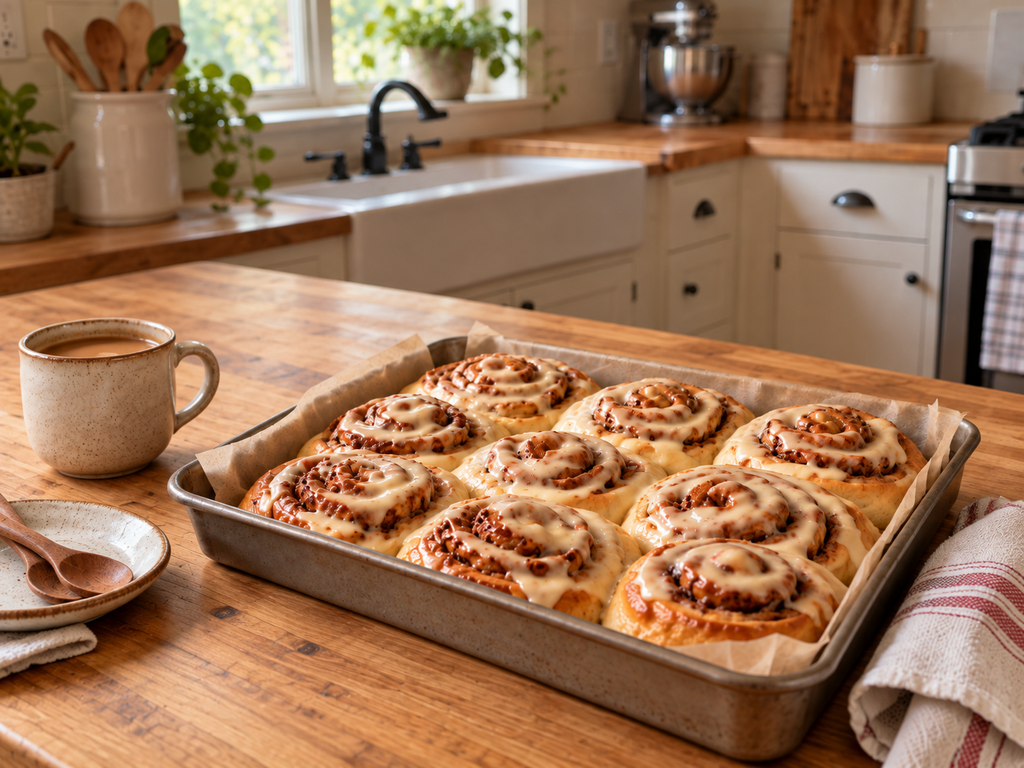
This recipe makes soft, rich cinnamon rolls with a buttery brown sugar filling and a simple cream cheese icing.
Makes
9 large cinnamon rolls
Preparation time
About 25 minutes, plus rising time
Baking time
About 22–27 minutes
Ingredients
For the dough
- 3/4 cup whole milk, warm but not hot
- 2 1/4 teaspoons active dry yeast
- 1/4 cup granulated sugar
- 1 large egg
- 1 egg yolk
- 1/4 cup unsalted butter, melted and slightly cooled
- 3 cups all-purpose flour, plus a little extra if needed
- 3/4 teaspoon salt
For the cinnamon filling
- 1/2 cup unsalted butter, softened
- 2/3 cup packed brown sugar
- 1 1/2 tablespoons ground cinnamon
- Pinch of salt
For the cream cheese icing
- 4 ounces cream cheese, softened
- 2 tablespoons unsalted butter, softened
- 3/4 cup powdered sugar
- 1/2 teaspoon vanilla extract
- 1–2 tablespoons milk, as needed
How I Make Them
1. Start with the dough
Pour the warm milk into a large mixing bowl and stir in the yeast and a small spoonful of the sugar. Leave it for about five to ten minutes, until the surface begins to look slightly foamy.
The milk should feel warm rather than hot. If it is too hot, it can damage the yeast, while milk that is too cool will simply make the dough take longer to rise.
Once the yeast is ready, add the remaining sugar, egg, egg yolk, and melted butter. Stir everything together until combined.
Add the flour and salt gradually, mixing until a soft dough begins to form.
2. Knead until the dough becomes smooth
Turn the dough onto a lightly floured surface and knead it for about eight minutes. If you are using a stand mixer, use the dough hook on medium-low speed for roughly five to six minutes.
The dough should become smooth, elastic, and slightly tacky.
Try not to add too much additional flour. A softer dough gives you softer cinnamon rolls, and it is better for the dough to feel a little sticky than to make it dry and heavy.
Place it into a lightly greased bowl, cover it, and leave it somewhere warm until it has roughly doubled in size. Depending on the temperature of the room, this normally takes around one to one and a half hours.
This is the part of the recipe when I usually make coffee and leave the dough alone.
There is nothing particularly interesting to watch, but there is something satisfying about coming back later and finding that the dough has quietly doubled while you were doing something else.
3. Make the cinnamon filling
While the dough is rising, mix the brown sugar, cinnamon, and a pinch of salt in a small bowl.
Once the dough has risen, roll it into a rectangle roughly 14 by 18 inches.
Spread the softened butter evenly over the surface, leaving just a narrow edge uncovered.
Sprinkle the cinnamon and brown sugar mixture over the butter, making sure it reaches almost all the way to the edges.
This is not the moment to be cautious with the filling. The best cinnamon rolls have enough cinnamon sugar to create those dark, sticky layers once they bake.
4. Roll and cut
Starting with one of the long sides, roll the dough tightly into a log.
Use a sharp knife or a piece of unflavored dental floss to divide the log into nine roughly equal pieces.
Arrange the rolls in a lightly greased 9-inch square baking dish or similar-sized baking pan, leaving a little space between them.
Cover the pan loosely and allow them to rise for another 30–45 minutes.
By the end of the second rise, they should look noticeably fuller and should be starting to touch each other.
5. Bake until golden
Preheat the oven to 350°F (175°C).
Bake the cinnamon rolls for approximately 22–27 minutes, until the tops are lightly golden and the centers are cooked through.
I prefer not to let them get too dark. Cinnamon rolls are best when the edges are baked but the centers remain soft.
When they come out of the oven, leave them in the pan while you prepare the icing.
6. Make the icing
Beat the softened cream cheese and butter together until smooth.
Add the powdered sugar and vanilla, then mix until creamy. Add milk a little at a time until the icing reaches the consistency you prefer.
I like it soft enough to spread easily across the warm rolls but not so thin that it disappears completely.
Spread the icing over the rolls while they are still warm.
The heat will melt it slightly, allowing it to settle into the swirls and edges rather than sitting only on top.
That is exactly how I want them.
The First One Is Always the Best
There is usually one moment when cinnamon rolls are at their absolute best: not straight from the oven, when they are still too hot, and not hours later after everything has cooled.
It is somewhere in between.
The icing has started melting around the edges, the middle of the roll is still warm, and the cinnamon filling is soft enough to pull apart with a fork.
That is when I make another coffee and finally sit down.
There is nothing elaborate about it, but it feels like the kind of breakfast that belongs to a weekend.
A Few Small Things That Make Them Better
One of the most important things is simply not overbaking them. A cinnamon roll that looks deeply browned may already be much drier inside than you want.
I also prefer using brown sugar rather than white sugar in the filling because it gives the center a softer, slightly caramel-like texture.
Whole milk makes the dough richer, but 2% milk will work if that is what you have.
And if your kitchen is cold, especially during fall or winter, the dough may need more time to rise. I would rather wait another twenty minutes than rush it before it is ready.
Yeast dough does not care about the clock nearly as much as we do.
Can You Prepare Them the Night Before?
Yes, and this is probably the best option if you want warm cinnamon rolls without starting the entire process early in the morning.
Prepare the recipe through the point where the rolls have been cut and placed into the baking dish.
Instead of allowing the second rise at room temperature, cover the dish tightly and place it in the refrigerator overnight.
In the morning, take the pan out and let the rolls sit at room temperature for approximately 45–60 minutes before baking.
They may need slightly longer if your kitchen is particularly cold.
This means most of the work happens the evening before, while the morning itself is mostly about turning on the oven and waiting for the smell to begin.
How I Store Them
Cinnamon rolls are best the day they are baked, but leftovers can be stored in an airtight container in the refrigerator for around three days.
I warm individual rolls gently before eating them again.
A few seconds in the microwave is enough to soften the center and bring back some of that just-baked feeling.
If you know you will be storing several rolls, you can also keep some of the icing separate and add it after reheating.
The Kind of Baking I Want More of
The older I get, the more I appreciate recipes that are less about impressing anyone and more about changing the feeling of an ordinary day.
Cinnamon rolls do that.
They are not difficult, but they require enough time that you have to choose to make them.
That makes them feel slightly special.
On a gray morning, when the windows are cold and the day outside does not seem particularly inviting, there are worse ways to spend a few hours than waiting for dough to rise while the kitchen slowly fills with warmth.
The world outside can stay cold for a little longer.
Inside, there is coffee.
There is cinnamon.
And breakfast is in the oven.
That is exactly the kind of morning I had in mind.
What is the one thing you love baking when the weather turns cold?